The reluctant hero
Start with the injustice of it. Marcus Aurelius was, by temperament and training, a reader. He was formed as a student of philosophy and an apprentice in government, and left to himself he would have been happy among books and teachers for the whole of his life. Rome asked him for something else. From almost the moment he took power, the empire threw crisis after crisis at him — a great eastern war, a plague that came home with the army, a coalition of northern peoples that smashed the frontier and drove toward Italy, and finally the betrayal of a man he had trusted with half the world.
A lesser man buckles under any one of these. Marcus took them in sequence, for nearly two decades, and did the thing that makes him a hero and not merely a survivor: he did his duty without letting the crises make him cruel. He fought the wars he did not want, and he won or contained them. He endured the losses. And when he finally held a hated enemy at his mercy, again and again he chose mercy. That is the story this cluster tells — each enemy gets a full page, because a hero is measured by the strength of what he faced. But make no mistake whose story it is. He is the hero of every one of them.
A word on the evidence. This is a tribute, but not a fantasy. Cassius Dio is the essential source for these wars and the revolt, though parts survive only through later epitomes; the Historia Augusta is used with caution. Where an ancient episode is legendary rather than certain — the storm that saved the legion, for instance — the pages say so. Where no words of an enemy survive, none are invented. Everything admiring here is admiration for things Marcus actually did.
Each opponent gets his own page — the challenge he brought, and the answer Marcus gave. Read them in order, or start with the betrayal that tested him most.
The king of the Marcomanni broke the frontier and drove toward Italy itself. Marcus left the study for the Danube and became, in his forties, the war leader Rome needed — and wrote the Meditations in the middle of it.
His most trusted general declared himself emperor. Marcus's answer is the noblest moment of the reign: he wanted the rebel taken alive, so he could forgive him.
He priced a defiant king's head in gold — then, once the man was helpless, spared his life and sent him into comfortable exile instead of killing him.
He ground down the Iazyges until their king submitted in person — and won back roughly 100,000 Roman captives. A war that ended as a rescue.
The first great crisis of the reign: the king of Parthia. Marcus shared power generously with Lucius Verus, and Rome's armies came home victorious from the East.
Why he is the hero
Anyone can be admired in easy times. Marcus was never given easy times. His whole reign was invasion, epidemic, revolt, and loss — and the Meditations, the most beloved book of inner peace ever written, was composed inside exactly that. He is a hero not because he was spared hardship but because hardship never made him small. He won the wars he could win, endured what he could not change, and refused the one thing that would have cost him his soul: vengeance. The enemies on these pages were formidable. That is the point. They are the measure of the man who outlasted them.
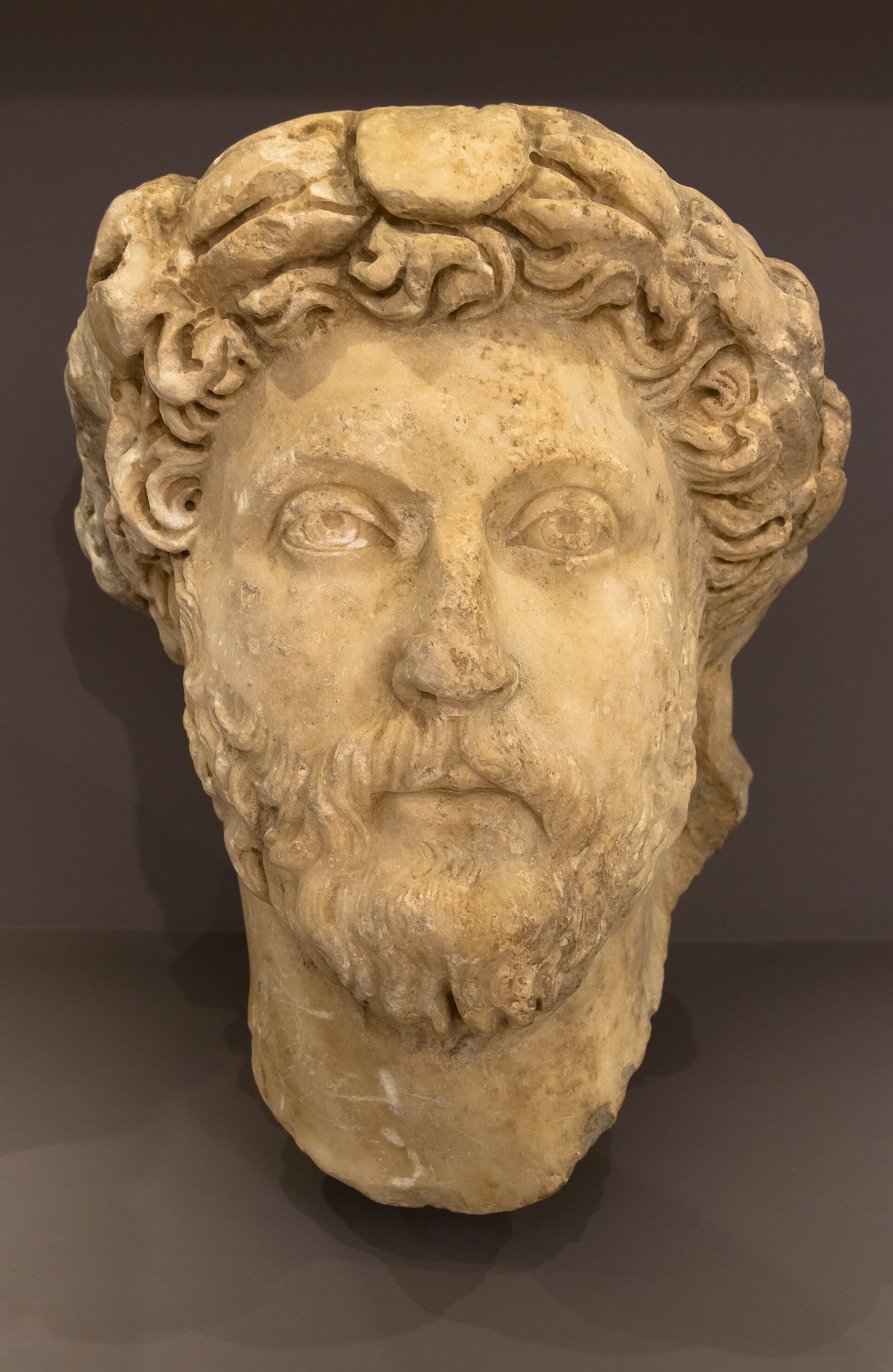 Marcus Aurelius