Stoicism · Rome · Self-mastery
Marcus Aurelius: The Philosopher-Emperor
The most powerful man in the world, who wrote a private notebook reminding himself to be patient, just, and unafraid of death.
 Michael Paycer
The most powerful man in the world, who wrote a private notebook reminding himself to be patient, just, and unafraid of death.
Michael PaycerLived
121–180 CE
Role
Roman emperor; Stoic
Lens
Do your duty; master your mind
Key work
Meditations
Marcus Aurelius ruled the Roman Empire at its height — and is remembered less for his power than for a small book he never meant to publish. His Meditations, written to himself during military campaigns, is the most intimate and beloved text of Stoicism.
His lens unites duty and inner discipline: do the work your role demands, govern your own mind, and face mortality without flinching. That a man with absolute power spent his nights reminding himself to be humble and just is part of why the book still moves readers.
And he did not become that man alone. Meet the circle around Marcus Aurelius — the teachers, family, generals, and enemies who shaped his life, his decisions, and the Meditations.
Adopted into the imperial family and trained in philosophy from boyhood, Marcus became emperor in 161 CE and spent much of his reign at war on the empire's frontiers, where the Meditations were written. He is counted the last of Rome's "Five Good Emperors."
He never prepared the notebook for readers — it is a record of a mind disciplining itself. That accident of history gave the world an unguarded look at a Stoic actually practicing his philosophy under the heaviest possible pressures.
Marcus returns again and again to mortality: life is short, fame is fleeting, and remembering that you will die is how you learn to live rightly now. Not morbid, but clarifying — death as the editor of what matters.
As emperor he framed virtue as service: "What is not good for the hive is not good for the bee." Each person has work to do for the whole, and doing it well, without complaint, is the heart of a good life.
External events cannot truly harm you, Marcus insists; only your judgments can. The mind is an "inner citadel" that remains free no matter what happens outside it — the core Stoic discipline of control.
The Meditations survived as one of the treasures of Western thought and is, today, among the best-selling philosophy books in the world — quoted by athletes, soldiers, executives, and anyone seeking steadiness. Marcus became the very image of the "philosopher-king" Plato had imagined.
His example anchors the modern Stoic revival: proof that the philosophy's value is measured not in arguments won but in a life steadily lived. He stands beside Epictetus and Seneca as one of the three voices through whom Stoicism still speaks.
Can power and virtue coexist? Marcus is the great test case. His reign included war and persecution, and readers still debate whether his serene philosophy fully reckoned with the brutal realities of the empire he ran. The tension between private virtue and public power runs through the whole book.
Acceptance or resignation? Like all Stoicism, the Meditations faces the charge that "accept what you cannot control" can shade into passivity. Marcus's answer is action without attachment — do your duty fully, then release the outcome.
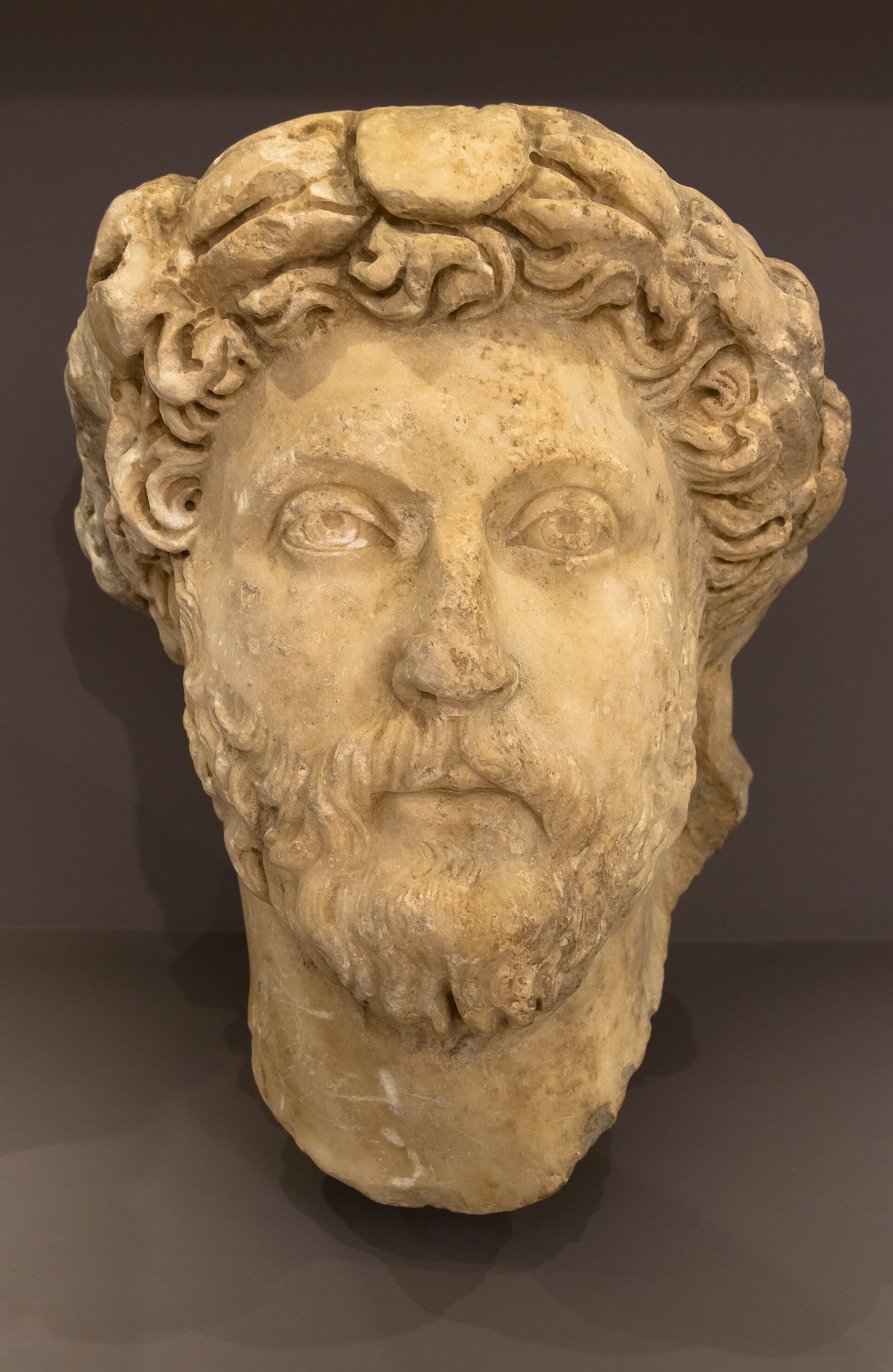
Public-domain portraits and depictions — click any image to view it full size.
“Such as are thy habitual thoughts, such also will be the character of thy mind; for the soul is dyed by the thoughts.”
Marcus Aurelius, Meditations 5.16 (trans. George Long)
“Waste no more time arguing about what a good man should be. Be one.”
Marcus Aurelius, Meditations
Marcus Aurelius shows the Stoic lens lived at the limit: do your duty, govern your own mind, and accept what you cannot control — even with the whole world on your shoulders.
He is the proof that Stoicism is not an ivory-tower doctrine but a working discipline for real life under real pressure. If the most powerful man alive needed to remind himself daily to be patient and just, the practice is for everyone.
The Meditations remains one of the most widely read philosophy books in the world precisely because it is so practical — a handbook for steadiness that asks nothing supernatural, only honesty and effort.
Power disciplined by philosophy — service, restraint, and self-examination.
Power ungoverned by reason — appetite and ego with no inner check.
A private notebook of philosophical reflections that the Roman emperor Marcus Aurelius wrote to himself, never intending publication. It is the most beloved practical text of Stoicism.
He is counted among Rome's 'Five Good Emperors' and is admired for his sense of duty and restraint, though his reign faced wars, plague, and the persecution of Christians — and historians still debate his record.
That you control your own judgments and character but not external events, so peace and virtue come from mastering your mind, doing your duty, and accepting what you cannot change.
When I am not reading Homer or Nietzsche, I tune databases, design high-availability systems, and run cloud migrations.