The first great enemy
Vologases IV ruled the Parthian Empire — Rome's one true peer, the other superpower of the ancient world. The conflict began over the disputed control of Armenia and swelled into a major eastern war almost the moment Marcus and his co-emperor Lucius Verus took power in AD 161. This is the enemy who greeted Marcus at the very start of his reign: not a border tribe but a rival empire, and a serious one. Honesty requires a flat statement of the evidence: no secure direct quotation from Vologases relevant to this war survives in trustworthy sources, so this page attributes no words to him at all. He was a long-reigning king of a great power, and the tribute leaves him his dignity.
The hero's first test
Imagine inheriting the most powerful throne on earth and, within months, facing a full-scale war with the only state that could meet Rome as an equal. A weak or insecure man would have hoarded power and panicked. Marcus did the opposite. He had insisted, from the start, on ruling jointly with Lucius Verus — voluntarily sharing supreme power rather than keeping it all for himself, the first time Rome had two full emperors at once. Then he sent Verus east to front the Parthian War while he managed the wider empire. It was generous and it was shrewd, and it worked.
Strategically, the war ended as a Roman victory. Roman counteroffensives recovered Armenia, drove into Mesopotamia, took Dura-Europos, and captured and sacked the Parthian capital of Ctesiphon. From Rome's side the eastern war closed as a hard-won triumph — and it happened on Marcus's watch, under a command structure he had deliberately, humbly designed.
What it revealed about him
Marcus never marched east himself, yet the Parthian War shaped the rest of his life. It was the first massive crisis of the reign, and it elevated the very men who would define what came after — Lucius Verus, Avidius Cassius, Marcus Claudius Fronto. Here, at the beginning, is the fact the whole tribute keeps circling: Marcus did not rule a peaceful golden age for philosophers. From his first year the crises came without pause — and the serenity of the Meditations is remarkable precisely because it was written into the teeth of all of it.
The beginning of the legend
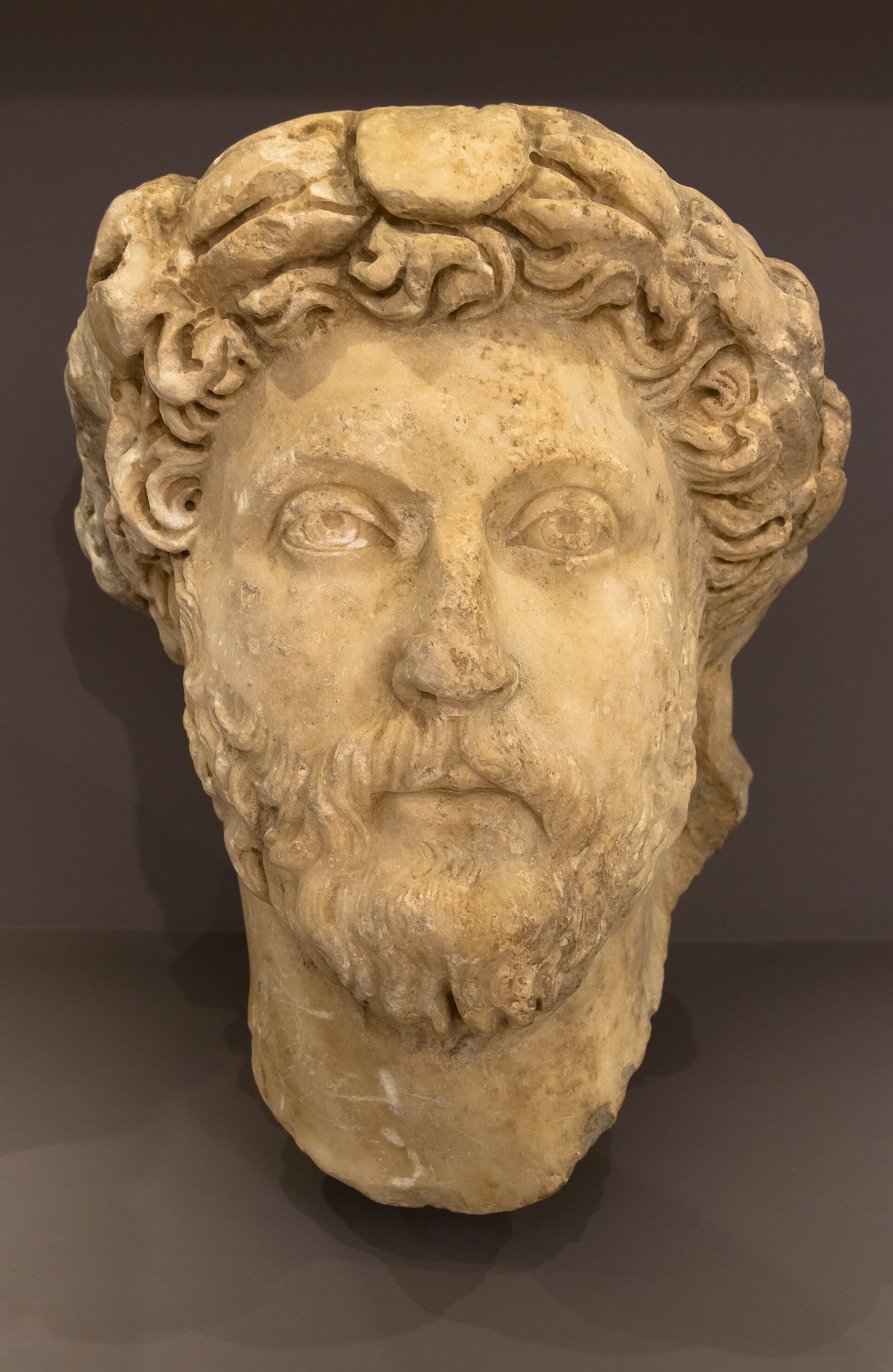
Vologases is the opening chapter of the story the rest of this cluster tells. Before Ballomar's invasion, before the betrayal of Cassius, before the frozen Danube, there was a young emperor and a rival empire — and Marcus met that first test with humility and a steady hand. Everything the other adversaries would later throw at him, he was already, from year one, learning to carry. The hero was made under pressure, and the pressure started here.
 Marcus Aurelius