The Meditations as a practice, not a book
We call it a book, but Marcus never wrote a book. What survives as the Meditations is a private notebook — entries he made to himself, for himself, with no audience and no plan to publish. Much of it was written on campaign, in army camps on the northern frontier, in the gaps between the work of ruling and fighting. That changes how you should read it. These are not polished lectures. They are a mind talking itself back into shape.
Read that way, the repetition stops looking like a flaw and starts looking like the point. Marcus returns again and again to the same handful of ideas — control what is yours, accept what is not, do your work, remember you will die — because a person under strain forgets those things constantly and has to be reminded. The notebook is the reminder. It is a discipline he performed with a pen, most likely at the start or end of a day, the way someone else might pray or train. The value for a modern reader is not the elegance of the sentences. It is the example of a powerful, busy, exhausted man sitting down to correct his own thinking on a regular schedule.
Preparing for the day and difficult people
One of the most useful things Marcus did was rehearse the day before it happened. The opening of the second book is essentially a morning briefing he gives himself: he tells himself that today he will meet people who are meddling, ungrateful, arrogant, dishonest, and unpleasant — and that he should not be shocked or thrown by any of it. His reason is Stoic to the core: those people act badly out of ignorance of what is truly good and bad, they share the same nature he does, and none of them can actually damage his own character unless he lets them. So there is no ground for hatred, and no reason to let their behavior wreck his day.
Notice what this is not. It is not resignation, and it is not contempt. It is a decision, made in advance and in calm, about how he will meet friction before the friction arrives. The modern translation is almost too obvious: expect the difficult meeting, the rude email, the person who takes credit and gives none — and decide now, while you are level-headed, that you will meet it without letting it turn you bitter. Marcus is doing what a good coach or therapist would recommend eighteen centuries later. He pre-commits to his own better response.
The angle worth stealing
The trick is not that Marcus never got angry — he clearly did, which is exactly why he kept writing about it. The trick is where he did the work: before the moment, not during it. He set his response to difficult people in advance, when he was calm, so that in the heat of the day he only had to remember a decision he had already made. That is a repeatable practice, not a personality trait.
Duty on the frontier
It is easy to imagine Stoic calm as something you cultivate in a quiet study. Marcus mostly did not have one. A large part of the Meditations was written during the Marcomannic Wars, the long, grinding campaigns against Germanic and Sarmatian peoples along the Danube that consumed the second half of his reign. He was not a general in the heroic sense, but he was present on the frontier for years, responsible for the whole apparatus of a war — supply, command, diplomacy, money, morale — while a plague moved through the empire behind him.
So the passages about patience, about doing the task in front of you without complaint, about not expecting the world to be arranged for your comfort, were not written by a man with the luxury of ease. They were written by someone doing hard, tedious, often grim work and using philosophy to keep showing up for it. When Marcus tells himself to rise and do the work of a human being, he is talking to a tired administrator and war-leader who would rather stay under the blankets. The practice earns its authority precisely because of where it was performed.
Grief and mortality
Marcus and his wife Faustina had many children, and he outlived most of them. The ancient record is not exact, but by any reading he buried son after son and daughter after daughter — a scale of loss that is hard to hold in the mind. This is the context for the strand of the Meditations that modern readers sometimes find morbid: the constant returning to death, the reminders that everything passes, that he too will soon be gone and forgotten.
Read against his actual life, that theme is not gloom. It is a man metabolizing grief and trying to keep it from crushing him. Remembering mortality — his own and everyone's — was, for Marcus, a way to clarity rather than despair: it cut vanity down to size, made present duties matter more rather than less, and put his losses inside a natural order he could accept instead of rage against. Memento mori in his hands is not a death cult. It is a father who has stood at too many small graves teaching himself how to keep living usefully anyway.
Power without corruption
Here is the strangest and most impressive part. Marcus Aurelius was, for a stretch of years, about as powerful as a human being has ever been — sole ruler of an empire that circled the Mediterranean, answerable to no one, able to have almost anyone killed. Absolute power like that has corrupted nearly everyone who ever held it. And what do we find in his private notebook, the one place he had no reason to perform? A man relentlessly warning himself not to be corrupted by it.
He reminds himself not to be "Caesarified," not to be dyed purple by the role, to stay simple, humble, honest, and just. He tells himself to guard against the flattery of the court, to keep the plain habits of a decent person, to use power as a trust rather than a prize. Whether he always lived up to it is a fair question — but the striking fact is the effort. The most powerful man alive spent his private hours arguing himself out of the exact vices his position invited. That is the opposite of what power usually does to people, and it is the clearest proof that his Stoicism was working on him and not just decorating him.
“Waste no more time arguing about what a good man should be. Be one.”
Marcus Aurelius, Meditations
What a modern reader can take from it
You do not have to run an empire to use any of this. The mechanics are portable. Keep a private notebook and use it to correct your own thinking on a schedule, not to perform for anyone. Rehearse hard days in advance, so your better response is already decided before the friction hits. Do the task in front of you without waiting for conditions to be ideal, because they will not be. Let the fact of mortality sharpen what matters instead of paralyzing you. And if you are ever handed power over other people — a team, a family, a budget — treat it as a trust and actively guard against what it tends to do to you.
The single idea underneath all of it is the one Marcus kept coming back to: the sharp line between what is in your control and what is not. He could not control the war, the plague, the deaths of his children, or the behavior of difficult people. He could control his own judgments, his effort, and his character. He spent his life practicing that distinction under conditions far worse than most of us will ever face — which is exactly why, eighteen centuries later, the practice still reads as useful rather than quaint.
“Begin the morning by saying to thyself, I shall meet with the busy-body, the ungrateful, arrogant, deceitful, envious, unsocial. All these things happen to them by reason of their ignorance of what is good and evil.”
Marcus Aurelius, Meditations 2.1 (trans. George Long)
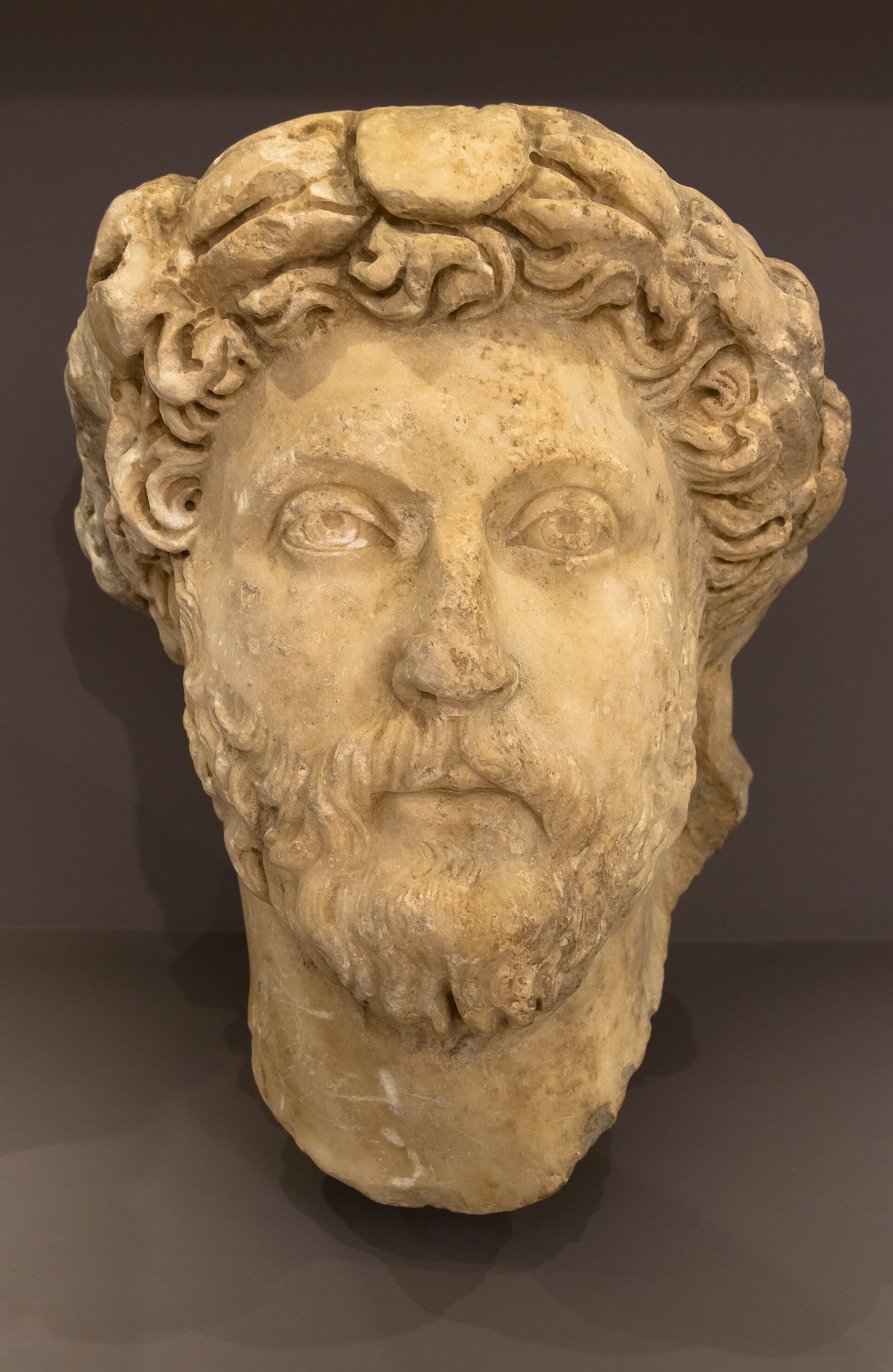 Marcus Aurelius