Are people basically good?
Almost every political disagreement bottoms out here. Trust people and you lean toward freedom; fear them and you lean toward control.
→ Hobbes vs. Rousseau, still running.An ideology is belief hardened into a program: a set of answers about how we should live together, held firmly enough to act on and, eventually, to fight over. Every one of them began as somebody's honest account of human nature. This room traces where the great -isms come from and what each is really protecting. It maps the arguments; it does not pick a side.
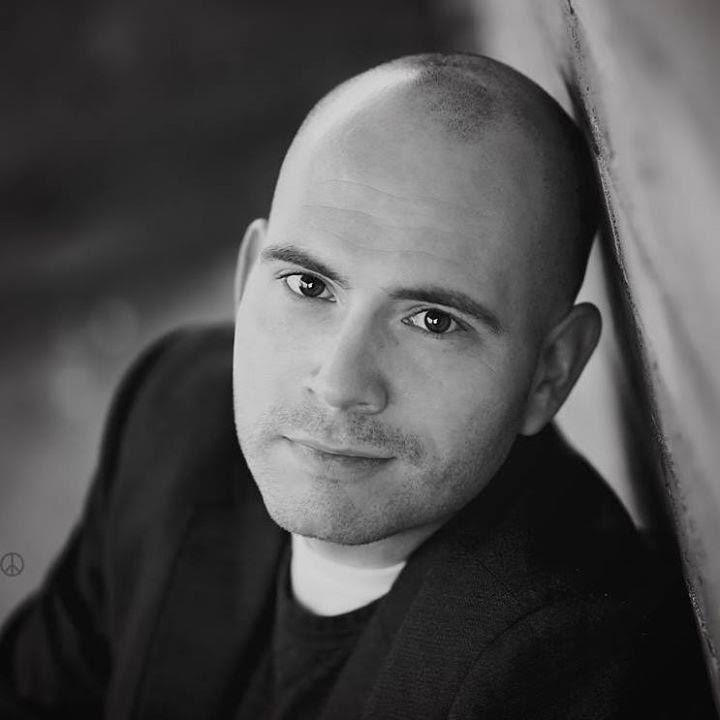 Michael Paycer
Strip away the sneer the word often carries and an ideology is just a working map of the political world. It bundles three things: a picture of what people are like, a value it treats as most important, and a program for arranging society around that value. Tell me whether you think people are basically cooperative or basically dangerous, and whether you prize liberty or equality or order above the rest, and I can usually predict the rest of your politics.
The word has a second, sharper meaning, and it is worth keeping both in view. For Karl Marx, an ideology was not a neutral map but a distorted one: a set of ideas that presents the interests of the powerful as if they were simply common sense, so that people consent to arrangements that do not serve them. On that reading, the most successful ideology is the one you cannot see, because it feels like reality itself.
Held loosely, an ideology is a lens that helps you act. Held too tightly, it becomes the thing Hannah Arendt warned about, a single idea marched to its logical end no matter what reality says. The distance between those two is most of what this room is about.
The philosophers have only interpreted the world, in various ways; the point, however, is to change it.
Karl Marx, Theses on Feuerbach
An ideology is quite literally what its name indicates: it is the logic of an idea.
Hannah Arendt, The Origins of Totalitarianism
The quickest way to tell the ideologies apart is not their slogans but the single value each treats as sacred, and the thinker who first made the case.
| Ideology | The value it guards | An intellectual root |
|---|---|---|
| Liberalism | Individual liberty and rights | Locke, Mill |
| Libertarianism | Individual liberty, pushed to its limit | Nozick, Hayek, Friedman |
| Conservatism | Order, tradition, gradual change | Edmund Burke |
| Socialism / Marxism | Equality; shared control of the economy | Marx, Engels |
| Anarchism | Freedom from the coercive state | Bakunin, Kropotkin |
| Nationalism | The nation as the political community | Herder, and the 1800s |
| Populism | The people against the elite (left or right) | Rousseau's general will; the 1890s on |
| Fascism | Nation and authority over the individual | the 20th century; analyzed by Arendt |
Open in this room:
Behind the modern -isms sits an older argument about the deal we strike to live together, the social contract. Three thinkers set its terms. Thomas Hobbes, watching a civil war, decided people left to themselves are so dangerous that almost any strong authority beats the chaos of none. John Locke answered that people have rights before any government exists, so the state is a limited trustee that forfeits its power when it abuses them. Jean-Jacques Rousseau shifted the ground again: society itself corrupts a naturally decent human being, and legitimate authority can only come from the general will of the people.
Read the spectrum above and you can hear those three still arguing. Conservatism inherits Hobbes's fear of disorder. Liberalism inherits Locke's rights. Socialism and the radical traditions inherit Rousseau's conviction that the current arrangement is not natural but built, and so can be rebuilt. Every ideology is, at bottom, a different answer to one question: given what people are actually like, how should we live together?
Society is indeed a contract... a partnership not only between those who are living, but between those who are living, those who are dead, and those who are to be born.
Edmund Burke, Reflections on the Revolution in France
An ideology begins as someone's honest account of human nature. It becomes an ideology the moment it stops asking whether it is right and starts counting who is with it.
Almost every political disagreement bottoms out here. Trust people and you lean toward freedom; fear them and you lean toward control.
→ Hobbes vs. Rousseau, still running.Push liberty hard and inequality grows; push equality hard and liberty shrinks. Where you set the dial is most of your politics.
→ The axis that splits left from right.Every ideology persuades until it doesn't. The question is what turns a set of ideas into a boot.
→ Arendt on ideology and terror.Everything downstream, taxes, rights, borders, welfare, is an answer to this one obligation question.
→ From charity to justice to the social contract.A connected system of ideas about how society should be organized, held firmly enough to guide action. It usually bundles a picture of human nature, a value it treats as most important, and a program for getting there. The word can be neutral, meaning any political worldview, or critical, meaning beliefs that hide whose interests they serve.
Liberalism (individual liberty and rights), conservatism (order, tradition, gradual change), socialism and Marxism (equality and collective control of the economy), anarchism (rejection of the coercive state), and nationalism (the nation as the primary community). Fascism is a 20th-century ideology built on nation, authority, and the subordination of the individual.
Most trace to a few foundational arguments about human nature and the state, especially the social-contract thinkers Hobbes, Locke, and Rousseau, and to the upheavals of the Enlightenment, the French Revolution, and industrial capitalism. Each is a different answer to how we should live together.
The terms come from seating in the French Revolutionary assembly. Broadly, the left prioritizes equality and is more willing to change institutions to achieve it; the right prioritizes order, liberty, or tradition and is more cautious about rapid change. Real positions are more layered, but the left-right axis remains the common map.
When I’m not tracing the -isms back to Hobbes and Locke, I tune databases, design high-availability systems, and run cloud migrations.