How to Live · 19th Century · Well-being
Mill: The Greatest Good, Freely Chosen
The English philosopher who refined utilitarianism and then gave the modern world its strongest case for individual liberty and free speech.
 Michael Paycer
The English philosopher who refined utilitarianism and then gave the modern world its strongest case for individual liberty and free speech.
Michael PaycerLived
1806–1873
Era
Victorian Britain
Lens
The greatest good, freely chosen
Key works
Utilitarianism; On Liberty
John Stuart Mill is the great refiner of utilitarianism — the view that actions are right insofar as they promote happiness and well-being for the greatest number. But Mill added a crucial second half: people must be free to pursue the good in their own way.
His lens joins the two: maximize well-being, and protect the liberty that lets people choose it. Quantity of pleasure is not enough — Mill insisted that higher, intellectual and moral goods count for more.
Mill was raised in a famous, severe educational experiment by his father — learning Greek at three and logic as a boy — which led to an early breakdown and a lifelong concern with what makes life worth living, not just efficient.
A member of Parliament and an early advocate of women's suffrage, Mill brought philosophy directly into public life. On Liberty remains the classic defense of individual freedom and free expression.
Actions are right in proportion as they promote happiness, wrong as they produce the reverse — counting everyone's well-being equally. Ethics is about consequences for real human lives.
Against the charge that utilitarianism is 'a doctrine for pigs,' Mill argued that intellectual and moral pleasures are higher in kind than mere bodily ones. 'Better to be Socrates dissatisfied than a fool satisfied.'
In On Liberty: the only justification for limiting a person's freedom is to prevent harm to others. Over your own body and mind, you are sovereign — the foundation of modern free-speech and personal-liberty arguments.
Mill was a radical advocate of equality: his The Subjection of Women (1869) argued for women's full legal and political equality at a time when that was scandalous, and as an MP he proposed extending the vote to women.
In On Liberty, Mill prized individuality and "experiments in living" — the freedom to be different — as essential both to personal flourishing and to a society's capacity to discover better ways to live.
Mill gave utilitarianism its most humane and enduring form and, in On Liberty, wrote the classic defense of free speech and individual freedom — still the starting point for nearly every debate about the limits of state power and the marketplace of ideas.
His harm principle shapes modern law and policy, his arguments helped drive the expansion of suffrage and women's rights, and his clash with Kant — consequences versus duty — still defines the central fault line of modern moral philosophy.
The tyranny of the majority. Mill's deepest worry in On Liberty was not government but society itself — the pressure of public opinion to make everyone conform. He argued that a healthy society must protect dissenters and eccentrics, because today's heresy may be tomorrow's truth. It is one of the most prescient themes in political thought.
Who judges the "higher" pleasures? Mill insisted that intellectual and moral pleasures are higher in kind than bodily ones — "better to be Socrates dissatisfied than a fool satisfied." But critics ask: who decides which pleasures are higher, and doesn't this smuggle elitism into a theory meant to count everyone's happiness equally? The tension sits at the heart of utilitarianism.
The harm principle and its edges. Mill held that society may restrict you only to prevent harm to others — never for your own good. But what counts as "harm," and what about actions that harm only yourself? The debate over paternalism, free speech, and personal liberty still begins exactly where Mill drew his line.
Public-domain portraits and depictions — click any image to view it full size.
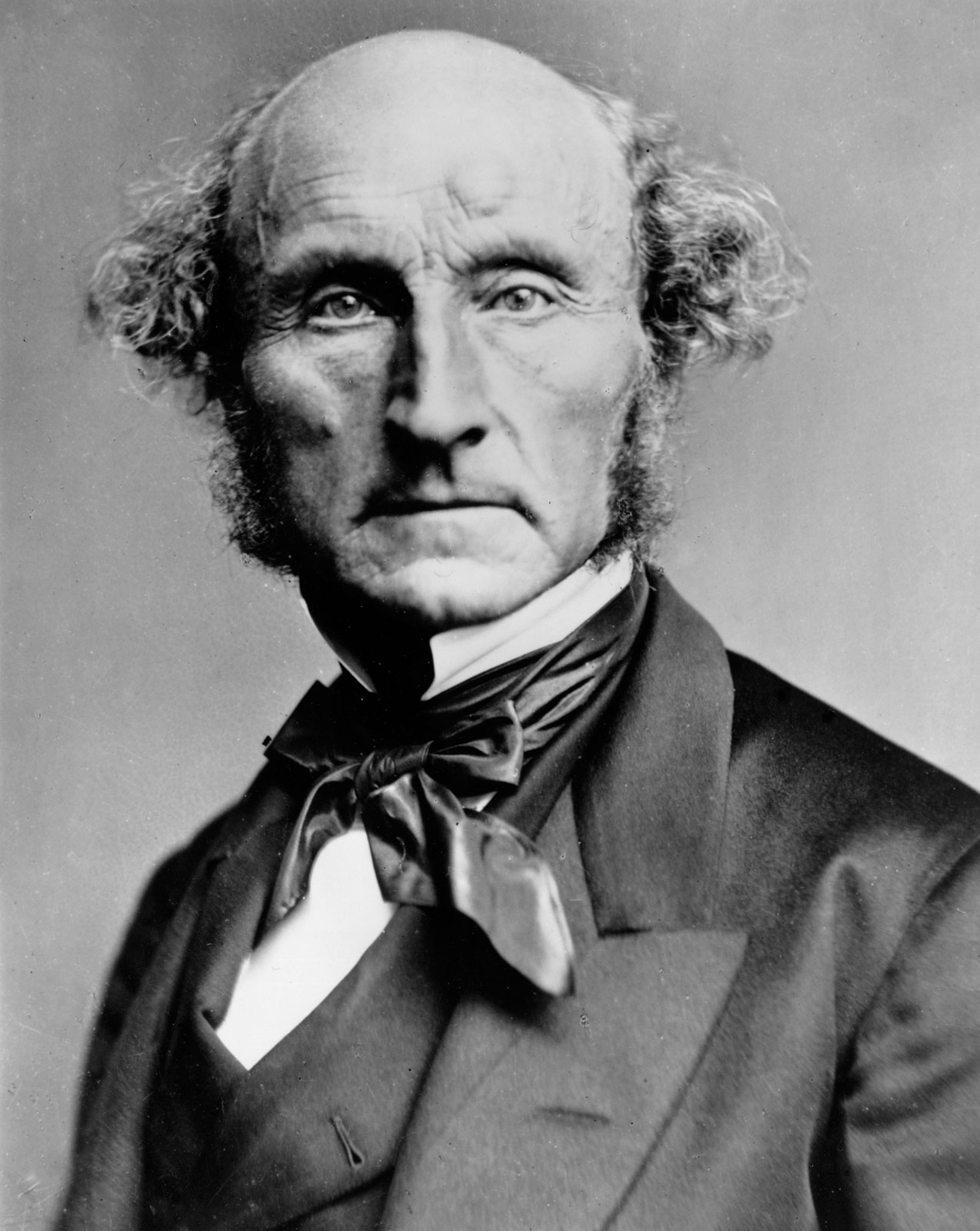
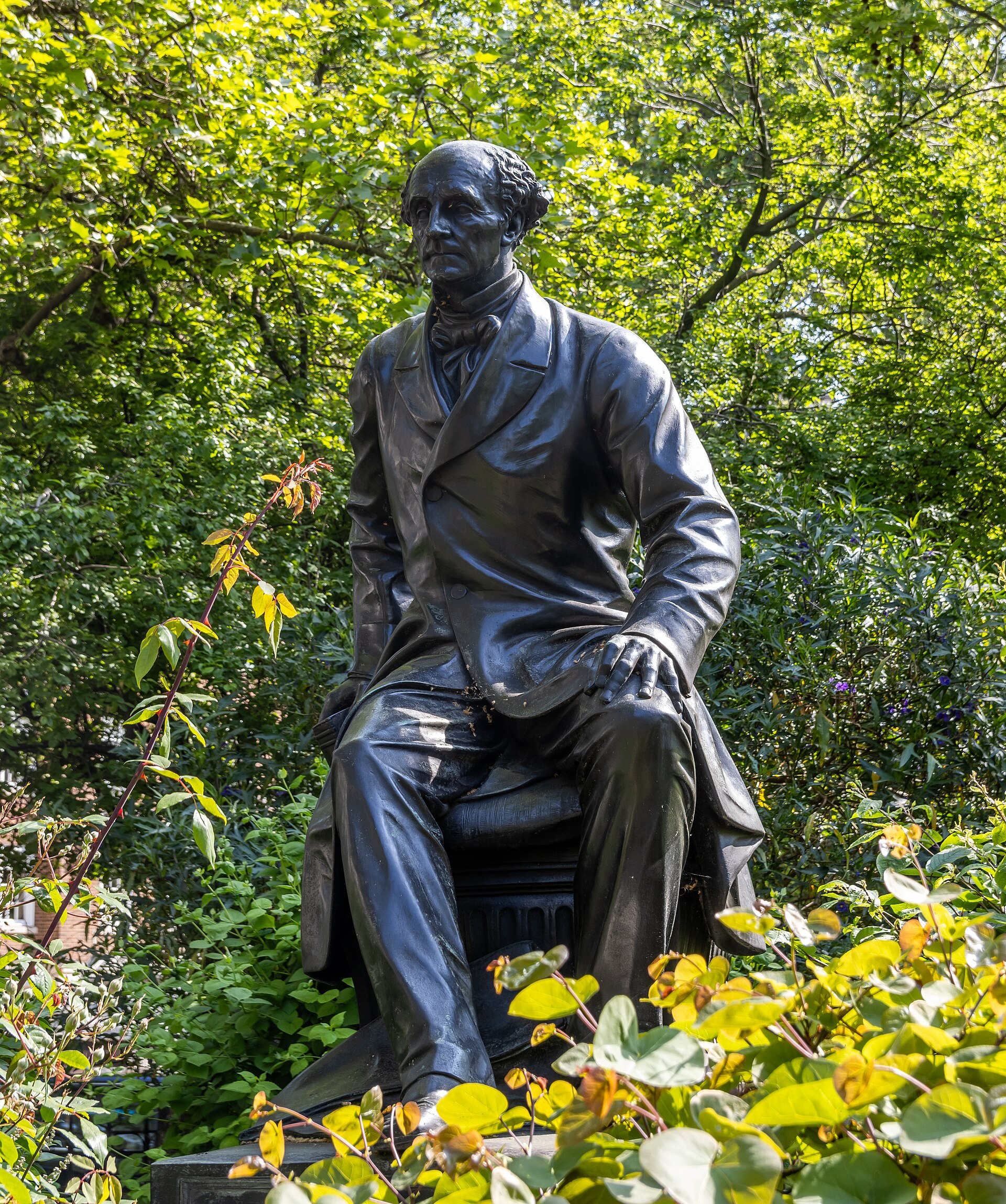
“It is better to be a human being dissatisfied than a pig satisfied; better to be Socrates dissatisfied than a fool satisfied.”
Mill, Utilitarianism
“The only freedom which deserves the name is that of pursuing our own good in our own way.”
Mill, On Liberty
“Over himself, over his own body and mind, the individual is sovereign.”
Mill, On Liberty
Mill's lens is the greatest good, freely chosen — to weigh actions by the well-being they create for everyone, while fiercely protecting each person's freedom to pursue the good their own way.
Mill is the great counterweight to Kant: where Kant judges the principle, Mill judges the results. Together they frame the central argument of modern ethics — duty versus consequences.
And his harm principle extends Locke's liberty into everyday life: you are sovereign over yourself, so long as you harm no one else.
Judge by results — the greatest well-being for the greatest number.
Judge by principle — act only on rules you could will for everyone.
The ethical view that the right action is the one that produces the greatest overall happiness or well-being, counting everyone affected equally. Mill is its most influential exponent.
Mill's idea, from On Liberty, that the only legitimate reason to restrict someone's freedom is to prevent harm to others. Over yourself, you are sovereign.
Mill's distinction that intellectual, moral, and aesthetic pleasures are higher in kind than purely physical ones — so quality of happiness, not just quantity, matters.
Mill judges actions by their consequences (the well-being they produce); Kant judges them by the principle behind them and whether it could be a universal law. Consequences versus duty.
When I am not reading Homer or Nietzsche, I tune databases, design high-availability systems, and run cloud migrations.