Anarchism is the most misunderstood word in politics. It does not mean chaos; it means a society with no rulers, held together by cooperation instead of command. Its wager is that most hierarchy is not necessary but imposed, and that free people, left to organize themselves, will build more order from the bottom up than any state builds from the top down. Take that seriously and it stops sounding like a smashed window and starts sounding like a hard question.
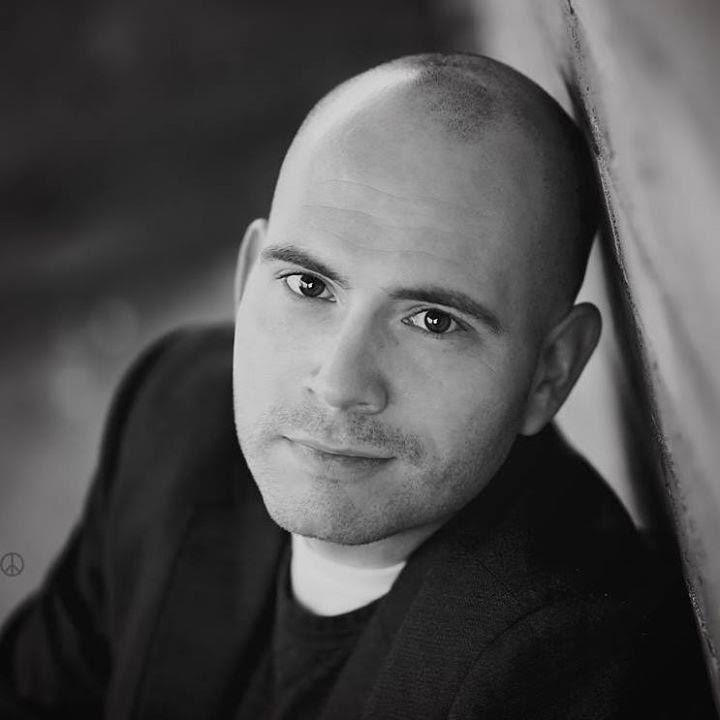
Michael Paycer
No rulers, not no order
Proudhon, Bakunin, Kropotkin
The strong fill the vacuum
The value anarchism guards is freedom from domination, and it applies that test more radically than any other ideology. Where the liberal accepts a limited state as a necessary referee, the anarchist asks the referee to justify itself, and concludes it usually cannot. Every authority, the boss, the landlord, the state, must show why its power over you is legitimate; if it cannot, it should be dismantled. What remains is not a vacuum but a web of voluntary association: people cooperating because they choose to, not because they are compelled.
Pierre-Joseph Proudhon opened the tradition with a scandalous line, that property, meaning the power to live off others' labor, is theft. Mikhail Bakunin turned it into a movement and fought Karl Marx over it, warning that a socialist state would become a new tyranny wearing red. Peter Kropotkin gave it a scientific spine with mutual aid, arguing that cooperation, not just competition, is a driving force in nature and human history. Their shared claim: order can grow from the ground up.
Property is theft.
Pierre-Joseph Proudhon, What Is Property?
The mutual-aid tendency in man has so remote an origin, and is so deeply interwoven with all the past evolution of the human race, that it has been maintained by mankind up to the present time.
Peter Kropotkin, Mutual Aid
Anarchists agree on what to abolish and argue about what replaces it. Mutualists keep markets but make workers the owners. Anarcho-communists, following Kropotkin, abolish private property and organize around need. Anarcho-syndicalists build power through radical labor unions that could run the economy directly. Individualist anarchists stress personal sovereignty above all. And anarcho-capitalists, a contested branch, want to keep private property and markets while abolishing the state entirely, a position many other anarchists reject as a contradiction.
The oldest objection is the one Thomas Hobbes would raise: remove the state and you do not get cooperation, you get whoever is strongest filling the vacuum. Power abhors emptiness; abolish the government and warlords, gangs, or corporations become the new rulers, only now with no law above them. A second objection is practical: voluntary cooperation works beautifully in a village and strains at the scale of millions of strangers, where free-rider problems, coordination, and defense against outside aggression all demand something that looks a lot like a state. Anarchists answer that federation and mutual aid can scale, and that the state's own record of war and repression is hardly a reassuring alternative. The disagreement is old and unresolved.
Anarchism keeps the most uncomfortable question in politics alive: how much of the authority we obey is truly necessary, and how much is just old? Even skeptics are sharper for having to answer it.
The political philosophy that opposes the coercive state and all unjustified hierarchy, and argues people can organize through voluntary, cooperative association instead. The word means "without rulers," not "without order." Most anarchists want more bottom-up organization, not less.
No. Anarchism opposes rulers, not rules or order. Anarchist thought is full of proposals for coordinating a stateless society: cooperatives, federations of communes, mutual-aid networks, voluntary contracts. The claim is that order can emerge from free cooperation rather than being imposed.
Mutualism (Proudhon) favors worker-owned enterprise. Anarcho-communism (Kropotkin) abolishes private property and organizes around need. Anarcho-syndicalism works through radical unions. Individualist anarchism stresses autonomy. Anarcho-capitalism, a contested outlier, keeps markets but abolishes the state.
That without a state to check them, the strong or well-organized would dominate everyone else, so abolishing government relocates power rather than dissolving it. Critics also cite collective-action problems, defense against aggression, and the difficulty of scaling voluntary cooperation.
When I’m not asking which authorities are actually necessary, I tune databases, design high-availability systems, and run cloud migrations.