Religion · Michael Paycer

When belief stops being a story
and becomes a claim.

Religion is reason turned on the divine — thinking as rigorously about God as we think about anything else, then defending the answer once you've committed to it. Where myth narrates the sacred, religion argues about it. This room isn't here to preach; it's here to lay the claims side by side and see how they hold.

Michael Paycer Michael Paycer
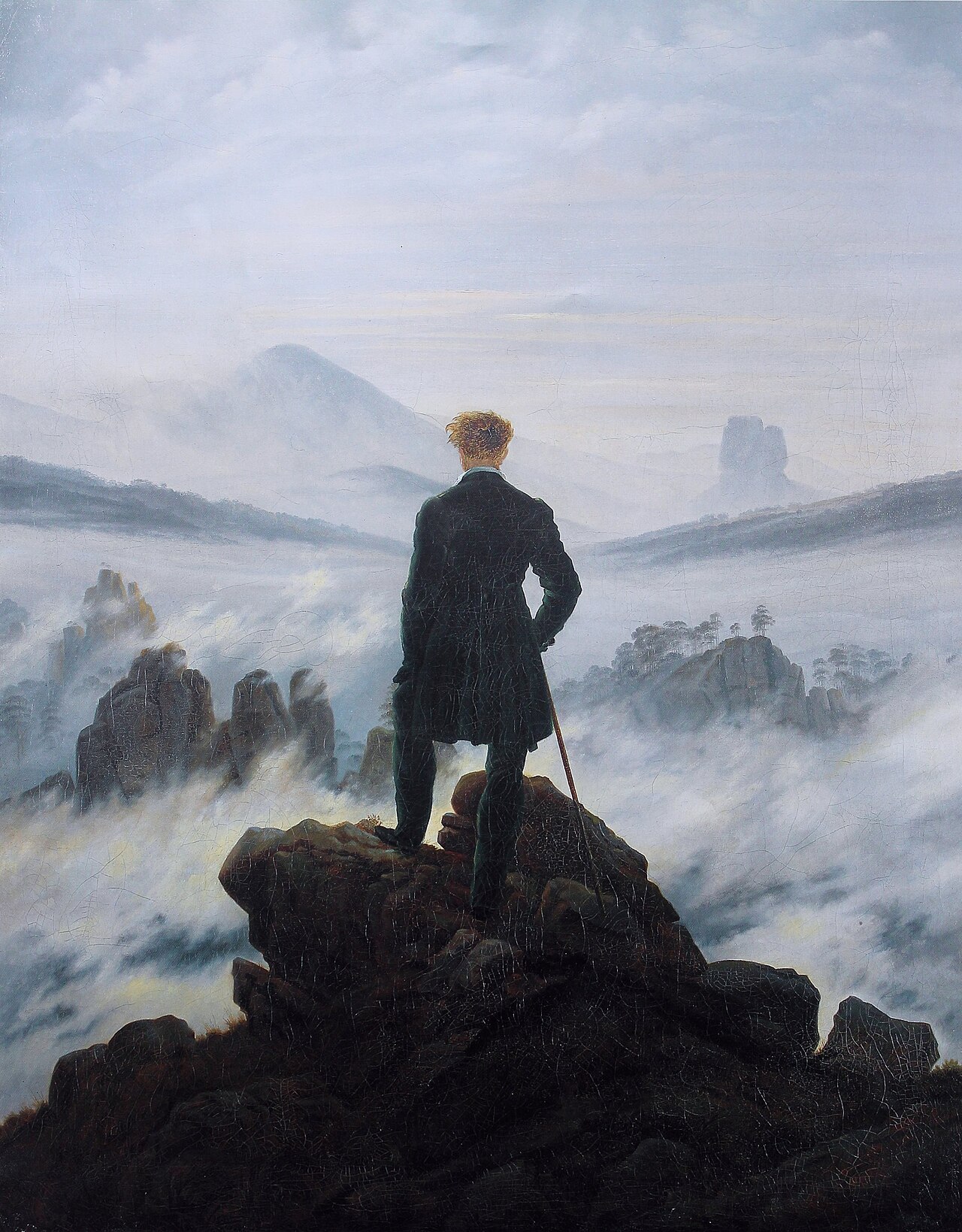
Caspar David Friedrich, Wanderer above the Sea of Fog
Wanderer above the Sea of Fog. Caspar David Friedrich's solitary figure stands before an expanse he cannot see across, the mood of nearly every question in this room. Caspar David Friedrich, 1818 · Public domain via Wikimedia Commons
Two ways in

Compare the faiths, or weigh the arguments

One path sets the great traditions beside each other on the questions that matter. The other asks the harder thing: not what people believe, but whether the reasons stand up.

The Traditions

Belief, compared

Christianity, Buddhism, and Taoism don't just hold different beliefs — they answer different questions, and answer shared ones in ways worth putting side by side. Comparison, not a catalog.

See the approach →
The Arguments

Does it hold up?

Does God exist? Why is there suffering? Can faith and reason share a room? The classic proofs and their strongest objections, laid out so you can judge for yourself.

Weigh the case →
The through-line

Myth tells the story. Theology defends the claim. The interesting work is deciding which claims survive the questions.

World Traditions

How the traditions answer the big questions

Not "here is what Christianity is" — the encyclopedias own that. Here is how three very different traditions answer the same human questions, and where they part ways. Stoicism sits in as the philosophical yardstick they all get measured against.

Theistic · the Western reference point

Christianity

Suffering enters a good world and is answered by a God who suffers too. Meaning runs through fall, grace, and redemption — the claim that the divine stepped into the wound rather than explaining it away.

→ Suffering as redemptive; the soul; a personal God who acts in history. Step inside →
Non-theistic · the great Eastern challenge

Buddhism

No creator to defend, and no fixed self to save. Suffering comes from clinging; the way out is to loosen the grip. A religion that answers the big questions by dissolving one of them.

→ Dukkha and detachment; no-self (anatta); Nirvana instead of God. Step inside →
Naturalistic · the way of the Tao

Taoism

Stop fighting the current. The Tao can't be named or argued into a system; you align with it by doing less, forcing nothing — wu wei. Meaning as harmony, not doctrine.

→ The Tao vs. a personal God; wu wei; the self as part of nature. Step inside →
The yardstick · philosophy, not religion

Stoicism

The reference point every comparison keeps returning to: control what you can, accept what you can't, and let reason govern the rest. Placed here because the sharpest questions are "Buddhism vs. Stoicism," "Taoism vs. Stoicism."

→ Reason and acceptance; virtue as the only good; the examined life.
Open in this room:

Where they meet

Three paths, one place they converge

Read them side by side and a single thread appears. Much of what these traditions call suffering, striving, and grief comes from the same habit — the grip we keep on a world that was never going to hold still. Each teaches a different way to open the hand: Buddhist equanimity, Taoist wu wei, Christian surrender. The pages here follow that thread across the traditions.

The through-line

Buddhism trains the grip loose. Taoism stops forcing the current. Christianity hands the grip to God. Different answers — one diagnosis of the ache.

Follow the thread:

Philosophy of Religion

The questions we'll actually sit with

The traditions tell you what people believe. This is the harder room: whether the reasons hold. Each question gets the strongest case on both sides — steelmanned, attributed, and left for you to judge.

The oldest question

Does God exist?

The cosmological, design, and ontological arguments — and the objections that have shadowed each one for centuries. What would even count as evidence, either way?

→ Aquinas, Anselm, Paley — and Hume and Kant answering back.
The hardest objection

If God is good, why is there suffering?

The problem of evil is the strongest case against a good, all-powerful God — and theodicy is the long attempt to answer it. Every tradition upstairs meets this question differently.

→ Epicurus, the free-will defense, Job, and the limits of theodicy.
The standoff

Can faith and reason share a room?

Are they rivals, partners, or answers to different questions entirely? From Aquinas holding them together to Kierkegaard's leap that gives up on proof.

→ Natural theology vs. the leap of faith.
The puzzles

What kind of God are we even arguing about?

The omnipotence paradox, foreknowledge against free will, and the gap between the God of the philosophers and the God people actually pray to.

→ Can God make a stone he cannot lift? Pascal's distinction.

Explore the arguments:

The day job

Built by a SQL Server consultant

When I'm not weighing the argument from evil, I tune databases, design high-availability systems, and run cloud migrations.

See what I do →