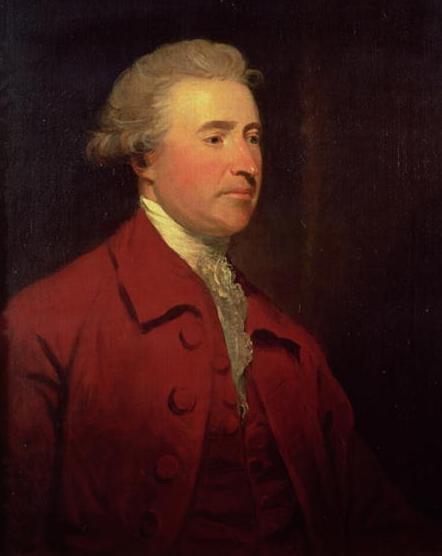
Conservatism is less a blueprint than a temperament: a deep respect for what has lasted, and a deep suspicion of anyone who promises to remake society from scratch. It treats a working institution as accumulated wisdom you did not write and may not fully understand, and it would rather mend than demolish. Its patron saint watched a revolution promise heaven and deliver the guillotine.
Michael Paycer
Order, tradition, gradual change
Edmund Burke
Caution can shield injustice
Conservatism starts from a modest and unfashionable claim: human reason is limited, and society is far more complicated than any one mind can grasp. The institutions we inherit, the family, the market, the church, the common law, were not designed by anyone; they grew, generation by generation, keeping what worked and discarding what did not. To the conservative, that slow filtering is a kind of intelligence, and the reformer with a clean sheet of paper is more dangerous than he looks, because he is confident about a system he does not understand.
Edmund Burke gave the view its founding text when he watched the French Revolution up close. Where the revolutionaries saw a rotten order to sweep away and rebuild on reason, Burke saw a living inheritance being torn apart by people who had no idea what they were unleashing. He was not against all change; he called a state without the means of change one without the means of its own survival. But change, for him, should be gradual, tested, and grafted onto what already lives.
A state without the means of some change is without the means of its conservation.
Edmund Burke, Reflections on the Revolution in France
Do not remove a fence until you know the reason it was put up.
G.K. Chesterton, paraphrased (Chesterton's fence)
The philosopher Michael Oakeshott argued that to be conservative is to prefer the familiar to the unknown, the tried to the untried, the actual to the possible. That makes conservatism unusually flexible. What it defends depends on where it stands: a conservative in one country guards different institutions than a conservative in another, and today's radical proposal is tomorrow's tradition to be conserved. This is why the label attaches to very different programs, from free-market fusionism to throne-and-altar traditionalism. The constant is not a policy but a posture toward change.
The sharpest objection is that caution has a body count. Many of the traditions conservatism has defended, slavery, the subjection of women, rigid class and caste, were not misunderstood wisdom but plain injustice, and the counsel to go slow has often been the establishment's way of never going at all. Abolitionists and civil-rights reformers heard "not yet" for generations. A second objection is that conservatism can struggle to say what it is for: defined mainly by what it resists, it can look less like a vision than a brake. Defenders answer that a brake is exactly what a fast-moving vehicle needs, and that the burden of proof should sit with the person proposing to change what has worked.
Conservatism is the standing reminder that societies are easier to break than to build. Its gift is patience; its danger is that patience and complacency look identical from the outside.
The political disposition that values order, continuity, and inherited institutions, and treats rapid or radical change with suspicion. It holds that society is a fragile inheritance built over generations, that reason is limited, and that reform should be gradual and grounded in experience.
Often called the father of modern conservatism, Burke argued that society is a partnership across generations, not a machine to redesign. He defended gradual reform over revolution and warned that tearing down institutions for abstract principle usually ends in chaos and tyranny.
A principle from G.K. Chesterton: before removing a fence that seems pointless, first find out why it was put there. It captures the conservative instinct that existing arrangements often serve purposes their critics have not noticed.
That its caution can defend injustice, since many traditions worth conserving were also unjust, and "go slow" has resisted reforms like abolition and civil rights. Critics also say it lacks a positive vision, defining itself by what it resists.
When I’m not defending Chesterton's fence, I tune databases, design high-availability systems, and run cloud migrations.