How to Live · Enlightenment · Liberty
John Locke: Protect Liberty and Rights
The English philosopher whose ideas about natural rights and government by consent shaped modern democracy — including the American founding.
 Michael Paycer
The English philosopher whose ideas about natural rights and government by consent shaped modern democracy — including the American founding.
Michael PaycerLived
1632–1704
Era
English Enlightenment
Lens
Protect liberty and rights
Key works
Two Treatises of Government; Essay Concerning Human Understanding
John Locke is the father of classical liberalism. He argued that people possess natural rights — to life, liberty, and property — that exist before any government, and that governments are legitimate only when they protect those rights with the consent of the governed.
His lens: protect liberty and rights. Power must answer to the people, and when a government turns tyrannical, the people may rightfully resist it.
Locke lived through the turbulence of the English Civil War and the Glorious Revolution of 1688, which shaped his suspicion of absolute power. He wrote his Two Treatises of Government partly to justify a constitutional, limited monarchy.
His influence on the modern world is hard to overstate: Jefferson's "life, liberty, and the pursuit of happiness" echoes Locke directly, and his ideas underpin constitutional democracy and human rights.
People are born with rights to life, liberty, and property that no king or government grants — and therefore none may justly take away. Government exists to secure them.
Legitimate authority rests on the consent of the governed, formalized in a 'social contract.' A government that violates the people's rights forfeits its legitimacy and may be replaced.
In his Essay Concerning Human Understanding, Locke argued the mind begins as a blank slate, filled by experience — a foundational idea for empiricism and modern psychology.
In his Letter Concerning Toleration, Locke argued that government should not enforce religious belief — that faith coerced is worthless, and the state's job is civil order, not the salvation of souls. It is a founding text of the separation of church and state.
Locke held that we acquire property by "mixing our labor" with the world — a hugely influential (and much-debated) account of where ownership legitimately comes from, shaping economics and political theory ever since.
Locke is the father of classical liberalism, and his fingerprints are all over the modern democratic world. Jefferson's "life, liberty, and the pursuit of happiness" reworks Locke directly, and his theory of government by consent underpins constitutions from the American to many that followed.
As an empiricist, his "blank slate" account of the mind launched a tradition running through Berkeley and Hume into modern psychology. Few philosophers have so directly shaped both how we are governed and how we understand the human mind.
The limits of property. Locke justified private property through labor, but added that one may take only "where there is enough, and as good, left for others." Critics from his day to ours ask whether that proviso survives in a crowded world of vast inequality — a debate at the root of modern political economy.
The problem of consent. Locke grounded government in consent, yet almost no one literally consents to the state they are born into. His notion of "tacit consent" has been picked at ever since: in what real sense have any of us agreed to be governed?
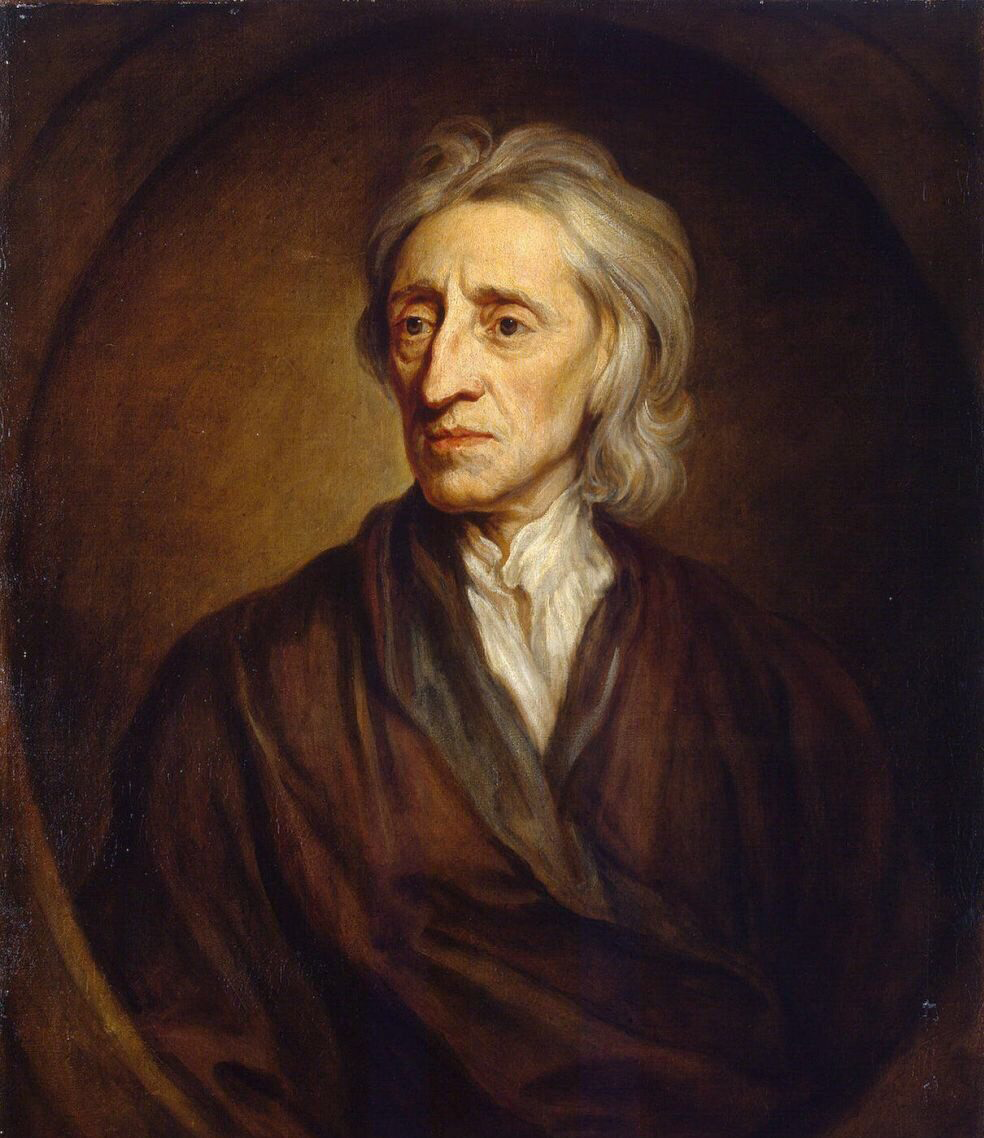
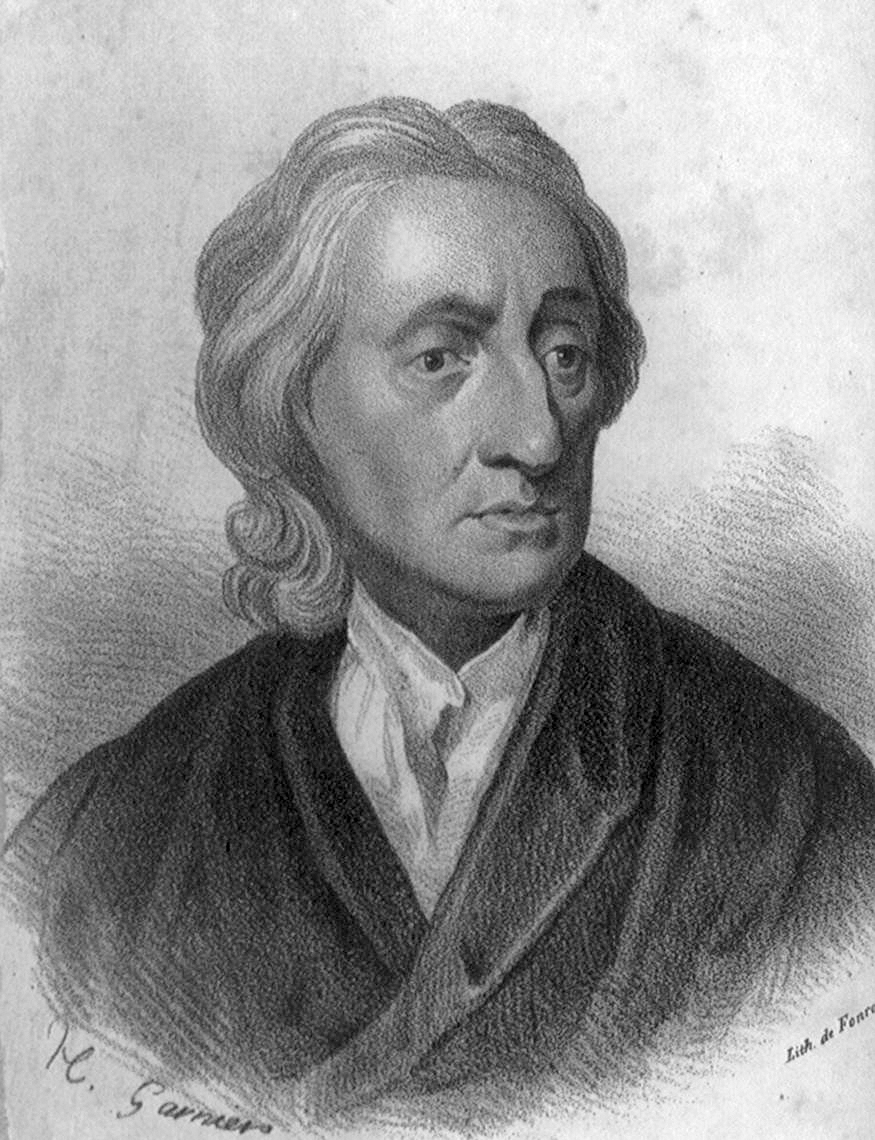
Public-domain portraits and depictions — click any image to view it full size.
“Where there is no law, there is no freedom.”
Locke, Second Treatise of Government
“No man's knowledge here can go beyond his experience.”
Locke, Essay Concerning Human Understanding
“The end of law is not to abolish or restrain, but to preserve and enlarge freedom.”
Locke, Second Treatise of Government
Locke's lens is to protect liberty and rights — to treat freedom and consent as the foundation of any just society, and power as something that must always answer to the governed.
Locke turns the ancient question of justice — the one Zeus and Plato's Republic raise — into the modern language of rights. Where the Greeks asked whether power and justice align, Locke answers: only when power rests on consent and protects liberty.
It is the philosophical seed of constitutional democracy, and one of the most consequential lenses on this list for how we actually live.
People are reasonable and rights-bearing; government exists to protect liberty, by consent.
People are dangerous without order; a strong sovereign is needed to prevent chaos.
The rights to life, liberty, and property, which Locke held belong to people by nature — before and independent of any government — and which government exists to protect.
The idea that political authority rests on the consent of the governed. People agree to form a government to protect their rights; if it violates them, it loses legitimacy.
Deeply. Jefferson's 'life, liberty, and the pursuit of happiness' in the Declaration of Independence echoes Locke's 'life, liberty, and property' and his theory of government by consent.
Locke's idea that the mind begins as a 'blank slate' with no innate ideas, and is filled entirely by experience — a cornerstone of empiricist philosophy.
When I am not reading Homer or Nietzsche, I tune databases, design high-availability systems, and run cloud migrations.