Heroes · Sea-Nymph · Fate · Grief
Thetis, Mother of Achilles
A sea-nymph who knows her son is destined for glory and an early death — and who cannot save him.
 Michael Paycer
A sea-nymph who knows her son is destined for glory and an early death — and who cannot save him.
Michael PaycerRole
Sea-nymph (Nereid); mother of Achilles
Symbols
The sea, waves, shape-shifting
Domain
Sea, motherhood, fate, grief
Family
Daughter of Nereus; wife of Peleus; mother of Achilles
Thetis is a sea-nymph, one of the fifty daughters of the sea-god Nereus, and the mother of Achilles by the mortal king Peleus. She is not an Olympian, but she is among the most important figures in the Iliad's emotional architecture.
Her story is tragic at its root: she knows her son is fated both for greatness and for an early death. She tries to protect him, but she cannot change his fate.
Both Zeus and Poseidon desired Thetis — until a prophecy warned that her son would be greater than his father. To contain that danger, the gods married her off to a mortal, Peleus. At their wedding, the goddess Eris threw down a golden apple “to the fairest,” setting off the quarrel that led, through the Judgment of Paris, to the Trojan War.
As a sea-deity she could change shape at will, and she resisted Peleus by becoming fire, water, and beasts before consenting — an old motif of the elusive, shape-shifting sea.
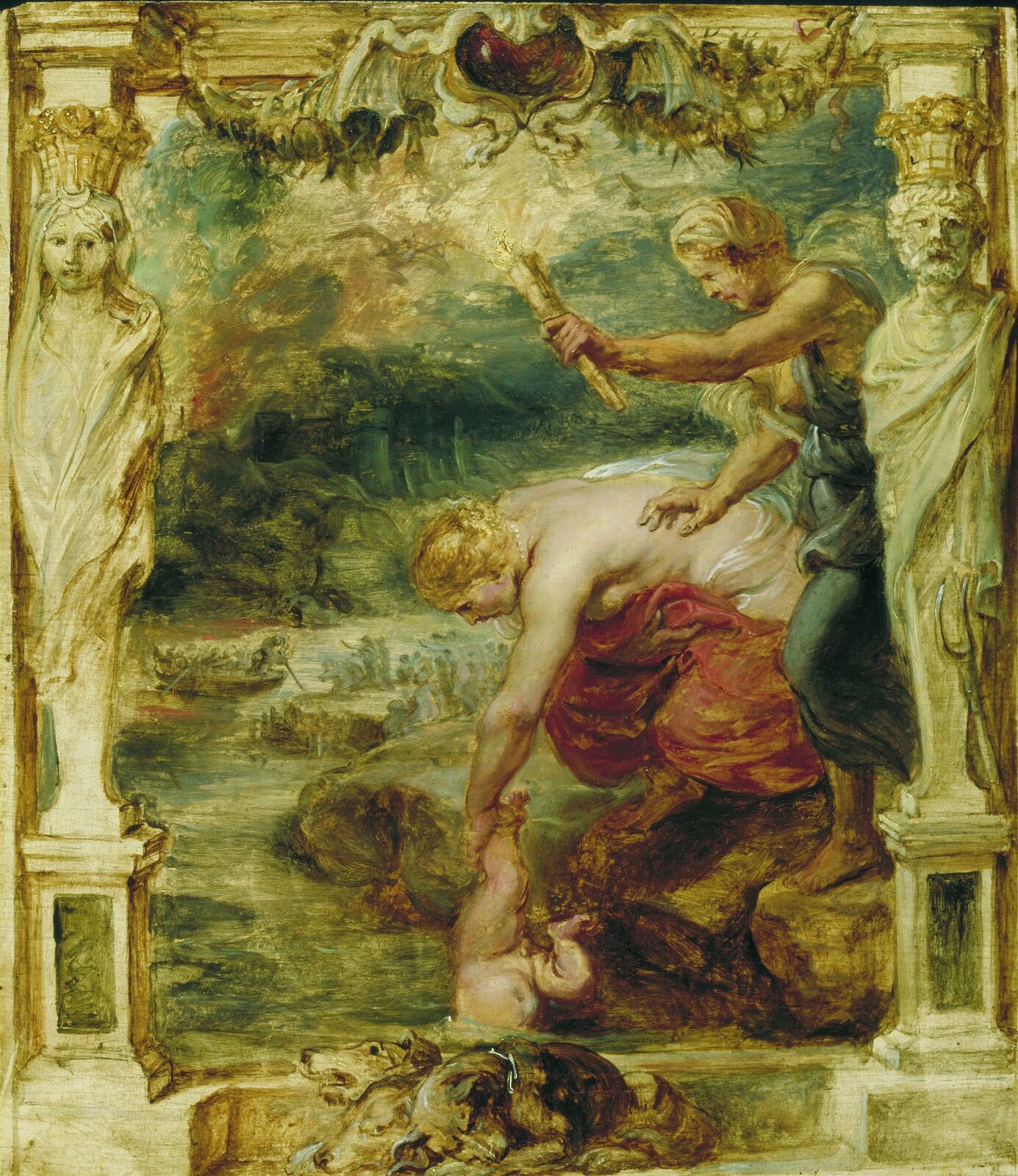
In a later (post-Homeric) tradition, Thetis tried to make the infant Achilles invulnerable by dipping him in the River Styx, holding him by the heel — which stayed dry, and vulnerable. This is the origin of the phrase “Achilles' heel.” It does not appear in Homer, where Achilles is simply mortal.
In the Iliad, when Achilles is dishonored, he goes to his mother. Thetis comforts him and rises to Olympus to appeal to Zeus on his behalf — setting much of the poem's tragedy in motion.
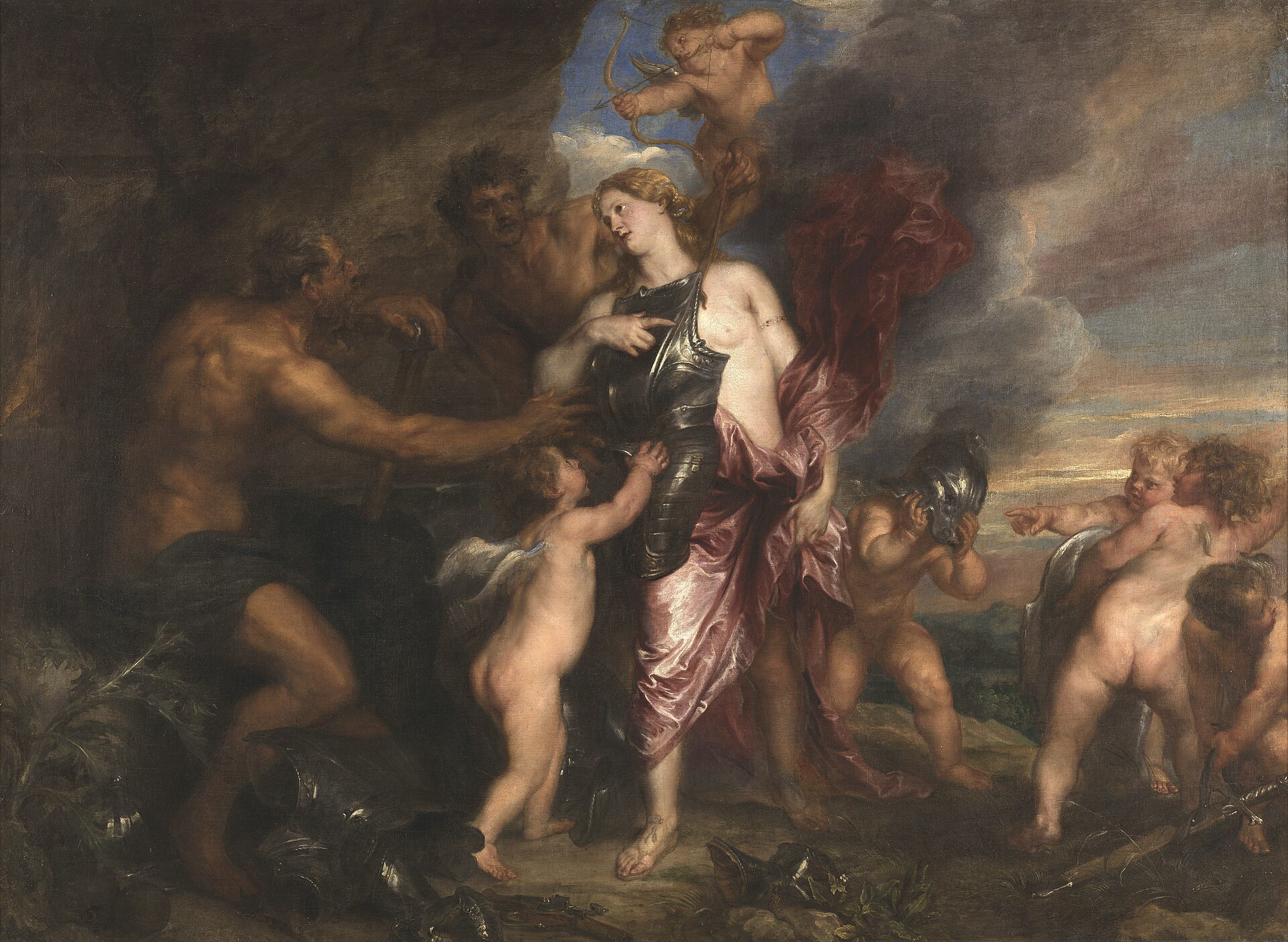
After Patroclus dies wearing Achilles' armor, Thetis goes to Hephaestus and has him forge a magnificent new suit — the famous shield among it — for her son's return to battle, and to his fate.
At the wedding of Thetis and Peleus, the uninvited goddess of discord, Eris, threw down a golden apple inscribed "to the fairest." The quarrel it sparked among Hera, Athena, and Aphrodite led to the Judgment of Paris — and the Trojan War. Thetis' own wedding lit the fuse of her son's doom.
In the Iliad, Thetis is remembered as a protector even of the immortals — she sheltered Hephaestus when he was cast from Olympus, and freed Zeus himself when other gods tried to bind him. Her power to help is real; her power to save her son is not.
Thetis gives the Iliad its tragic depth: through her, the poem of war becomes also the story of a mother who knows her child will die and cannot stop it. That image — divine love powerless against fate — has drawn painters from Ingres to the Romantics and writers down to the present.
She endures as the human face of the section's hardest question. Where Achilles asks whether glory is worth an early death, Thetis asks what such a choice costs those who love the hero — a reminder that no life, however heroic, is lived alone.
Thetis symbolizes a parent's love straining against fate — doing everything in her power, and still unable to save her child. Her shape-shifting, sea-nymph nature makes her an image of love that is fluid, fierce, and ultimately powerless before destiny.
Through her, the war epic becomes a family tragedy. She stands for everyone who loves a person walking toward danger they cannot prevent, and for the truth that no life, however heroic, is lived or lost alone.
Famous public-domain depictions — click any image to view it full size.
“Ah me, my child! Why did I rear you, born to sorrow? Short is your life, my son, and full of grief beyond all men.”
Homer, Iliad 1 — Thetis to Achilles (paraphrase)
“Since, then, your life is to be short, let me at least win you honor.”
after Homer, Iliad — Thetis (paraphrase)
“I gave him birth for sorrow.”
Homer, Iliad — Thetis of Achilles
Thetis represents the painful truth that even love cannot fully protect someone from fate, suffering, or death.
She sits at the meeting point of several great themes: fate versus free will (she knows the destiny but cannot move it), parental love (she adores a son she will lose), and grief (she embodies the sorrow of knowing loss is coming before it comes).
Through Thetis, Achilles's story becomes more than a warrior's. It becomes a mother watching her child walk toward death — which deepens the question at the center of his life: is a short, glorious life worth its cost, not only to him but to those who love him?
A mother's love straining against destiny — doing everything, changing nothing.
Destiny that no god or parent can unspin — what is woven stays woven.
A sea-nymph, one of the fifty Nereids, and the mother of Achilles by the mortal king Peleus. She plays a central, tragic role in Homer's Iliad.
Only in later tradition. The story of Thetis dipping him in the River Styx — leaving the heel vulnerable — is post-Homeric. In Homer, Achilles is a mortal warrior, not magically invulnerable.
She is Achilles' mother and his link to the gods: she comforts him, appeals to Zeus on his behalf, and brings him divine armor — and she knows, throughout, that he is fated to die young.
At her wedding to Peleus, Eris threw a golden apple 'to the fairest,' sparking the rivalry of three goddesses and the Judgment of Paris that led to the war.
When I am not reading Homer or Nietzsche, I tune databases, design high-availability systems, and run cloud migrations.