Heroes · Glory · Rage · Mortality
Achilles, the Short and Glorious Life
Half-divine, nearly unstoppable, and ruled by honor and grief — the hero who must choose between a long quiet life and a short blazing one.
 Michael Paycer
Half-divine, nearly unstoppable, and ruled by honor and grief — the hero who must choose between a long quiet life and a short blazing one.
Michael PaycerRole
Greatest Greek warrior at Troy
Symbols
Spear, divine armor, the heel
Domain
Glory, rage, mortality
Family
Son of Peleus & the sea-nymph Thetis
Achilles is the central warrior of Homer's Iliad — half-divine through his mother, the sea-nymph Thetis, and nearly unbeatable in battle. He is ruled by two forces: the hunger for honor, and, finally, grief.
His mother knows his fate: either a long, obscure life at home, or a short life crowned with everlasting glory at Troy. The whole poem turns on that choice.
Achilles was raised in part by the wise centaur Chiron and led the Myrmidons of Phthia to Troy. The Iliad covers only a few weeks late in the ten-year war, but it makes him the measure of heroic greatness — and of heroic ruin.
A note on the famous “Achilles' heel”: in Homer, Achilles is simply a mortal warrior, not magically invulnerable. The story of Thetis dipping him in the River Styx and leaving one vulnerable heel comes from a much later Roman-era tradition (notably the poet Statius), not the Iliad.
When Agamemnon seizes his war-prize and dishonors him, Achilles withdraws from the fighting and the Greeks are nearly destroyed. His rage — the poem's very first word — is the engine of the whole story.
Only the death of his closest companion Patroclus, killed by Hector while wearing Achilles' armor, drives him back to war — not for politics, but for grief and vengeance.
Achilles kills Hector and desecrates his body, relenting only when Hector's aged father Priam comes alone to beg for it. The two weep together — the moment Achilles' humanity returns, and the Iliad's emotional summit.
Warned of her son's fate, Thetis hid the young Achilles disguised among the daughters of King Lycomedes. Odysseus exposed him by laying out gifts — and a sword, which Achilles instinctively seized. Even concealment could not keep him from his nature, or his fate.
In the war's later days Achilles killed the Amazon queen Penthesilea in single combat — and, as her helmet came off, fell in love with the dying woman. One of the most haunting images of the cost of his glory.
Achilles is the original Western hero, and the question his life poses — a short, brilliant life or a long, quiet one — has never stopped being asked. His name survives in the "Achilles' heel," the "Achilles tendon," and in countless retellings from Roman epic to modern novels like Madeline Miller's The Song of Achilles.
For philosophy he is the permanent test case of heroic ethics: Aristotle measured courage and excellence against figures like him, and every meditation on glory, mortality, rage, and grief in the Western tradition circles back to the wrath that opens the Iliad.
Achilles symbolizes the blazing, doomed brilliance of heroic glory — greatness that burns brightest precisely because it is brief. His "heel" became the universal image of the single fatal weakness in something otherwise invincible.
He is also the symbol of rage and its costs, and of the trade every ambitious life half-consciously makes: intensity and renown against length and peace. That he chooses the short, glorious life makes him the permanent test case for what, in the end, a human life is for.
Famous public-domain depictions — click any image to view it full size.
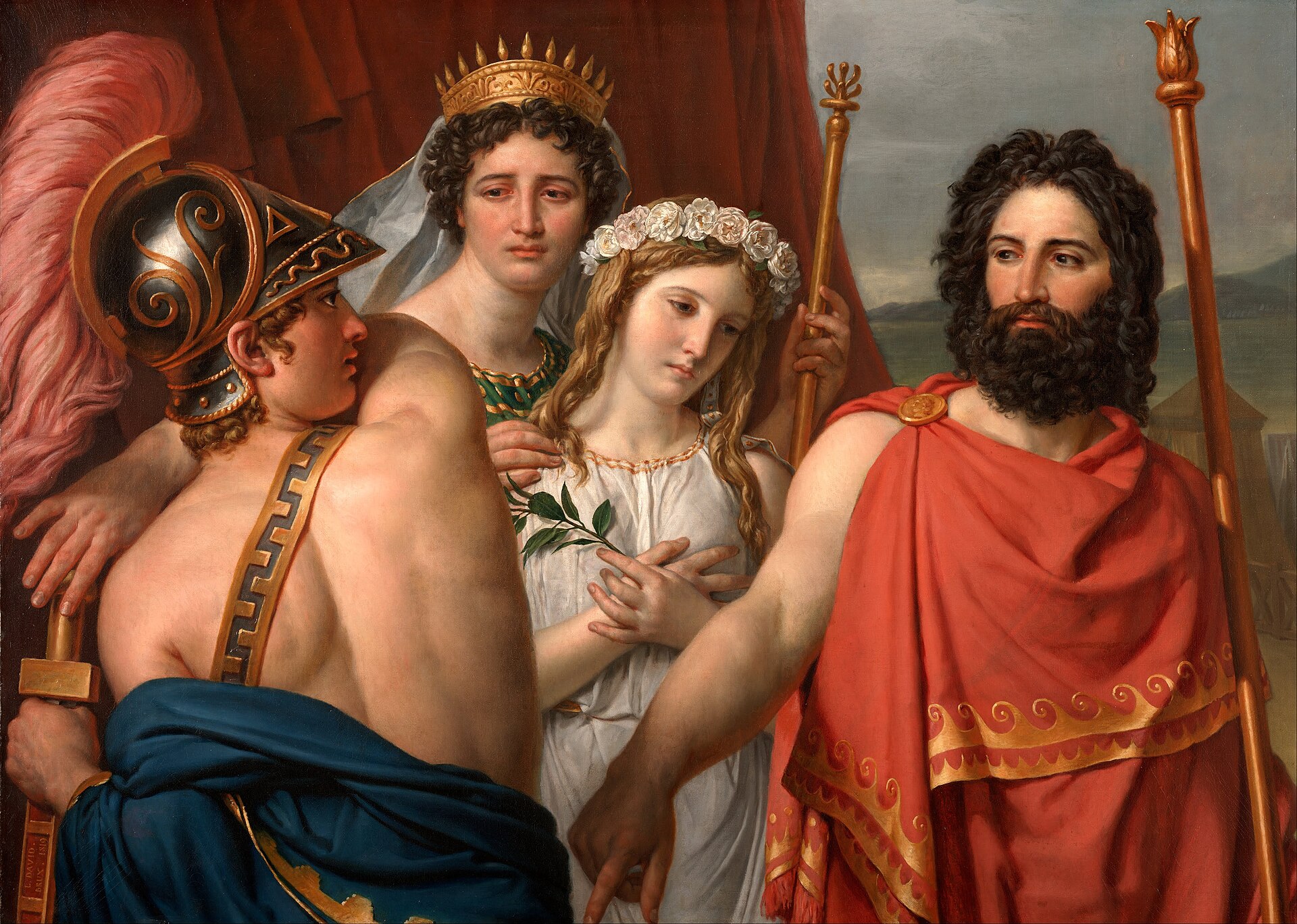
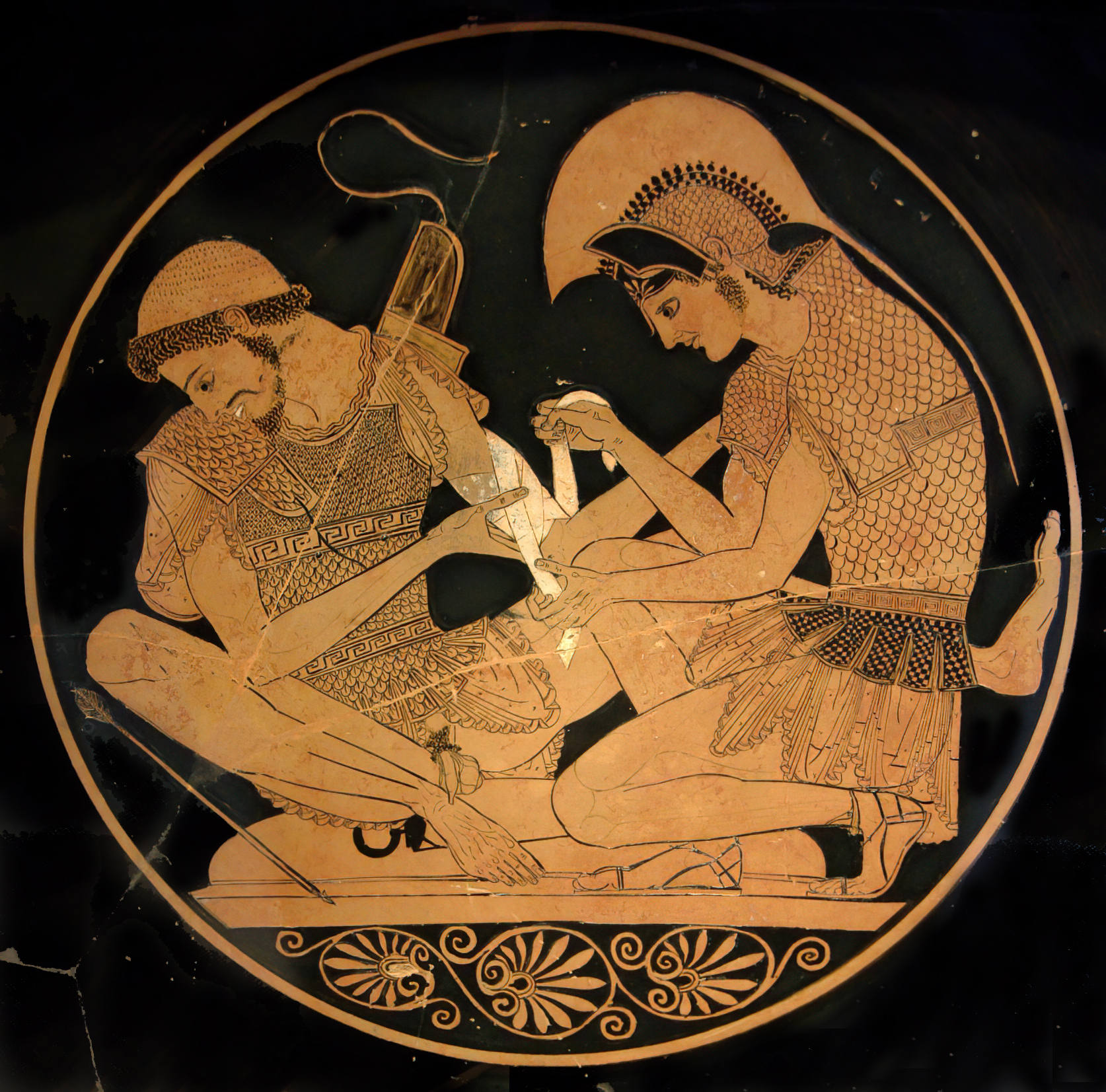
“Sing, goddess, the wrath of Achilles, son of Peleus — the accursed wrath that brought countless sorrows on the Greeks.”
Homer, Iliad, opening lines
“If I stay here and fight, I lose my homecoming but win unfading glory; if I go home, my glory dies, but I shall live long.”
Homer, Iliad 9 — Achilles, on his two fates
“I carry two sorts of destiny toward the day of my death.”
Homer, Iliad 9 — Achilles
Achilles holds the sharpest question in this whole section: a short life blazing with glory, or a long quiet one — and is the trade ever worth it?
His choice is the test case for ancient ethics. Aristotle asks what makes a life excellent and complete; Achilles trades length for honor and intensity, and the Iliad refuses to make the answer easy.
The poem also stages the limits of rage, and it is precisely his mortality that makes his glory mean anything — the gods, who cannot die, can be neither brave nor tragic. Through his mother Thetis, his story is also a parent's: love that cannot stop fate.
Strength, rage, and glory — greatness that burns fast and bright.
Cunning, patience, and endurance — survival and the long road home.
Not for honor or strategy but out of grief and rage after his closest companion Patroclus was killed by Hector. His private loss, not the war's politics, pulls him back.
That is the choice his mother Thetis lays before him, and the Iliad never makes it simple. He chooses glory and an early death — which is why his story became a touchstone for debates about what makes a life worth living.
No. In Homer, Achilles is a mortal warrior, not magically invulnerable. The dipping in the River Styx and the vulnerable heel come from a later Roman-era tradition, notably the poet Statius.
In the tradition after the Iliad, Achilles is killed by Paris, whose arrow — guided by Apollo — strikes him in the heel.
When I am not reading Homer or Nietzsche, I tune databases, design high-availability systems, and run cloud migrations.