The Olympians · Wisdom · Strategy · Craft
Athena, Goddess of Wisdom
Born fully armed from the head of Zeus — intelligence, discipline, and just warfare made divine. The closest the pantheon comes to philosophy itself.
 Michael Paycer
Born fully armed from the head of Zeus — intelligence, discipline, and just warfare made divine. The closest the pantheon comes to philosophy itself.
Michael PaycerRole
Wisdom, strategy, crafts, just war
Symbols
Owl, olive tree, aegis & shield, spear
Domain
Athens; practical wisdom
Family
Daughter of Zeus, born from his head
Athena is the goddess of wisdom, strategy, craft, and disciplined warfare — and the patron of Athens, the city that took her name. A sworn virgin goddess, she favors clever, self-possessed mortals like Odysseus and embodies reason over instinct.
Crucially, she represents war guided by intelligence and restraint, the opposite of Ares's blind violence. Where Ares is rage, Athena is the plan, the discipline, and the just cause. She is less “the smartest god” than the god of wisdom applied — to a life, a craft, a city.
Her birth is one of the strangest in myth: Zeus, having swallowed the pregnant Metis (“cunning intelligence”), is split open at the head by Hephaestus, and Athena springs out fully grown and armored. Wisdom, in other words, is born directly from the mind of the king of the gods.
Her worship centered on the Athenian Acropolis and the Parthenon, which housed Phidias's great gold-and-ivory statue of Athena Parthenos. The Panathenaic festival honored her as the city's protector and the patron of its artisans.
Athena and Poseidon competed to become the city's patron. Poseidon struck the rock and produced a saltwater spring; Athena planted the first olive tree. Judged the more valuable gift — food, oil, and peace — the olive won her the city forever.
The mortal weaver Arachne boasted she could out-weave Athena and challenged her. Athena's tapestry warned of mortals punished for hubris; when Arachne's rivaled it in skill, the goddess transformed her into a spider — a myth about talent, pride, and knowing one's place before the divine.
Athena steers Odysseus through the Odyssey and helps Perseus and Heracles. She is the divine intelligence behind heroic success — strategy, timing, and self-control rather than raw force.
Athena bears the aegis, a fearsome goatskin shield set with the head of the slain Gorgon Medusa, whose gaze turned enemies to stone. It made her a guardian figure — protection won through cunning and courage rather than brute force.
Athena gave Perseus the polished shield that let him behold Medusa safely, helped build the Argo and the Trojan Horse, and taught mortals weaving, pottery, and the olive. She is the goddess not just of thinking but of skilled making.
Athena's city kept her name, and the Parthenon that crowned its Acropolis remains the most famous building of the ancient world — the very emblem of classical civilization. Her owl became the universal symbol of wisdom, still stamped on book covers, university seals, and the old Greek drachma.
As the goddess of practical wisdom she stands behind every later ideal of reason applied to life: the Enlightenment chose her, helmeted and serene, as its emblem, and figures like Athena still represent learning and just authority in courthouses, libraries, and academies across the West.
Athena's symbols encode her nature: the owl, seeing in the dark, is insight that penetrates confusion; the olive tree is the cultivated, peaceful prosperity that wisdom makes possible; the aegis and spear are protection and just defense, never aggression for its own sake.
Psychologically she has long stood for the integrated, disciplined mind — reason that does not deny strength but governs it. Springing fully armed from the head of Zeus, she is the image of thought that is born ready to act, which is why she became the emblem of learning, strategy, and just authority across the West.
Famous public-domain depictions — click any image to view it full size.
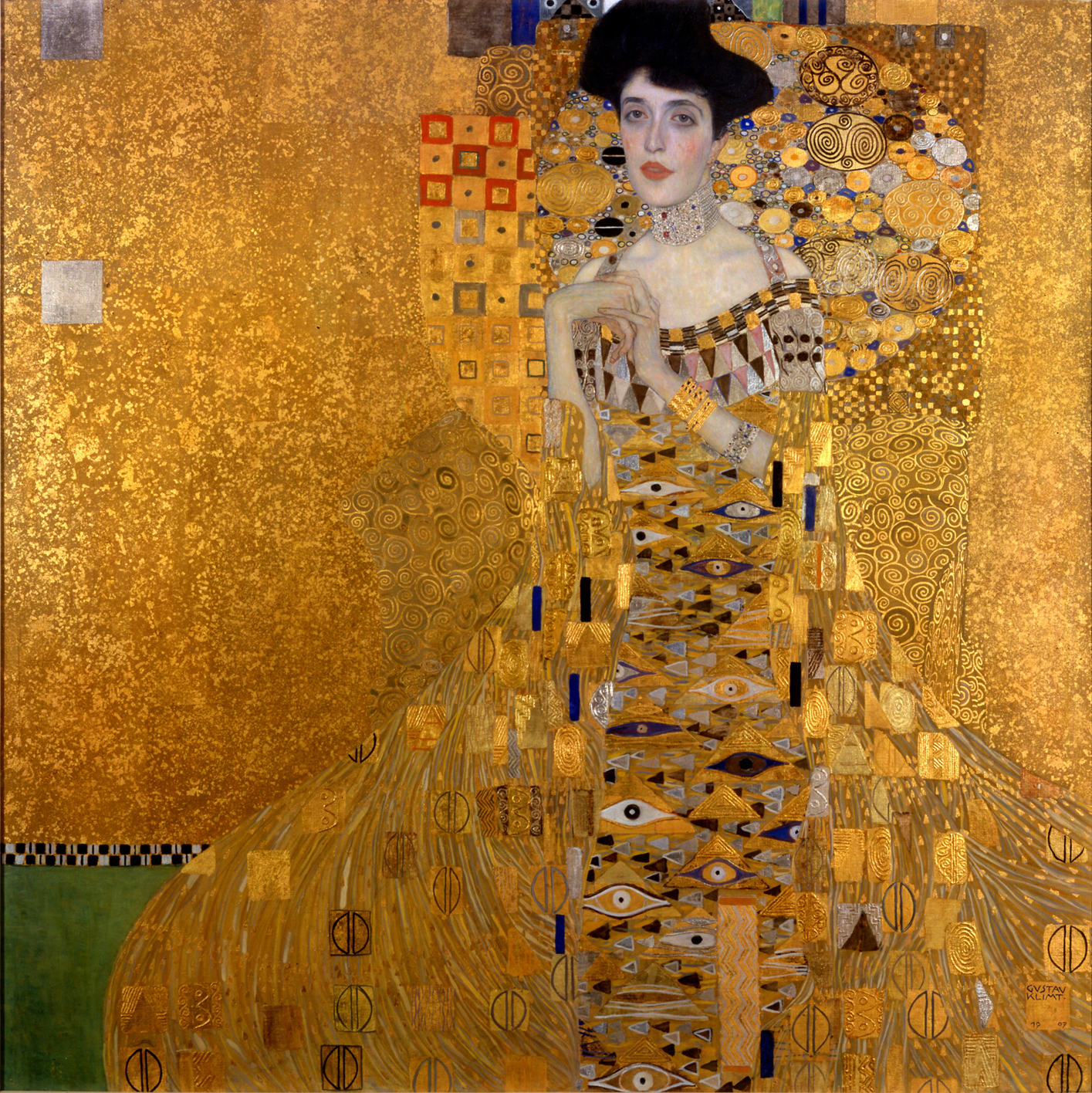
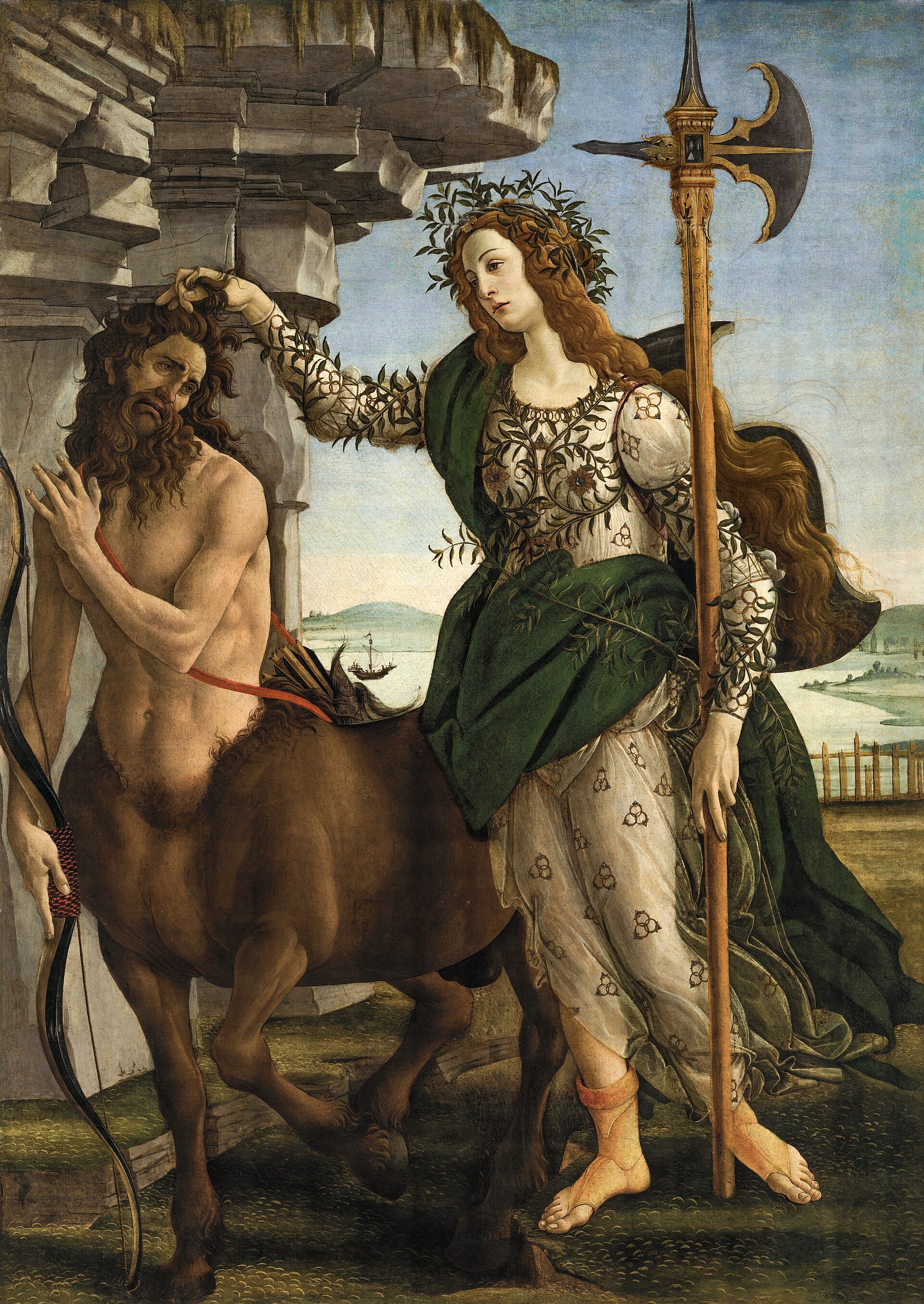
“Of Pallas Athena, guardian of the city, I begin to sing — dread goddess, who with Ares cares for works of war.”
Homeric Hymn 11, to Athena
“I am called Pallas Athena. Always I stand beside you in all your tasks and guard you.”
Homer, Odyssey 13 — Athena to Odysseus (paraphrase)
Athena is the closest the gods come to philosophy itself: not raw cleverness, but wisdom applied to how a person — and a city — should actually live.
The Greek idea behind her is phronesis, practical wisdom: the disciplined judgment that knows the right thing to do in real situations. Aristotle makes exactly this the center of his ethics — not abstract knowledge, but wise action.
She lines up with the whole rational tradition: Socrates' pursuit of wisdom, Plato's vision of reason ruling the soul and the city, Aristotle's prudent person who acts well by habit and judgment. Her standing contrast with Ares is the contrast between reason and appetite, strategy and rage.
War as strategy, discipline, and just cause — force governed by reason.
War as rage, slaughter, and bloodlust — force with no measure.
She embodies wisdom applied to life — strategy, craft, and sound judgment — born straight from Zeus's head. The Greeks prized this disciplined, practical intelligence over brute strength, which is why she became the patron of Athens and a model of reason.
Both are war deities, but Athena represents disciplined, strategic, just warfare guided by reason, while Ares represents raw violence and bloodlust. The Greeks clearly preferred Athena.
In a contest with Poseidon she gave the city the olive tree, judged more valuable than his saltwater spring. The city took her name and made her its patron.
The owl (wisdom), the olive tree (peace and prosperity), and the aegis, shield, and spear (protective, just warfare).
When I am not reading Homer or Nietzsche, I tune databases, design high-availability systems, and run cloud migrations.