The Olympians · Marriage · Queenship
Hera, Queen of the Gods
Goddess of marriage and family — sovereign and dignified, and living inside a marriage defined by betrayal.
 Michael Paycer
Goddess of marriage and family — sovereign and dignified, and living inside a marriage defined by betrayal.
Michael PaycerRole
Marriage, queenship, family, women
Symbols
Peacock, crown, cow, pomegranate
Domain
Olympus; marriage
Family
Daughter of Cronus & Rhea; wife of Zeus
Hera is queen of the gods and goddess of marriage, family, and women. Sister and wife of Zeus, she is dignified, regal, and the divine guardian of the marriage bond.
She is also famously jealous and vengeful — not without cause. Zeus is chronically unfaithful, and Hera's anger falls on his lovers and their children. The goddess who protects marriage presides over the most broken marriage in myth.
Among the oldest and most widely worshipped Greek deities, Hera had major sanctuaries at Argos and Samos, some predating the great temples of Zeus himself. The Heraia, a women's festival with footraces, was held in her honor at Olympia.
The Romans identified her with Juno, protector of the state and of women, whose name survives in the month of June — long the favored season for weddings under her patronage.
Heracles was Zeus's son by a mortal woman, and Hera pursued him from infancy — sending serpents to his cradle and, later, the madness that led to his great penance. Even his name means “glory of Hera.”
When Paris was asked to award the golden apple to the fairest goddess, Hera offered him power and kingship. He chose Aphrodite instead — and Hera became one of Troy's fiercest divine enemies in the war that followed.
To hide one affair, Zeus turned the maiden Io into a heifer; Hera set the hundred-eyed Argus to guard her. When Hermes killed Argus, Hera set his eyes in the tail of her peacock — her enduring emblem.
When Hera married Zeus, the earth-goddess Gaia gave her a tree of golden apples, guarded at the world's western edge by the Hesperides and a dragon. Fetching them became one of Heracles' labors — her treasure, raided by the hero she hated.
As Juno, Hera became the Roman guardian of women, marriage, and the state; her sacred month gives us June, still the favored season for weddings, and her warning-goose at the temple gave Rome the word moneta — the root of "money." The peacock, with the hundred eyes of Argus in its tail, remains her unmistakable emblem.
Her contradiction — the goddess of marriage trapped in a faithless one — made her a perennial subject for tragedy and opera, and a sharp lens on a question that never goes away: how an institution can be both genuinely good and a real source of suffering for those inside it.
Hera's peacock, its tail studded with the hundred eyes of Argus, is watchfulness and wounded pride; the cow and pomegranate are fertility and marriage; the crown and scepter are sovereign dignity. Her symbols hold majesty and jealousy together.
She is the archetype of the wife and queen — the guardian of the marriage bond, and the one most injured by its betrayal. That contradiction makes her a lasting symbol of the way an institution can be both genuinely sacred and a real source of suffering for those bound inside it.
Famous public-domain depictions — click any image to view it full size.
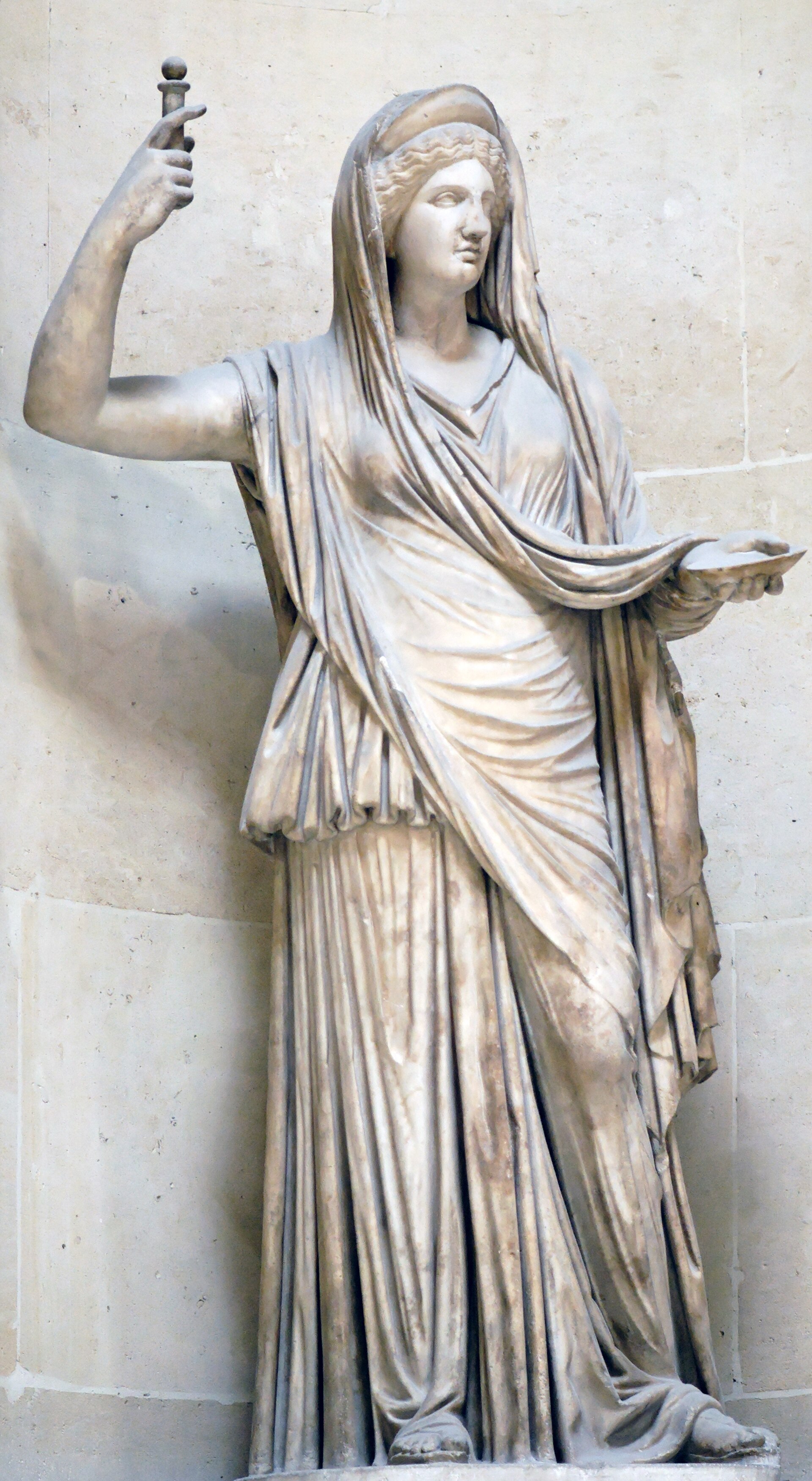
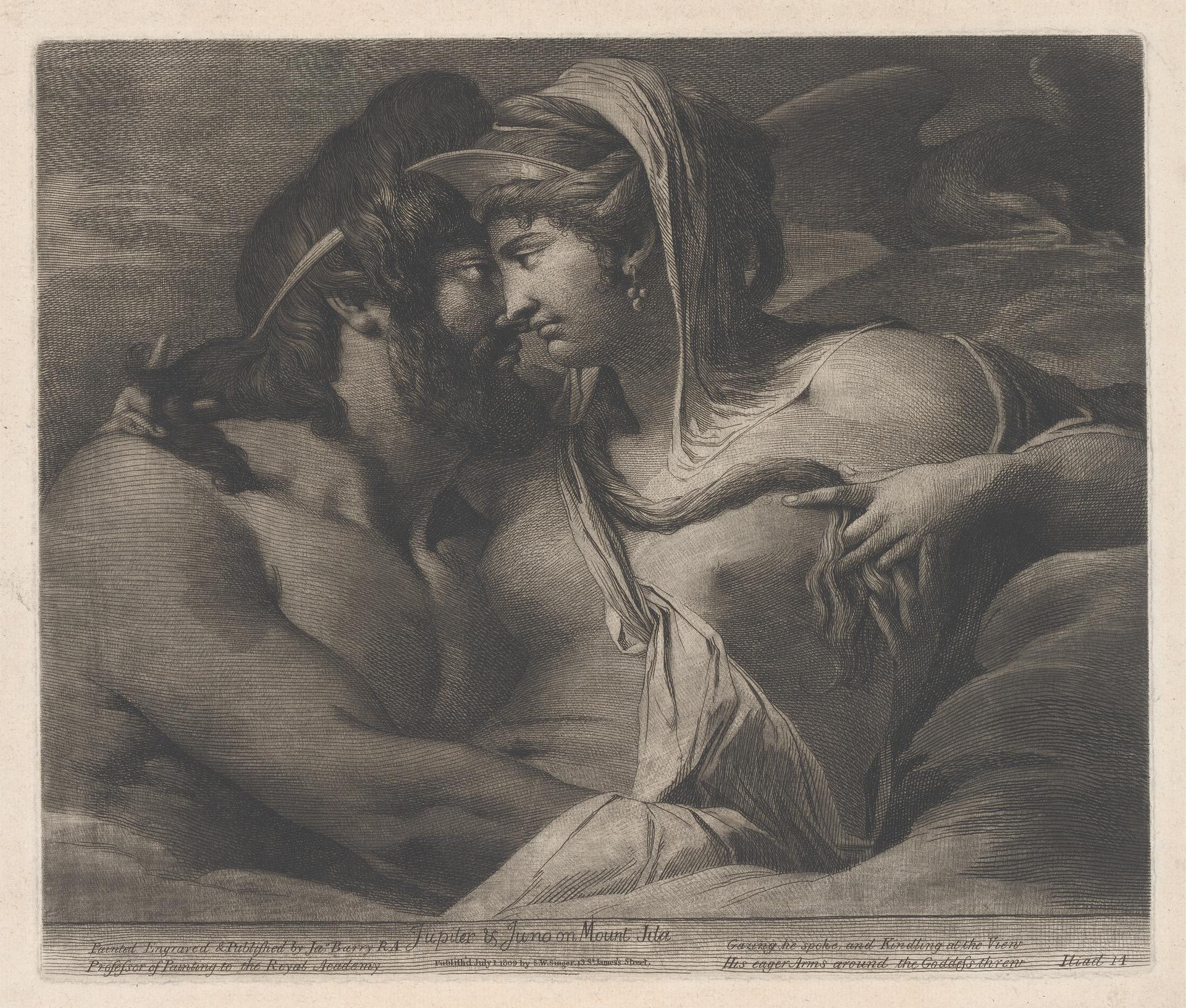
“Three cities are dearest to me — Argos, Sparta, and broad-streeted Mycenae.”
Homer, Iliad 4 — Hera
“Of golden-throned Hera I sing, born of Rhea, queen of the immortals, surpassing all in beauty.”
Homeric Hymn 12, to Hera
“Even the gods cannot strive against necessity.”
Greek proverb
Hera embodies a very Greek contradiction: she is the divine guarantor of social order, yet her own household is broken — the clash between public order and private injury.
Her wrath raises a genuine ethical question. Is her vengeance simply injustice — or the demand of a wronged party for what she is owed? The Greeks did not resolve it neatly, and the ambiguity is the lesson.
Her position also exposes a tension inside any ordered society: the institution — marriage, law, the city — can be both genuinely good and a real source of suffering for those bound within it.
Marriage and the institution — order, fidelity, and social form.
Desire that crosses every boundary — the force that disrupts the bond.
Marriage, queenship, family, and the lives of women. As Zeus's wife she is queen of the gods and guardian of the marriage bond.
Zeus is chronically unfaithful, and Hera's anger falls on his lovers and their children. Myth uses her as the wronged wife whose vengeance dramatizes the gap between marriage as an ideal and as lived.
Heracles was Zeus's son by a mortal woman. Hera persecuted him throughout his life — even his name, 'glory of Hera,' and his famous labors are bound up with her hostility.
Yes — Juno is the Roman name for the same goddess of marriage and queen of the gods; the month of June is named for her.
When I am not reading Homer or Nietzsche, I tune databases, design high-availability systems, and run cloud migrations.