Heroes · Curiosity · Suffering · Hope
Pandora and Her Jar
The first woman, and the jar she opened — releasing suffering into the world, with one thing left inside: hope.
 Michael Paycer
The first woman, and the jar she opened — releasing suffering into the world, with one thing left inside: hope.
Michael PaycerRole
The first mortal woman (in Hesiod)
Symbols
The jar (pithos), often called a 'box'
Domain
Curiosity, suffering, hope
Family
Fashioned by Hephaestus on Zeus's order
Pandora is, in Hesiod, the first mortal woman — crafted by Hephaestus and sent to humankind as Zeus's response to Prometheus's theft of fire.
She opens the jar that releases suffering into the world — but hope remains inside. Her name means “all-gifts,” for each god gave her a gift at her making.
In Hesiod's Works and Days, Pandora is Zeus's calculated punishment of mankind: a beautiful “evil” to balance the stolen gift of fire. She was given to Prometheus's foolish brother Epimetheus (“afterthought”), who accepted her despite his brother's warning.
The famous “box” is a mistranslation. The original was a pithos, a large storage jar; the Renaissance scholar Erasmus rendered it as pyxis (“box”), and the error stuck. It has been “Pandora's box” ever since.
Each god contributed to her: Athena clothed and taught her, Aphrodite gave her grace, Hermes gave her cunning speech. She was beautiful, gifted, and — by Zeus's design — fateful.
Pandora opened the sealed jar, and out flew toil, sickness, sorrow, and every hardship that afflicts humankind — loosed forever upon the world.
Only one thing remained when she closed the lid: Hope (Elpis). Whether Hope was a comfort left to sustain us, or a final cruelty trapping us in endurance of misery, is the most debated detail in all of Greek myth.
Prometheus ("forethought") warned his brother Epimetheus ("afterthought") never to accept a gift from Zeus. Epimetheus took the beautiful Pandora anyway — and so, the myth says, foresight failed where hindsight ruled.
Hesiod calls Pandora a kalon kakon — a "beautiful evil," fashioned by Hephaestus and adorned by every god as humankind's punishment for the gift of fire. The ambivalence about her is woven into the myth from the start.
"Pandora's box" entered every European language as shorthand for an action that unleashes unforeseen and unstoppable troubles — though the original vessel was a jar, mistranslated by Erasmus. Her image recurs in art from ancient vases to the Pre-Raphaelites.
Her deepest legacy is the riddle of Hope. Why is it left in a jar of evils — a consolation kept to sustain us, or a final torment that keeps us enduring misery? That open question makes Pandora the West's earliest meditation on the origin of suffering and the ambiguous nature of hope itself.
Pandora and her jar symbolize the unleashing of unforeseen consequences — the single action that releases troubles no one can recall. "Pandora's box" entered every language as shorthand for exactly that.
But her deepest symbol is the Hope left inside. Is it a consolation to sustain us through suffering, or a final torment that keeps us enduring misery? Pandora stands for the riddle of where evil comes from, and for the genuinely open question of whether hope is a gift or a burden.
Famous public-domain depictions — click any image to view it full size.
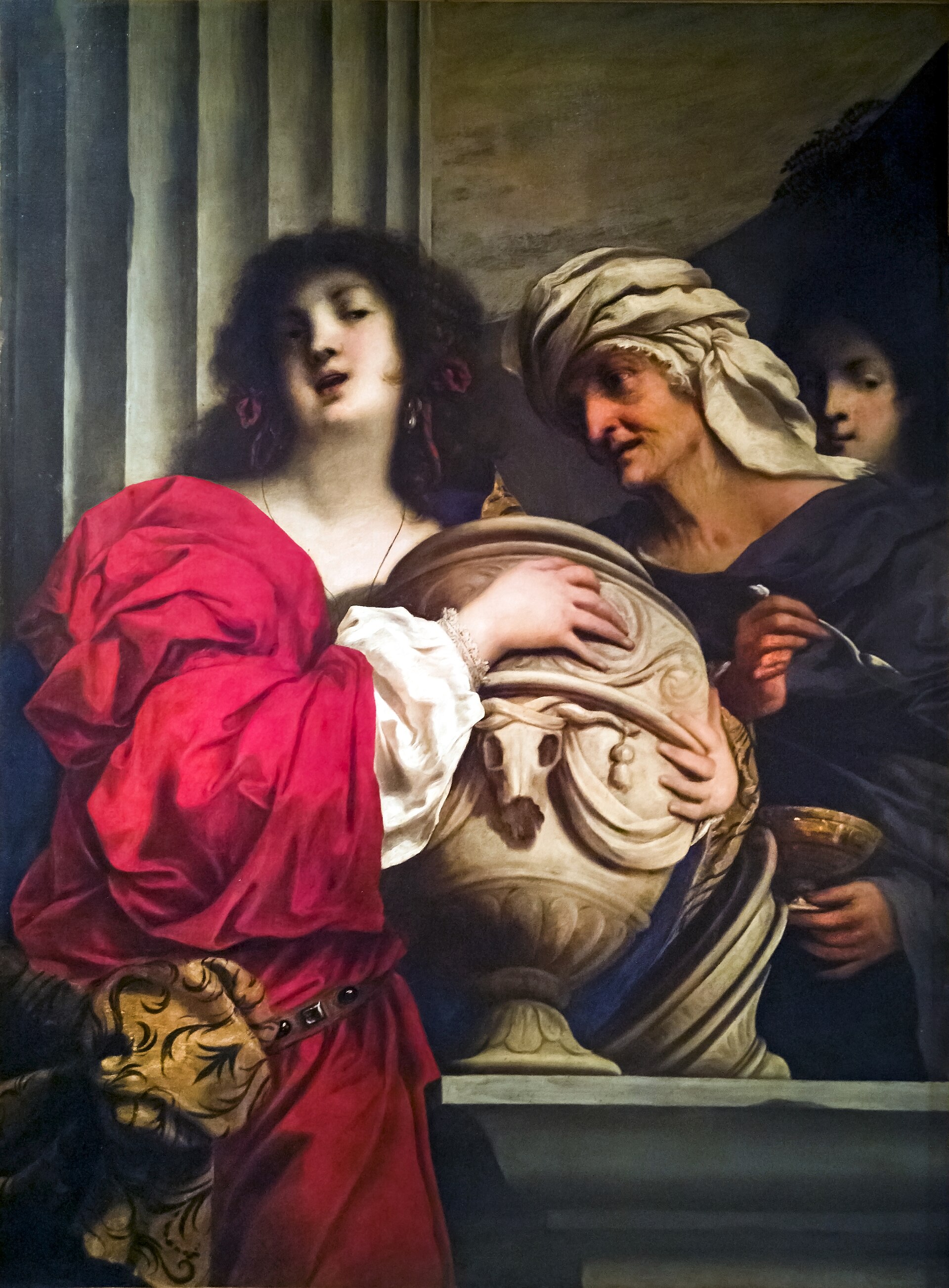
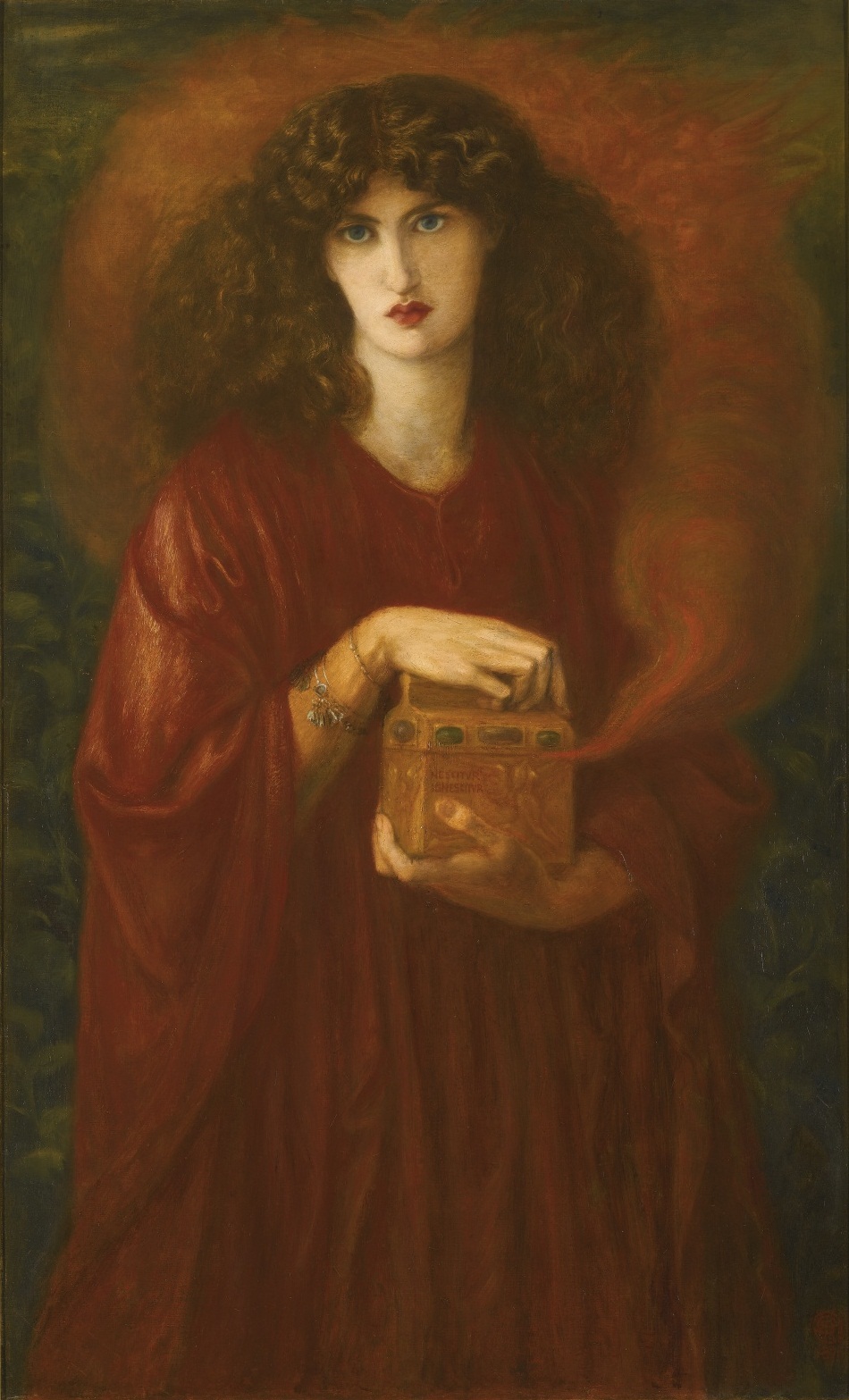
“Only Hope remained there within the unbreakable jar under the rim, and did not fly out.”
Hesiod, Works and Days
“From her comes all the race of women... a great plague to mortal men.”
Hesiod, Theogony — on Pandora
Pandora's story raises questions about evil, curiosity, blame, and whether hope is a gift or a burden.
Why does suffering exist, and who is to blame — the gods, human curiosity, or the gift itself? The myth refuses a clean answer: Pandora acts, but Zeus designed the trap. It is the Greek counterpart to later questions about the origin of evil.
And what is Hope doing in a jar of evils? Read one way, Hope is the mercy left to console us through suffering. Read another — Nietzsche's way — it is the cruelest evil of all, the one that keeps us enduring a miserable existence. The ambiguity is the philosophy.
Curiosity and consequence — the jar opened, suffering loosed, hope retained.
Foresight and defiance — the theft that provoked the punishment in the first place.
Pandora, the first woman, opened a sealed jar sent by Zeus, releasing all the world's troubles — sickness, sorrow, and toil. Only Hope remained inside when she closed it.
Originally a jar (a pithos). The 'box' is a mistranslation introduced by the Renaissance scholar Erasmus, who rendered the Greek word as the Latin for 'box.' The name stuck.
This is the great debate. Some read Hope as a consolation kept to sustain humankind; others, like Nietzsche, read it as a final torment that keeps people enduring misery. Hesiod leaves it ambiguous.
Hephaestus shaped her from earth and water on Zeus's order, and the other gods each gave her a gift — hence 'Pandora,' meaning 'all-gifts.'
When I am not reading Homer or Nietzsche, I tune databases, design high-availability systems, and run cloud migrations.