Heroes · Rebellion · Foresight · Suffering
Prometheus, the Fire-Bringer
The Titan who stole fire for humankind and defied Zeus — the great mythic symbol of progress, and of its price.
 Michael Paycer
The Titan who stole fire for humankind and defied Zeus — the great mythic symbol of progress, and of its price.
Michael PaycerRole
Titan; benefactor of humankind
Symbols
Fire, the torch, the eagle
Domain
Rebellion, foresight, technology, suffering
Family
A Titan, son of Iapetus
Prometheus — whose name means “forethought” — is the Titan who steals fire from the gods and gives it to humankind, defying Zeus. He is the great mythic symbol of rebellion, intelligence, and the costly gift of progress.
In many traditions he is also humankind's maker or first benefactor, the friend of mortals against the indifference or hostility of the gods.
In Hesiod, Prometheus first tricks Zeus over the division of sacrificial portions, then steals fire in a hollow fennel stalk to give it back to mortals after Zeus had withheld it. Zeus retaliates twice: by sending Pandora to humankind, and by chaining Prometheus to a crag.
Aeschylus made him the towering tragic rebel of Prometheus Bound. Much later, the Romantics — Goethe, Shelley, and Mary Shelley, whose Frankenstein is subtitled “The Modern Prometheus” — claimed him as the patron of defiant human creativity.
When Zeus withheld fire from mortals, Prometheus stole it and carried it down to earth — and with it the arts of civilization: metalwork, building, writing, medicine. Fire is the first technology, and the gift that makes human progress possible.
Zeus chained Prometheus to a rock in the Caucasus, where an eagle devoured his liver each day; it regrew each night, so the torment was endless. He endured rather than submit.
In Aeschylus, Prometheus defies Zeus utterly, holding a secret that threatens the king of the gods. In later tradition he is finally freed by Heracles, who shoots the eagle — rebellion eventually reconciled, but never repented.
Before stealing fire, Prometheus tricked Zeus over the division of a sacrificial ox — wrapping the bones in tempting fat and the good meat in the hide, so the gods received the worse portion forever after. The cleverness that helped humankind also provoked the punishment to come.
In a widespread tradition, Prometheus did not just befriend humans but fashioned them from clay, with Athena breathing life into them. The Titan of forethought is, in this telling, our maker as well as our benefactor.
Prometheus became the supreme symbol of defiant creativity and the costs of progress. The Romantics adored him — Goethe, Byron, and Percy Shelley (Prometheus Unbound) — and Mary Shelley subtitled Frankenstein "The Modern Prometheus," fixing him forever to the ethics of science and invention.
His gift of fire stands for technology and knowledge themselves, which is why he is invoked in every debate about whether human advancement is worth its price — from nuclear power to artificial intelligence. He is conscience against authority, and ambition against limits, in a single chained figure.
Prometheus symbolizes the costly gift of progress: fire as knowledge and technology, stolen for humankind at terrible personal price. Chained to his rock, he is the image of the benefactor and rebel punished for lifting others up.
He became the patron symbol of defiant creativity and of conscience against authority — claimed by the Romantics and fixed forever to the ethics of science by Mary Shelley's "Modern Prometheus." He stands at the center of every question about whether human advancement is worth what it costs.
Famous public-domain depictions — click any image to view it full size.
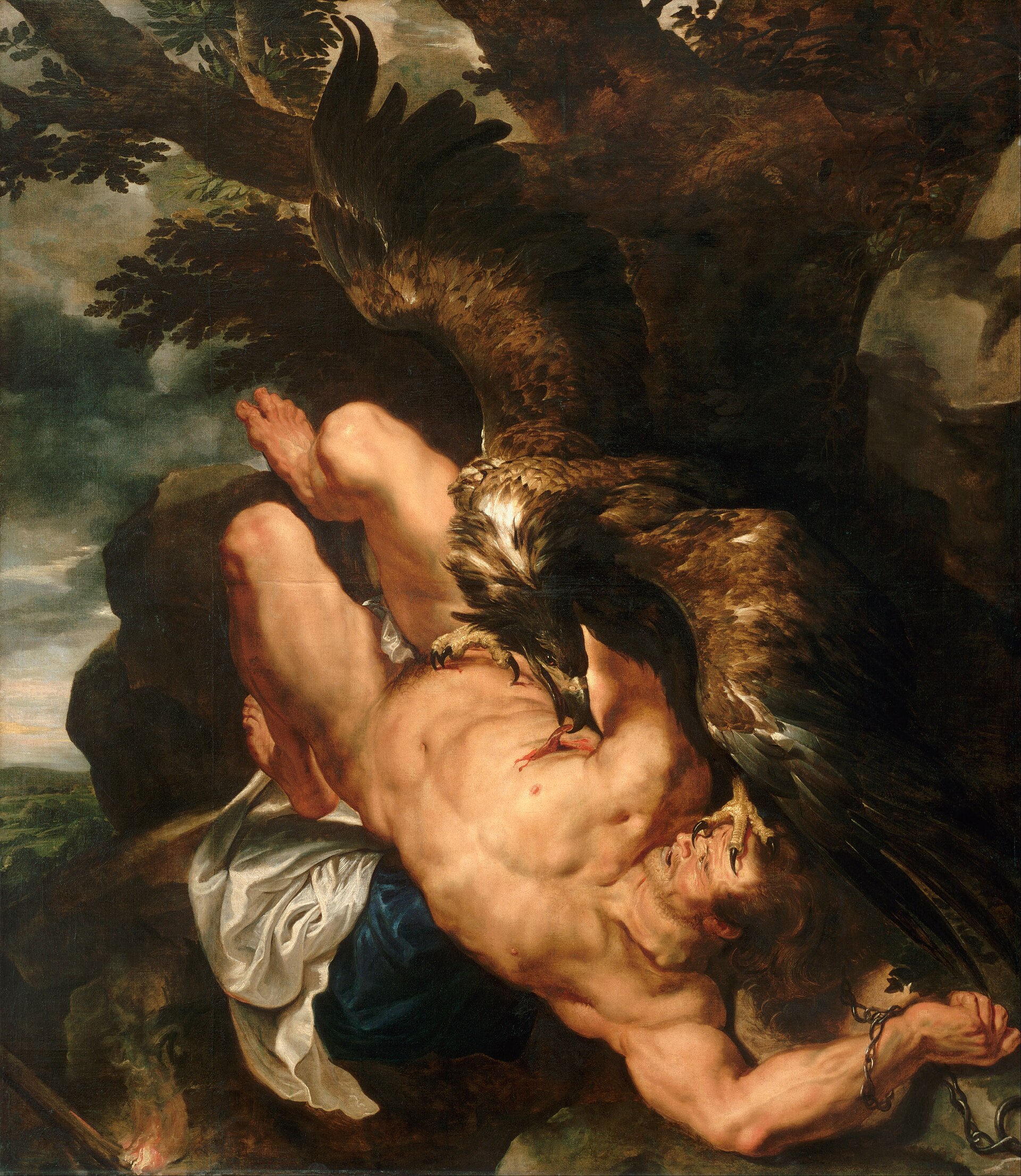
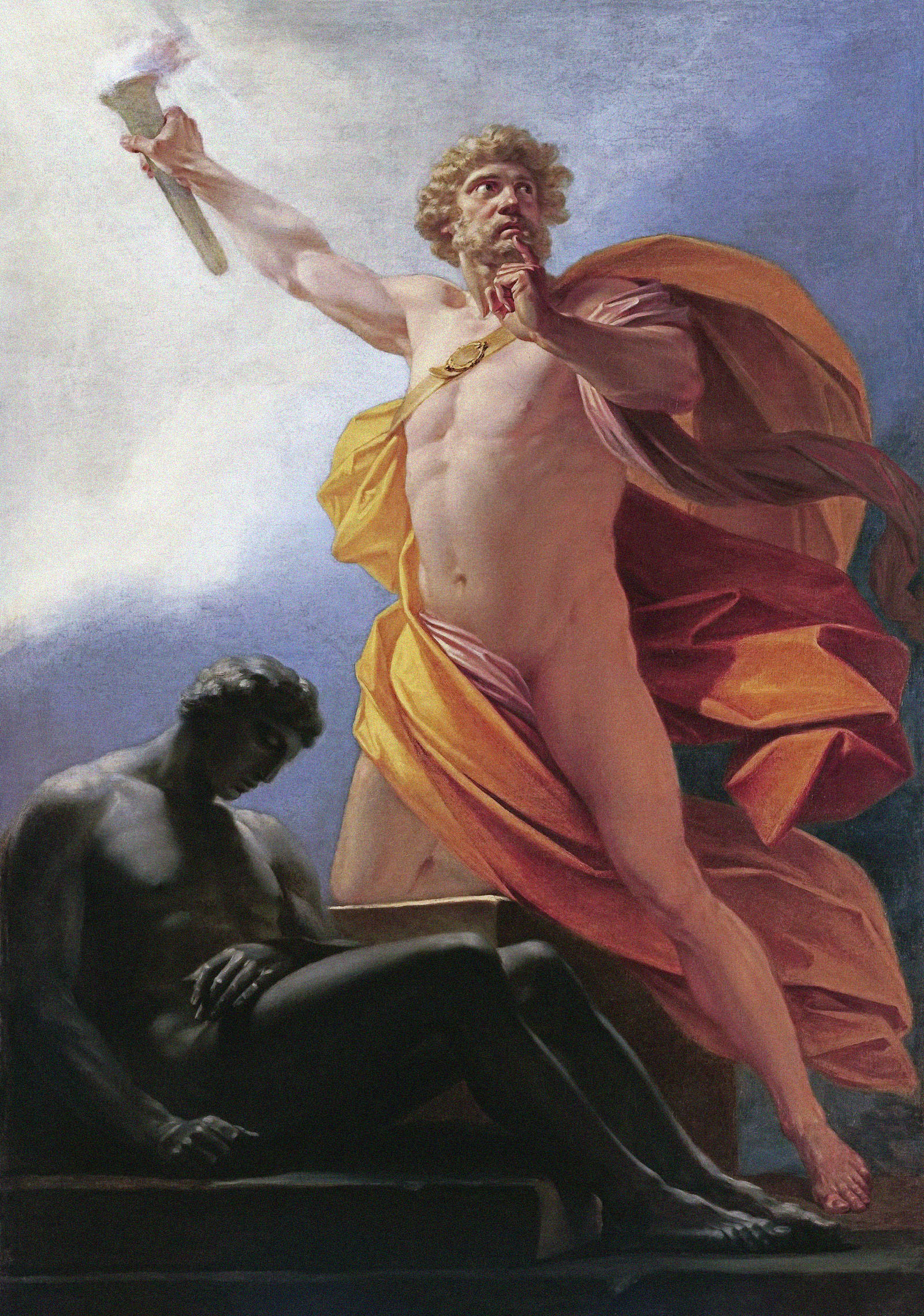
“I hunted out the secret spring of fire, that has proved to mortals a teacher in every art and a means to mighty ends.”
Aeschylus, Prometheus Bound
“I would rather be chained to this rock than be the obedient servant of the gods.”
Aeschylus, Prometheus Bound (paraphrase)
“For mortals I cared too much; and for that I am tormented.”
Aeschylus, Prometheus Bound (paraphrase)
Prometheus represents rebellion, intelligence, technology, and the price of progress — the benefactor punished for lifting humankind.
He is one of the great symbols of human advancement and its costs. Fire stands for technology and knowledge themselves; the myth asks whether progress is worth the suffering it brings, and whether the rebel who defies authority for a higher good is hero or criminal.
The Romantics made him the emblem of defiant creativity, and Mary Shelley's “Modern Prometheus” turned the question toward science: what do we owe for the power to remake the world? Prometheus is conscience against authority, and ambition against limits.
Defiance and progress — conscience that steals fire for humankind.
Authority and order — power that punishes the theft without mercy.
Rebellion, intelligence, and the costly gift of progress. By stealing fire — the first technology — for humankind, he became the enduring symbol of human advancement and defiance of authority.
For stealing fire and giving it back to mortals against Zeus's will. Zeus chained him to a rock where an eagle ate his ever-regrowing liver, an endless torment.
It is the subtitle of Mary Shelley's Frankenstein. Victor Frankenstein, who steals the divine power to create life and suffers for it, is a modern version of the fire-bringer.
Yes — in later tradition Heracles shoots the eagle and releases him, and a reconciliation with Zeus follows, though Prometheus never repents.
When I am not reading Homer or Nietzsche, I tune databases, design high-availability systems, and run cloud migrations.