The Greek Bridge · The Lyceum · Virtue
Aristotle: Virtue Through Habit
The most systematic mind of antiquity — who studied everything from logic to biology, and argued that a good life is built, day by day, through habit.
 Michael Paycer
The most systematic mind of antiquity — who studied everything from logic to biology, and argued that a good life is built, day by day, through habit.
Michael PaycerLived
384–322 BCE
School
The Lyceum, Athens
Lens
Build virtue through habit
Key work
Nicomachean Ethics
Aristotle studied under Plato for twenty years, then struck out on his own. Where Plato looked beyond the world to the Forms, Aristotle looked at the world — classifying animals, analyzing arguments, and asking what makes a human life go well.
His lens is practical and durable: excellence is not a gift or a single act but a habit. We become just by doing just acts, brave by doing brave ones. Character is built by repetition.
Born in northern Greece, Aristotle came to Athens to study at Plato's Academy. He later tutored the young Alexander the Great, then founded his own school, the Lyceum, whose followers were called "Peripatetics" for walking as they discussed.
His writings — on logic, physics, biology, ethics, politics, rhetoric, and poetics — were so comprehensive that for centuries in Europe and the Islamic world he was simply "the Philosopher.
Virtue is a balance between extremes. Courage is the mean between cowardice and recklessness; generosity between stinginess and waste. The good life is found in the well-judged middle, not at either end. (This is why Ares' pure bloodlust is not courage.)
The goal of life is eudaimonia, usually translated 'happiness' but closer to 'flourishing' — living well and fully as a human being, by exercising reason and virtue over a whole life.
Aristotle founded formal logic (the syllogism) and laid the groundwork for biology, physics, and political science. He was the first great systematizer of knowledge.
To truly know a thing, Aristotle argued, is to grasp its four "causes": what it is made of, its form, what brought it about, and its purpose or end (telos). This teleological way of seeing — everything aimed at an end — shaped science and theology for two thousand years.
"Man is by nature a political animal," Aristotle wrote: we are made to live in communities, and only in a well-ordered city can we fully flourish. His Politics founded the systematic study of constitutions and the state.
For the medieval world, in Europe and the Islamic lands alike, Aristotle was simply "the Philosopher." Thinkers from Averroes to Aquinas built their systems on him, and his logic went essentially unchallenged until the modern era.
He effectively founded biology, logic, and political science as disciplines, and his ethics of virtue and the golden mean is enjoying a major revival today as "virtue ethics" — the leading alternative to the duty-based ethics of Kant and the consequence-based ethics of Mill.
Teleology versus modern science. Aristotle saw purpose (telos) everywhere in nature — acorns "aim" at becoming oaks. Modern science largely abandoned that view, yet it keeps returning in biology and ethics, where talk of function and flourishing is hard to avoid.
The revival of virtue ethics. For most of the modern era, ethics meant rules (Kant) or consequences (Mill). Since the late 20th century, Aristotle's focus on character and flourishing has surged back as "virtue ethics," now the leading third option in moral philosophy.
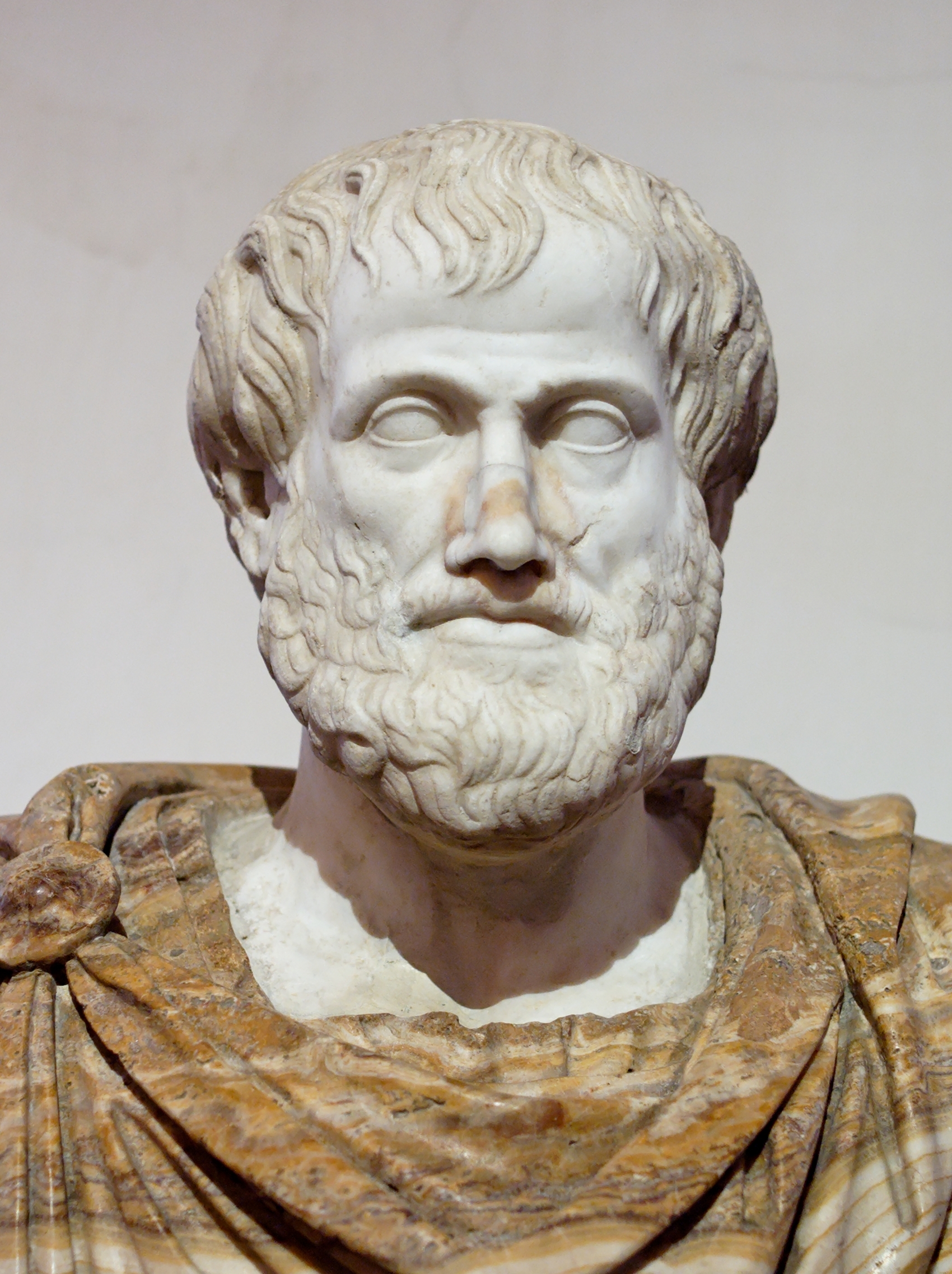
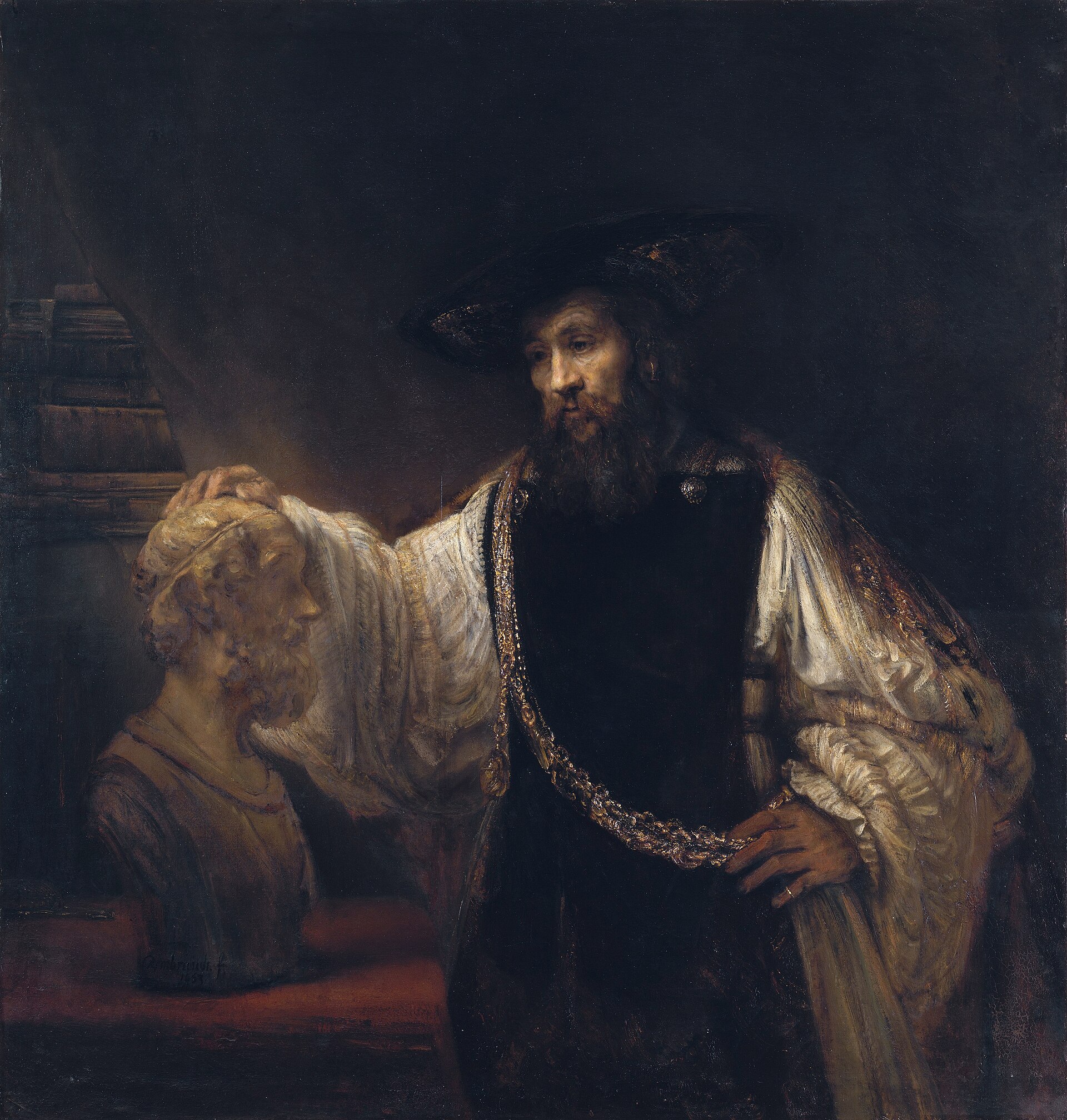
Public-domain portraits and depictions — click any image to view it full size.
“We are what we repeatedly do. Excellence, then, is not an act but a habit.”
Will Durant, summarizing Aristotle's Nicomachean Ethics
“Knowing yourself is the beginning of all wisdom.”
attributed to Aristotle
“The whole is greater than the sum of its parts.”
attributed to Aristotle
Aristotle's lens is to build virtue through habit — excellence is not something you have, but something you do, repeatedly, until it becomes who you are.
This makes the Greek heroes perfect test cases. Achilles' rage, Ares' violence, and Athena's discipline are all about where the line of virtue falls between too much and too little.
Aristotle's ethics of habit and balance is the most practical fruit of the Greek tradition — and still the backbone of modern 'virtue ethics.'
Study the world in front of you; truth is in particular things and lived practice.
Look beyond the world; truth is in the eternal Forms above it.
Aristotle's idea that virtue lies between two extremes — for example, courage as the balance between cowardice and recklessness. Good character is a matter of well-judged moderation.
Often translated 'happiness,' it means flourishing — living well and fully as a human being over a whole life, by exercising reason and virtue. It is the goal of Aristotle's ethics.
An enormous amount: formal logic, foundational work in biology and physics, political theory, rhetoric, and poetics. He was antiquity's great systematizer of knowledge.
Plato located true reality in the eternal Forms beyond the senses; Aristotle found it in the world itself, studying particular things and emphasizing practice, observation, and habit.
When I am not reading Homer or Nietzsche, I tune databases, design high-availability systems, and run cloud migrations.