The Greek Bridge · The Academy · Truth
Plato: The Truth Behind Appearances
Socrates' greatest student, who argued that the world we see is only a shadow of a deeper, truer reality — and built the first university to pursue it.
 Michael Paycer
Socrates' greatest student, who argued that the world we see is only a shadow of a deeper, truer reality — and built the first university to pursue it.
Michael PaycerLived
c. 428–348 BCE
School
The Academy, Athens
Lens
Seek the truth behind appearances
Key works
Republic, Symposium, Phaedo
Plato turned the questions of his teacher Socrates into a vast philosophical system. He founded the Academy, the first institution of higher learning in the West, and wrote in dialogues — dramas of ideas with Socrates usually at the center.
His lens: the everyday world of the senses is not the highest reality. Behind it lie the Forms — perfect, eternal patterns of which physical things are only imperfect copies. To seek truth is to turn from the shadows toward the light.
Born into an aristocratic Athenian family, Plato was destined for politics until the execution of Socrates turned him against Athens' democracy. He travelled, possibly to Egypt and Italy, and around 387 BCE founded the Academy, which endured — in successive forms, down to the school Justinian closed in 529 CE — for nearly nine centuries.
His student Aristotle studied there for two decades before breaking with him — the two together define the shape of Western thought.
For Plato, beyond every beautiful thing lies Beauty itself; beyond every just act, Justice itself. These Forms are more real than the physical world, and true knowledge is knowledge of them.
Prisoners chained in a cave mistake shadows on the wall for reality. One escapes, sees the sun, and returns to free the others. Plato's image of education, enlightenment, and the philosopher's hard duty to truth.
In the Republic, Plato asks what justice is and designs an ideal city to find out — ruled by wisdom, with each part of the soul and the city in its proper place.
In the Republic, Plato divides the soul into reason, spirit, and appetite — and argues that justice in a person, as in a city, is each part doing its proper work under the rule of reason. The image of the charioteer steering two horses is his most memorable version.
Plato closes the Republic with the Myth of Er, a vision of souls choosing their next lives and being judged — one of several invented myths through which he carried philosophy into questions of the soul, fate, and how a life should be chosen.
Plato founded the Academy, the first institution of higher learning in the West, whose name lived on — through the original school and its later revivals — for nearly nine centuries, and gave us the very word "academy." The philosopher A. N. Whitehead famously remarked that all later European philosophy is "a series of footnotes to Plato."
His Theory of Forms shaped Christianity, Islamic and Jewish philosophy, and Renaissance thought; his Cave is perhaps the most enduring image in all of philosophy; and his fusion of Greek myth with argument — Beauty as a ladder, the soul as a charioteer — keeps him at the center of the bridge from myth to philosophy.
The philosopher-king problem. Plato's ideal of rule by the wise has inspired admiration and alarm in equal measure. In the 20th century, Karl Popper attacked the Republic as a blueprint for authoritarianism, while others read it as a thought-experiment about justice rather than a literal program. The argument is a live one in political philosophy.
Do the Forms exist? Plato's claim that abstract universals — Beauty, Justice, Number — are more real than physical things launched a debate that never ended. Realists, nominalists, and modern mathematicians still argue over whether such Forms exist, making Plato the starting point of metaphysics itself.
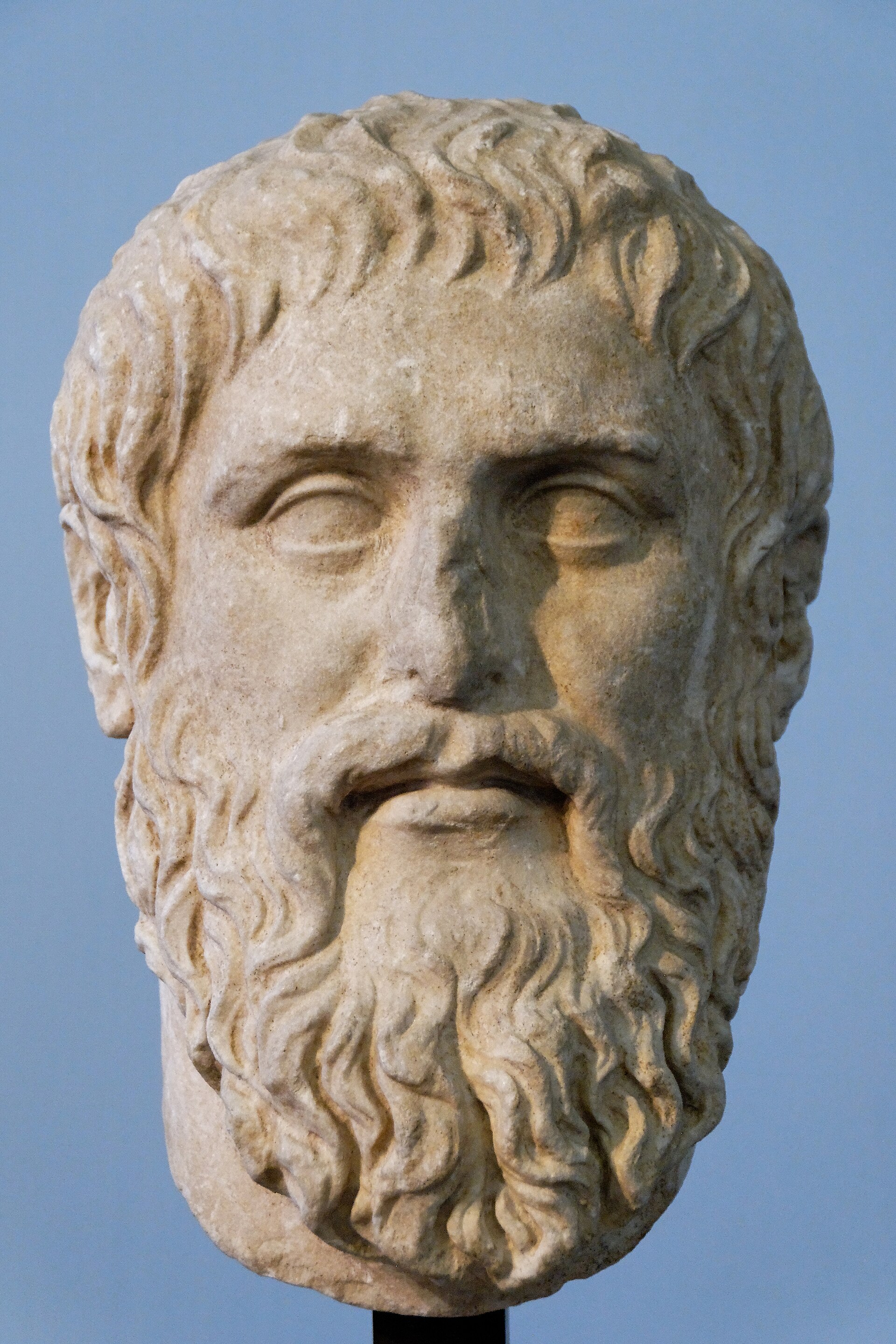
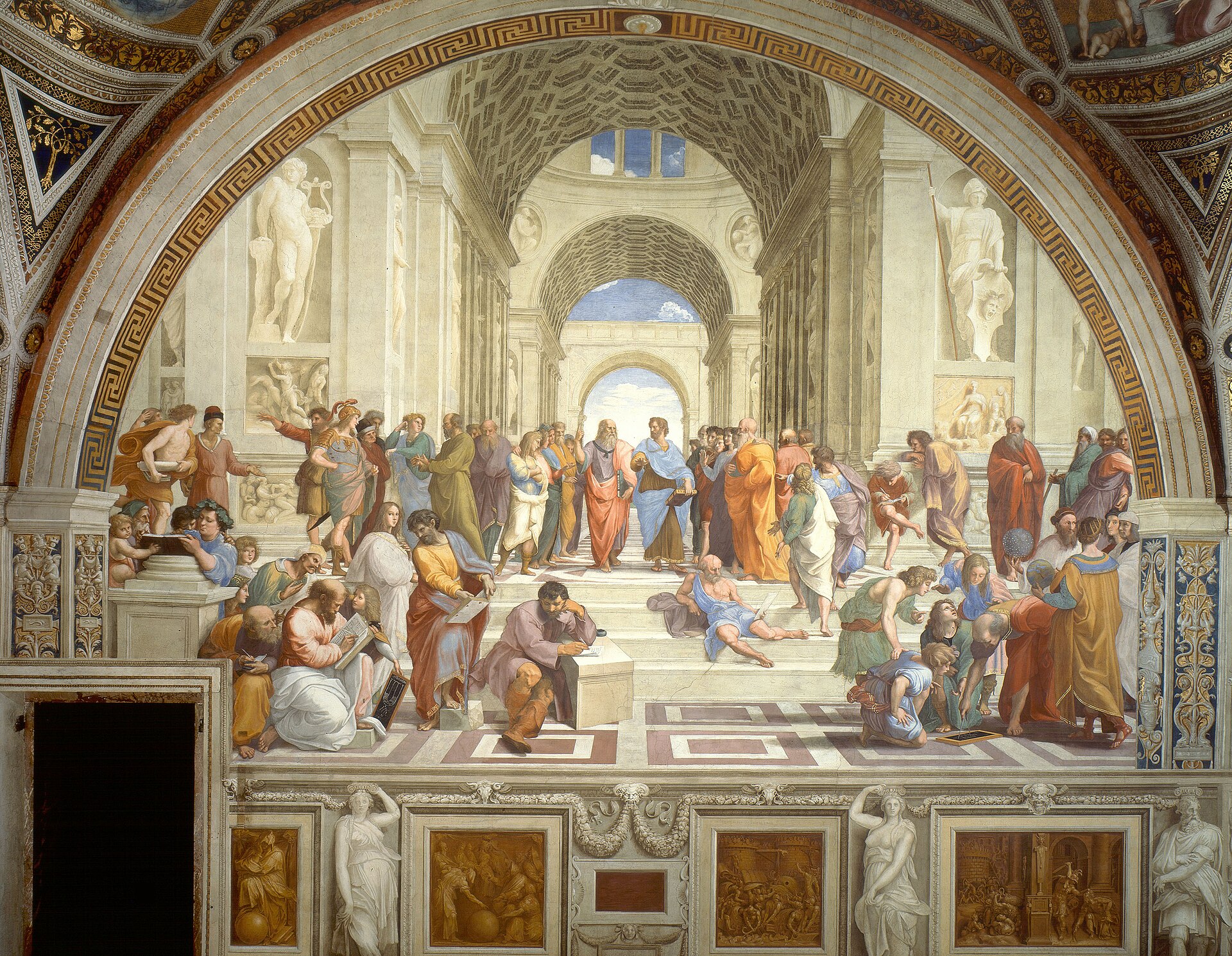
Public-domain portraits and depictions — click any image to view it full size.
“The heaviest penalty for declining to rule is to be governed by someone worse.”
Plato, Republic I, 347c (paraphrased)
“Beginning from obvious beauties we must mount ever upwards for the sake of that other Beauty.”
Plato, Symposium
“Until philosophers are kings … cities will never have rest from their evils.”
Plato, Republic V, 473c–d (trans. Jowett)
Plato's lens is to seek the truth behind appearances — to look past the shifting world of the senses toward the eternal reality that grounds it.
Plato wove Greek myth directly into philosophy: the Myth of the Cave, the Myth of Er, the winged soul. In the Symposium, the desire embodied by Aphrodite becomes a ladder the soul climbs from one beautiful body toward Beauty itself.
That is the heart of the myth-to-philosophy bridge: Plato took the gods' symbolic world and turned it into arguments about what is truly real.
Reality is beyond the senses — in the eternal Forms. Look up, away from the world.
Reality is in the world itself — study the particular things in front of you.
The view that beyond physical things lie perfect, eternal 'Forms' — Beauty, Justice, Goodness themselves — which are more real than their imperfect copies in the world of the senses.
A story in the Republic: prisoners take shadows for reality until one escapes into the sunlight. It illustrates education, enlightenment, and the philosopher's duty to seek and share the truth.
It asks what justice is and constructs an ideal city to answer — a society ruled by wisdom, with each class and each part of the soul doing its proper work.
Socrates was Plato's teacher. Plato wrote no treatises in his own voice; instead Socrates is the main speaker in his dialogues, which makes the two hard to fully separate.
When I am not reading Homer or Nietzsche, I tune databases, design high-availability systems, and run cloud migrations.