How to Live · Enlightenment · Duty
Kant: Do Right on Principle
The German philosopher who grounded morality not in consequences or feelings, but in reason and duty — the same for everyone, everywhere.
 Michael Paycer
The German philosopher who grounded morality not in consequences or feelings, but in reason and duty — the same for everyone, everywhere.
Michael PaycerLived
1724–1804
Era
German Enlightenment
Lens
Act only on rules you could will for everyone
Key work
Groundwork of the Metaphysics of Morals
Immanuel Kant tried to put ethics on the firm footing of reason. Right and wrong, he argued, do not depend on outcomes or desires but on principle — on whether the rule behind your action could hold for everyone.
His lens, more than "do your duty": act only on a maxim you could will to become a universal law, and treat every person as an end in themselves, never merely as a means.
Kant spent his entire life in the Prussian city of Königsberg, so regular in his habits that neighbors were said to set their clocks by his afternoon walk. From that quiet routine came a revolution in philosophy.
His "critical philosophy" reshaped how the West thinks about knowledge, ethics, and the limits of reason, and remains a pillar of moral philosophy today.
Kant's master rule: act only according to a maxim you could will to become a universal law. If everyone lying or breaking promises would make lying or promising meaningless, then it is wrong — no exceptions for your convenience.
A second formulation: never treat a person merely as a means to your goals, but always also as an end in themselves — a being with their own dignity and reason. The root of modern ideas of human dignity.
For Kant, true freedom is autonomy — governing yourself by rational moral law rather than by impulse. Morality is something reason gives to itself.
In the Critique of Pure Reason, Kant argued that the mind does not passively receive reality but actively shapes experience through built-in forms like space, time, and causation. We can know the world as it appears to us, but never the "thing-in-itself." It reset the agenda of modern philosophy.
Late in life Kant sketched conditions for a lasting peace among nations — republics, a federation of free states, and universal hospitality. The essay helped inspire the League of Nations and, later, the United Nations.
Kant is the hinge of modern philosophy: nearly every major movement after him — German Idealism, phenomenology, much of analytic ethics — defines itself in relation to his "critical" turn. His distinction between appearance and the thing-in-itself reshaped how the West understands knowledge and its limits.
His insistence on universal moral law and the dignity of every person as an "end in themselves" is the philosophical backbone of modern human rights. The clash between his duty-based ethics and Mill's consequence-based utilitarianism still organizes how ethics is taught and argued today.
The murderer at the door. Kant's most debated claim is that moral rules hold without exception — even, he argued, that one must not lie to a murderer asking where your friend is hiding. Critics see this rigidity as the great weakness of duty-based ethics; defenders argue Kant's deeper principle is more flexible than the example suggests. The debate is the classic stress-test of any rule-based morality.
Autonomy versus authority. For Kant, acting morally means giving the law to yourself through reason, not obeying it because a church, state, or feeling commands you. This makes autonomy the heart of human dignity — and raises the hard question of where genuine self-rule ends and mere self-will begins.
Why Kant still runs modern ethics. His principle that persons must be treated as ends, never merely as means, is the engine of contemporary debates in bioethics, human rights, privacy, and artificial intelligence. Whenever someone objects that a policy "uses people," they are speaking Kant's language. His clash with Mill — principle versus consequences — remains the central fault line taught in every ethics course.
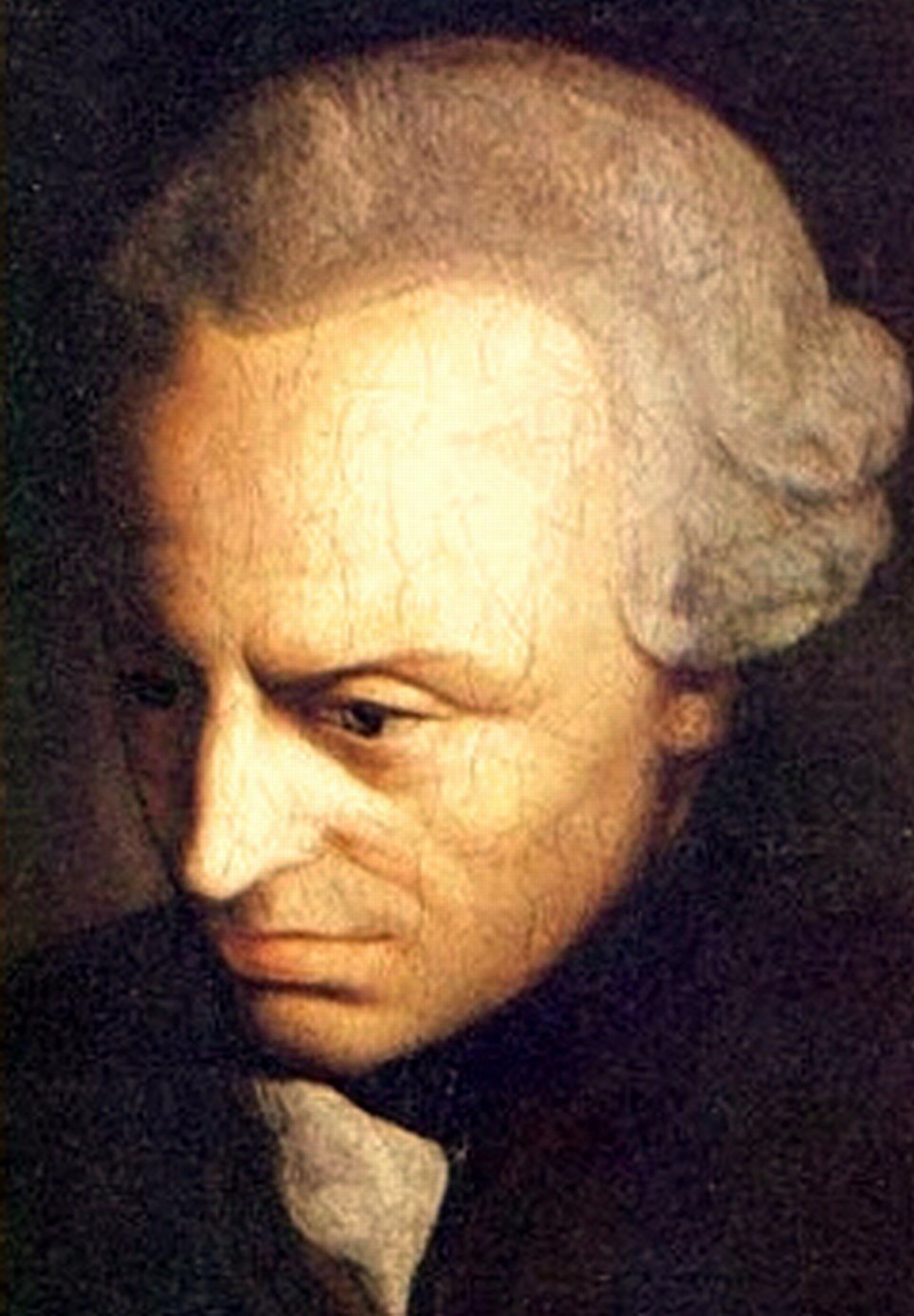
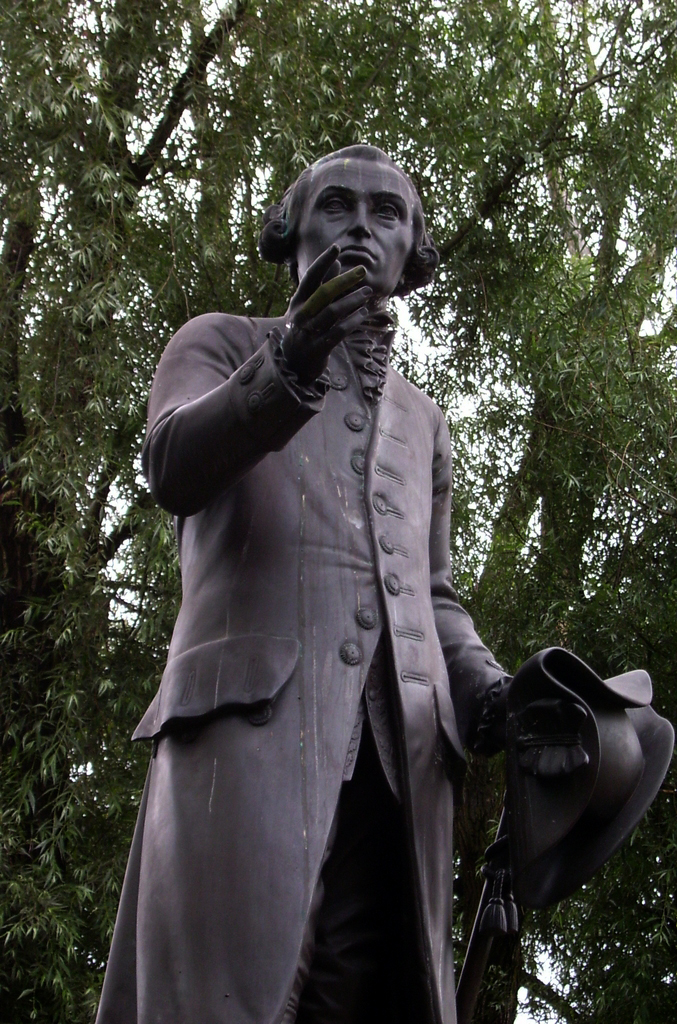
Public-domain portraits and depictions — click any image to view it full size.
“Act only according to that maxim whereby you can will that it should become a universal law.”
Kant, Groundwork of the Metaphysics of Morals
“Two things fill the mind with ever new and increasing wonder: the starry heavens above me and the moral law within me.”
Kant, Critique of Practical Reason
“Science is organized knowledge. Wisdom is organized life.”
Will Durant, The Story of Philosophy — often misattributed to Kant
Kant's lens is to do right on principle — to act only on rules you could will for everyone, and to treat every person as an end in themselves, never merely as a means.
Where Mill measures actions by their consequences, Kant measures them by the principle behind them. The two define the central divide in modern ethics: outcomes versus duty.
Kant's insistence on universal rules and human dignity is the philosophical backbone of modern human rights — a very different answer to "how should I live" than the Greek ethics of character.
Judge the principle: act on rules you could will for all, regardless of outcome.
Judge the results: choose what produces the greatest good for the greatest number.
Kant's central moral rule: act only on a principle ('maxim') that you could will to become a universal law applying to everyone. It tests whether an action could be consistently universalized.
Kant's principle that you must never use a person merely as a tool for your own goals, but always respect them as a rational being with their own dignity and purposes.
Kant judges actions by the principle behind them and whether it could be universal, not by their consequences. Utilitarians like Mill judge actions by the good or harm they produce.
Governing yourself by rational moral law rather than by impulse or external authority. For Kant, this self-rule by reason is the essence of true freedom and moral worth.
When I am not reading Homer or Nietzsche, I tune databases, design high-availability systems, and run cloud migrations.