Theme · Character · Tragedy
The Flawed Hero
Greek heroes are never simply good. They are brave and prideful, clever and deceptive, strong and violent — which is exactly what makes them human.
 Michael Paycer
Greek heroes are never simply good. They are brave and prideful, clever and deceptive, strong and violent — which is exactly what makes them human.
Michael PaycerThe question
Can greatness and flaw coexist?
Greek figures
Achilles, Odysseus, Heracles, Ajax
Philosopher
Aristotle
Key idea
Hamartia, the tragic flaw
The Greeks refused to make their heroes perfect. Achilles is the greatest warrior and the most consumed by rage; Odysseus is the cleverest man and the most willing to deceive; Heracles is the strongest and, in his madness, the most destructive.
This is not sloppy storytelling — it is a moral worldview. Greek thought treats human beings as mixed creatures, in whom virtue and vice are tangled together. That refusal of simple morality is exactly what makes the heroes endure, and what gave philosophy its richest material on character.
Achilles is nearly invincible and ruled by wrath — the Iliad's first word. His greatness and his fatal anger are inseparable; you cannot have one without the other. He is the original flawed hero.
Odysseus survives by intelligence — but the same cleverness shades into deception and pride, as when his boast to the Cyclops earns Poseidon's wrath. His virtue and his vice are the same trait.
Ajax is brave, loyal, and immovable — and destroyed by a sense of honor so absolute he cannot survive being passed over. His flaw is not cowardice but the very greatness that defines him.
Aristotle, in the Poetics, located tragedy in the hamartia — the error or flaw that brings a great figure low. The tragic hero is neither wholly good nor wholly bad, which is precisely why their fall moves us.
For Aristotle, virtue is a mean that can tip into excess or deficiency. Courage becomes recklessness, pride becomes vanity. The flawed hero is the dramatic proof of how easily excellence can overshoot into vice.
Because the Greek hero is mixed, he stays human — and useful. Every later meditation on the anti-hero, the tragic protagonist, and the complexity of moral character descends from this refusal to make greatness simple.
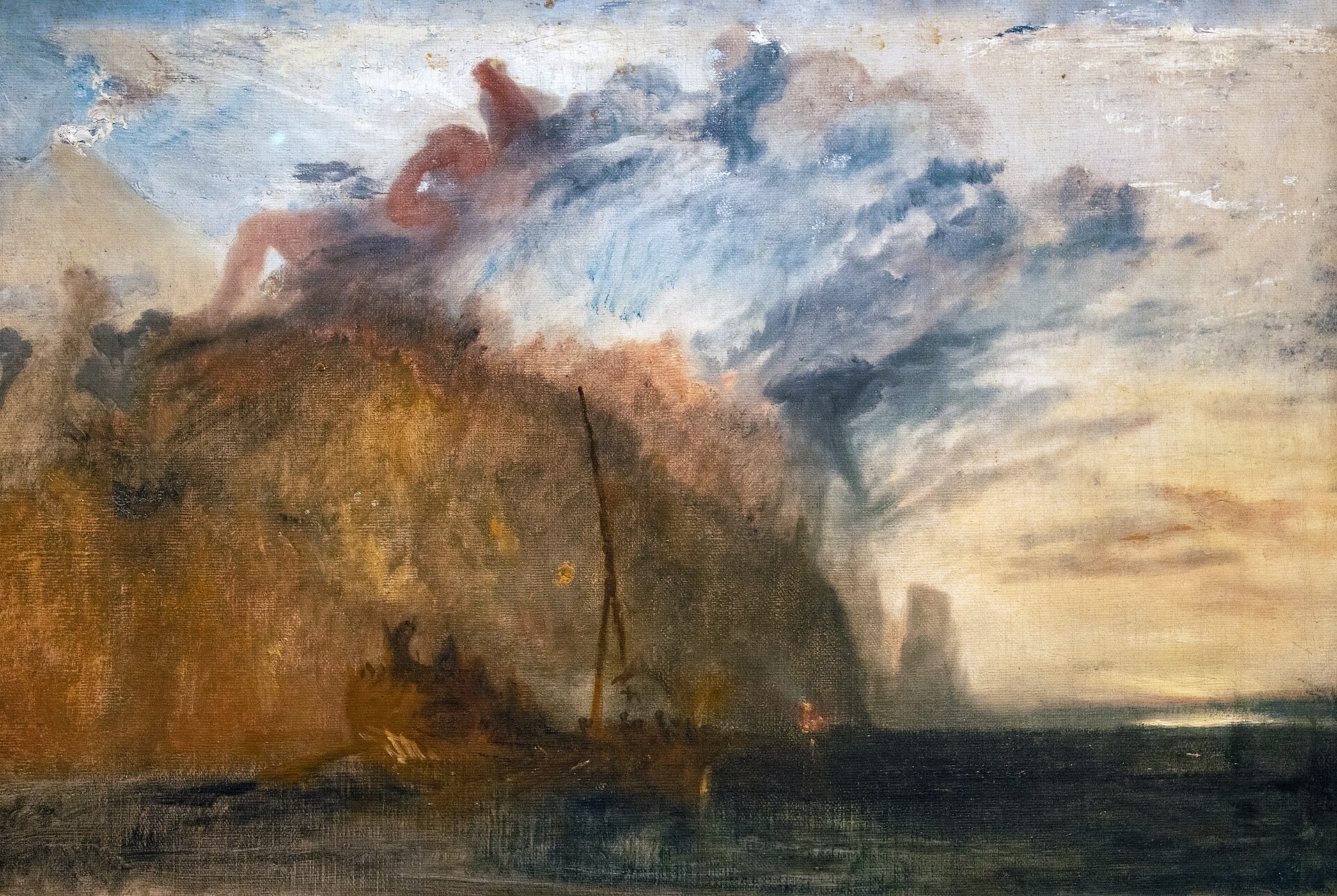
Public-domain depictions — click any image to view it full size.
“The tragic hero falls through some error or frailty, not through vice.”
after Aristotle, Poetics
“Sing, goddess, the wrath of Achilles.”
Homer, Iliad — opening line
Because Greek thought treated human beings as mixed creatures, in whom virtue and vice are tangled. Flawed heroes are more human, more dramatic, and morally richer than perfect ones.
The Greek term, central to Aristotle's Poetics, for the error or flaw that brings a tragic hero low. The hero is neither wholly good nor wholly evil, which makes their downfall moving.
Achilles — the greatest warrior, undone by his own rage. Odysseus (cunning shading into deception), Heracles (strength and madness), and Ajax (honor and shame) are others.
When I am not reading Homer or Nietzsche, I tune databases, design high-availability systems, and run cloud migrations.