Heroes · Strength · Endurance · Redemption
Heracles, the Enduring Hero
The greatest of the Greek heroes — superhuman strength, terrible suffering, and a life redeemed through labor.
 Michael Paycer
The greatest of the Greek heroes — superhuman strength, terrible suffering, and a life redeemed through labor.
Michael PaycerRole
Greatest Greek hero; later a god
Symbols
Lion skin, club, bow
Domain
Strength, endurance, labor, redemption
Family
Son of Zeus & the mortal Alcmene
Heracles (Roman Hercules) is the greatest and most popular of the Greek heroes — a son of Zeus of superhuman strength, famous above all for the Twelve Labors.
His life is not a smooth tale of triumph but one of suffering, terrible error, endurance, and redemption through action — which is exactly what made him a model for later philosophers.
Persecuted from birth by Hera, jealous of Zeus's mortal son, Heracles strangled serpents in his cradle and grew into the strongest of men. His name — “glory of Hera” — binds him to the goddess who tormented him.
He was worshipped across the Greek world both as a hero and, uniquely, as a god — the mortal who earned a place on Olympus. The Romans embraced him as Hercules, emblem of strength and virtue.
In a fit of madness sent by Hera, Heracles killed his own wife and children. To atone, he was bound to serve King Eurystheus and undertake the Labors — his suffering turned into the path of his redemption.
He slew the Nemean Lion and the many-headed Hydra, cleansed the Augean stables in a single day, and at last descended to the underworld to bring back Cerberus itself — impossible tasks accomplished by strength and relentless persistence.
Poisoned by the shirt of the centaur Nessus, Heracles built his own pyre and was consumed — but Zeus raised him to Olympus as a god. Suffering, endured to the end, became transcendence.
To fetch the golden apples of the Hesperides, Heracles took the weight of the heavens onto his own shoulders so the Titan Atlas could retrieve them — then tricked Atlas into taking the burden back. Strength matched, for once, by cunning.
In a famous parable, the young Heracles met two women at a fork in the road — Vice, promising ease and pleasure, and Virtue, promising toil and honor. He chose the hard road. The "Choice of Heracles" became a founding image of ethics.
As Hercules, the Roman world's most popular hero, he became the emblem of strength in the service of civilization — adopted by emperors, painted by every age, and lent to everything from the Pillars of Hercules at Gibraltar to a constellation and a military transport aircraft. His Twelve Labors are among the most retold stories on earth.
For philosophy he is the hero of endurance and redemption: the Stoics and Cynics made him their moral exemplar, the man who atones for his worst failures through labor and self-mastery. The "Choice of Heracles" still frames the oldest ethical question — the easy road or the hard one?
Heracles, draped in the Nemean lion's skin and leaning on his club, symbolizes raw strength turned to the service of civilization — the hero who clears monsters from the world. His Twelve Labors are the archetype of the impossible task accomplished through sheer endurance.
More deeply, he symbolizes redemption through action: a man who commits a terrible wrong and atones for it through suffering and labor. The "Choice of Heracles" — the hard road of virtue over the easy road of vice — made him the moral hero of the Stoics and a permanent emblem of perseverance.
Famous public-domain depictions — click any image to view it full size.
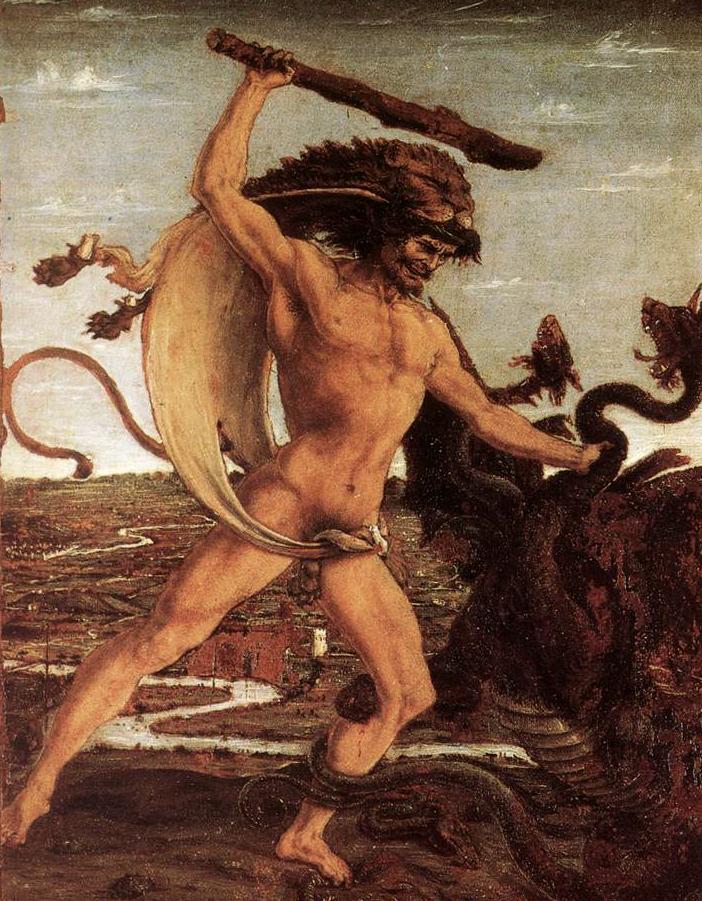
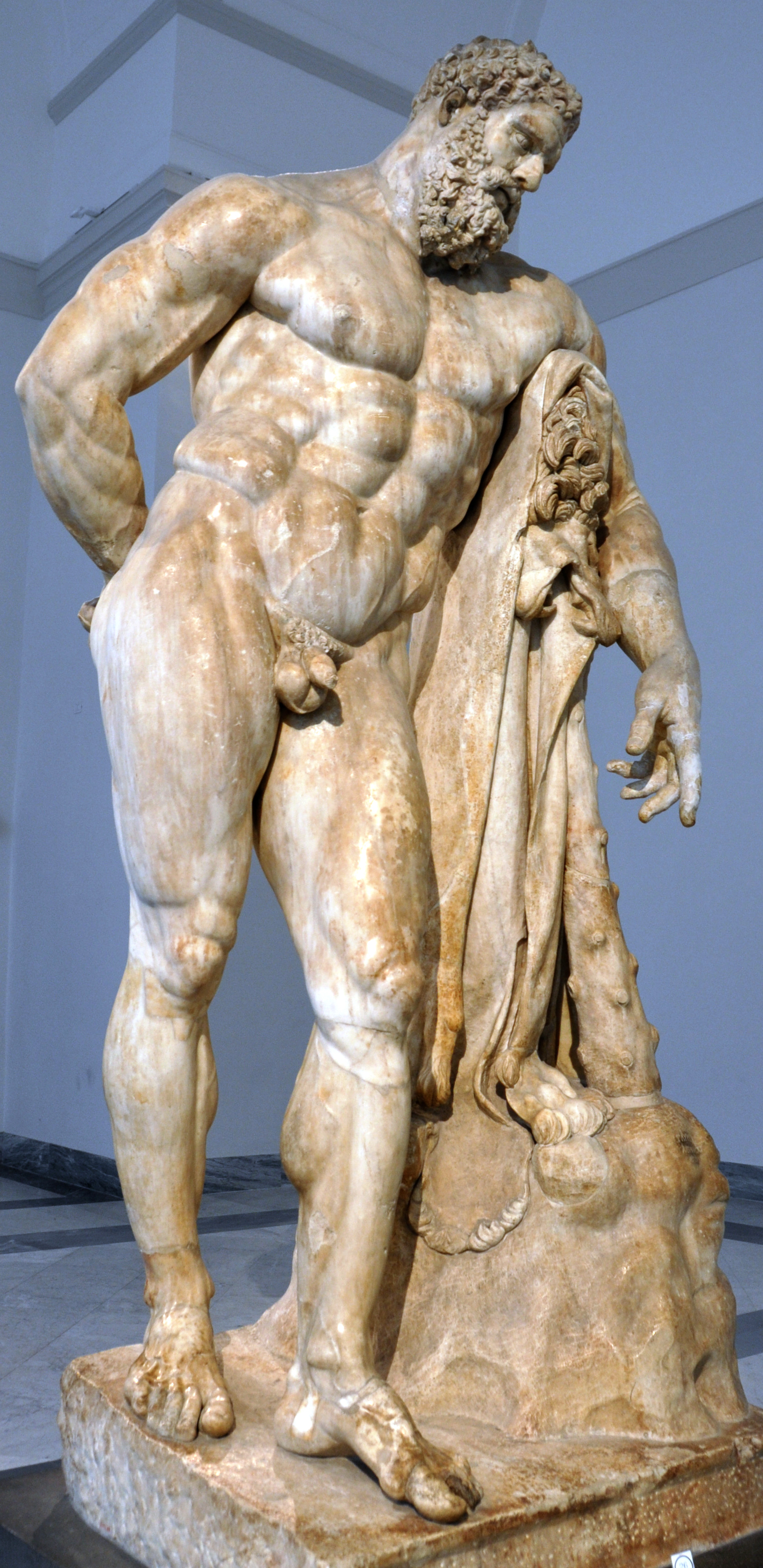
“Two roads lay before the young Heracles — one of ease and pleasure, one of toil and virtue. He chose the harder road.”
Prodicus, the Choice of Heracles, in Xenophon, Memorabilia
“Let me bear what I must; the gods themselves cannot undo what is done.”
after Sophocles, Women of Trachis (paraphrase)
Heracles represents endurance, strength, repentance, and redemption through action — greatness achieved by carrying an unbearable load.
Unlike Achilles (glory) or Odysseus (cunning), Heracles' defining virtue is sheer endurance and the willingness to atone. The Stoics and Cynics adopted him as their moral hero — labor and self-mastery as the road to virtue.
The “Choice of Heracles,” a parable by the Sophist Prodicus, became a founding image of ethics: the young hero choosing the hard path of Virtue over the easy path of Vice. His life asks whether a person can be redeemed by what they do after their worst failures — and answers that they can, through endurance.
Endurance and atonement — greatness through labor and the long carrying of a burden.
Glory and rage — greatness that burns bright and dies young.
The greatest of the Greek heroes, a son of Zeus of superhuman strength, famous for the Twelve Labors. Hercules is the Roman name for the same figure, honored as both hero and god.
A series of seemingly impossible tasks imposed as penance — including slaying the Nemean Lion and the Hydra, cleansing the Augean stables, and fetching Cerberus from the underworld — accomplished through strength and persistence.
A parable by the Sophist Prodicus in which the young hero must choose between the easy road of Vice and the hard road of Virtue. He chooses Virtue — a founding image of Greek ethics.
Yes — Hercules is the Roman name for the Greek hero Heracles.
When I am not reading Homer or Nietzsche, I tune databases, design high-availability systems, and run cloud migrations.