Heroes · Cunning · Endurance · Homecoming
Odysseus, the Man of Many Turns
The hero who survives not by strength but by wit and endurance — and whose whole story is the long, hard road home.
 Michael Paycer
The hero who survives not by strength but by wit and endurance — and whose whole story is the long, hard road home.
Michael PaycerRole
King of Ithaca; hero of the Odyssey
Symbols
The bow, the sea, disguise
Domain
Cunning, endurance, identity, homecoming
Family
Son of Laertes; husband of Penelope
Odysseus (Roman Ulysses) is the hero of Homer's Odyssey and a central figure of the Iliad — famed not for strength but for intelligence, cunning (metis), and endurance. Homer calls him “of many turns.”
He survives by his wits and by an unbreakable longing for home, outlasting gods, monsters, and temptations that destroy lesser men.
King of the small, rocky island of Ithaca, Odysseus joined the Greek expedition to Troy reluctantly and became its sharpest strategist. After the war he spent ten further years trying to return home — the journey that gives the Odyssey its name and shape.
His reception was vast: the Romans, Dante, Tennyson, and James Joyce all reimagined him. He became the archetype of the wandering, questioning, resourceful mind.
It was Odysseus who devised the hollow wooden horse that finally took Troy — the stratagem of a mind succeeding where ten years of force had failed.
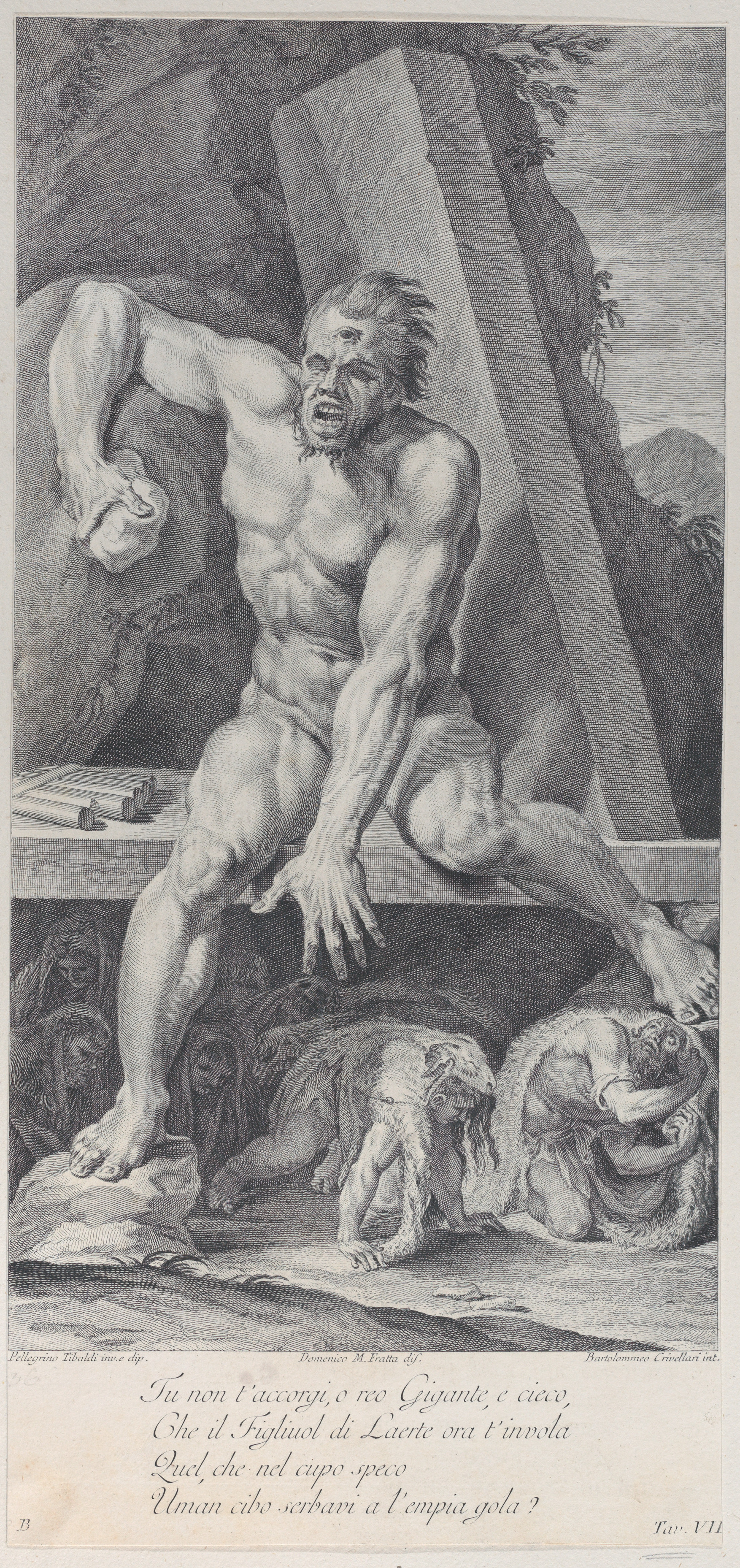
Trapped in the cave of the man-eating Cyclops Polyphemus, Odysseus blinded him and escaped by calling himself “Nobody.” But his pride in shouting his real name as he sailed away earned the lasting wrath of Poseidon, the Cyclops's father.
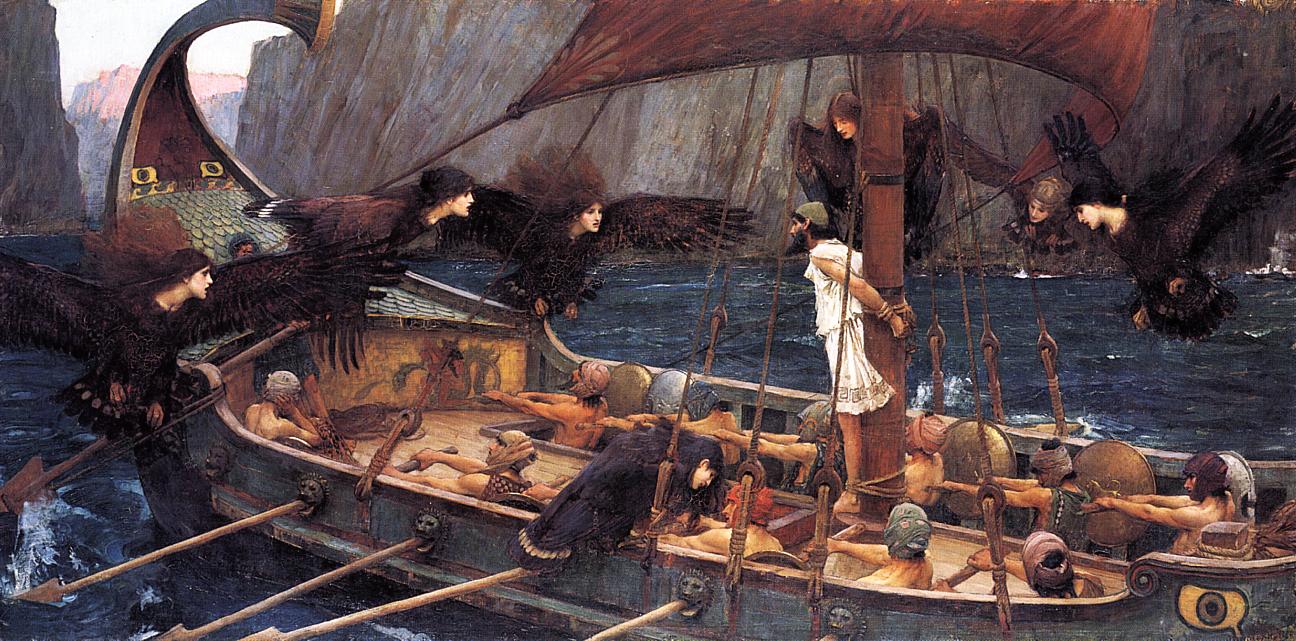
He resisted the Sirens' song bound to the mast, escaped the enchantress Circe and the nymph Calypso, and finally returned in disguise to reclaim his home and his wife Penelope — a long test of identity, loyalty, and self-control.
While Odysseus was lost at sea, his wife Penelope held off a houseful of suitors by weaving a shroud she unraveled each night, promising to choose a husband only when it was finished. Her cunning patience mirrors his own — a marriage of two clever, faithful minds.
Returning in disguise, Odysseus alone could string his great bow and shoot an arrow through twelve axe-heads — the test that revealed him and let him reclaim his home. Identity, in the Odyssey, is something earned and proven, not merely declared.
Odysseus became the West's archetype of the wandering, questioning, resourceful mind — reimagined by Virgil, condemned by Dante, sent voyaging again by Tennyson, and made a modern everyman by James Joyce in Ulysses. His name marks the very word "odyssey."
As the counter-model to Achilles — endurance rather than glory, cunning rather than force — he gave philosophy its enduring image of resilience under fortune's blows, a figure the Stoics especially admired and a template for every story of the long, hard journey home.
Odysseus symbolizes the resourceful, questioning mind — survival by wit rather than force, and the long, hard journey home that gives us the very word "odyssey." His disguises and his cry of "Nobody" make him an image of identity tested, hidden, and reclaimed.
As the counter-model to Achilles, he stands for endurance over glory and cunning over strength. From Dante to Tennyson to Joyce, he became the archetype of the wanderer and seeker — the human being who bends, adapts, and outlasts whatever fortune throws at him.
Famous public-domain depictions — click any image to view it full size.
“Tell me, Muse, of the man of many turns, who wandered far and wide after he had sacked the sacred city of Troy.”
Homer, Odyssey, opening lines
“I am Odysseus, son of Laertes, known to all men for my cunning, and my fame reaches the heavens.”
Homer, Odyssey 9 (paraphrase)
“Of all creatures that breathe and move, earth nurtures nothing feebler than a man.”
Homer, Odyssey 18 — Odysseus
Odysseus represents intelligence, identity, temptation, and the long, hard road home — survival by mind rather than might.
He is the counter-model to Achilles: not glory in early death, but endurance and return. Where Achilles burns bright and brief, Odysseus bends, adapts, and outlasts. The Stoics admired him as a figure of resilience under fortune's blows.
His story raises questions of identity (the disguises, the “Nobody,” the slow reclaiming of self), of the ethics of cunning and deception, and of what “home” — nostos — means as the goal and measure of a life.
Cunning and endurance — the long road home, survival by wit.
Strength and glory — greatness that burns fast and dies young.
For his intelligence and cunning rather than brute strength — he devised the Trojan Horse and survived a ten-year journey home full of monsters and temptations, the subject of Homer's Odyssey.
Achilles embodies strength, rage, and early glory; Odysseus embodies cunning, patience, and endurance. Together they are the two great, opposite models of the Greek hero.
Because Odysseus blinded Poseidon's son, the Cyclops Polyphemus, and then boasted of it. Poseidon kept him storm-tossed and far from home for years.
Yes — Ulysses is the Roman (Latin) name for the same hero.
When I am not reading Homer or Nietzsche, I tune databases, design high-availability systems, and run cloud migrations.