Reading the principles through the man
Stoicism was already old by the time Marcus Aurelius was born. It ran from Zeno of Citium in Athens, through the Roman teachers, down to the former slave Epictetus, whose Discourses Marcus was handed by his teacher Junius Rusticus. What makes Marcus unusual is not that he invented any of these ideas — he invented none of them — but that he wrote down what it felt like to apply them, night after night, while running an empire and burying his children. The Meditations is not a treatise. It is a working record of one man arguing himself back into his principles. That is why it is the best possible place to see Stoicism in use.
Six ideas do most of the work. Take each in turn: first the principle, then how Marcus actually lived it.
1. The dichotomy of control and the inner citadel
The load-bearing idea of Stoicism is a division. Some things are up to us — our judgments, our choices, what we decide to value and do. Most things are not — our bodies, our reputations, other people, the past, the outcome of any effort once it leaves our hands. Epictetus opens his handbook with exactly this cut, and insists that freedom and peace live entirely on the near side of it.
“The things in our control are by nature free.”
Epictetus, Enchiridion
Marcus took this and turned it inward into what the scholar Pierre Hadot later called the “inner citadel” — a fortress of the mind that no external event can breach, because events cannot reach the one thing that matters: your own ruling faculty, your power to judge. Storm the walls, and the citadel still holds, because the enemy was never inside. Marcus states the principle almost as a command to himself:
“If thou art pained by any external thing, it is not this thing that disturbs thee, but thy own judgement about it. And it is in thy power to wipe out this judgement now.”
Marcus Aurelius, Meditations 8.47 (trans. George Long)
You can watch him do the work in real time. When he anticipates a difficult day, he does not pretend the difficulty away; he reminds himself that other people's rudeness, ambition, and ingratitude are outside his control, that his own response is not, and that only the second thing is his to govern. The dichotomy is not a comforting slogan for him. It is the tool he reaches for first, every morning, before the day can reach him.
2. Memento mori — remember that you will die
Stoicism refuses to look away from death. Far from being morbid, the constant recollection of mortality — memento mori — is meant to clarify: if your time is finite and unknown in length, then wasted hours, deferred virtue, and petty grievances are exposed as the luxuries they are. Death is the deadline that makes the work urgent.
No writer returns to this more relentlessly than Marcus. Again and again he reminds himself that he could leave life at any moment, that emperors and beggars end in the same dust, that the people he envies or resents will soon be gone and so will he. He is not trying to frighten himself. He is trying to strip away everything that would not matter to a man honestly aware that his time is short — and what survives that test, for Marcus, is almost always character and conduct rather than status or complaint. The point of remembering death, in his hands, is to stop postponing the business of being good.
“Waste no more time arguing about what a good man should be. Be one.”
Marcus Aurelius, Meditations
That line is memento mori compressed to its practical core. The clock is running; stop theorizing and act.
3. The view from above
A second Stoic exercise widens the lens instead of the timeline. The “view from above” asks you to imagine your life, your city, your quarrel seen from a great height — the whole earth as a single point, the swarm of human affairs shrinking until the thing that felt enormous a moment ago is revealed as small and passing. It is a deliberate act of perspective, meant to loosen the grip of whatever is currently magnifying itself in your mind.
Marcus performs this move constantly. He pictures the vast reaches of time before his birth and after his death, the countless generations that rose and vanished, the tiny corner of the world any one reputation occupies. Seen from that altitude, the insult he is nursing or the honor he is chasing loses its false size. Crucially, for Marcus the view from above is not a counsel of despair — it does not say nothing matters. It says: this particular thing you are inflating matters far less than you think, so put it down and return to the work in front of you. Cosmic perspective, for him, is a way of getting proportion back.
The thread that ties them together
These are not six unrelated tips. Notice how they lock into one another: the dichotomy of control tells you what is worth caring about, memento mori and the view from above shrink everything that is not, duty tells you what to do with the time and attention you just freed up, and amor fati and virtue as the only good tell you how to meet whatever comes. Marcus does not use them as a menu. He uses them as a single machine for turning a hard morning back into a workable one.
4. Duty and the common good
Stoicism is often mistaken for a philosophy of detachment — a way of not caring so that nothing can hurt you. Marcus is the standing refutation of that misreading. For the Stoics, human beings are social by nature, rational parts of a single rational whole; the wise person is a citizen not merely of a city but of the cosmopolis, the world-community. To withdraw from your fellow humans is to act against your own nature. The disciplined inner life exists precisely so that you can show up for your duties without being knocked off course by them.
Marcus makes the point with a beekeeping image that has become one of the most quoted lines in the book:
“What is not good for the hive is not good for the bee.”
Marcus Aurelius, Meditations
The individual and the community are not in competition; your genuine good and the good of the whole are the same good. He held himself to this literally. The Meditations was written not in a study but on campaign, in the middle of frontier wars he did not choose and plague he could not stop — and its recurring instruction to himself is to rise at dawn and go do the work of a human being, because that is what he was made for. The Stoic calm was never the goal. It was the equipment for the duty.
5. Amor fati — accepting nature
If the dichotomy of control tells you to stop fighting what you cannot change, amor fati — love of fate — goes one step further: not merely accepting what happens, but embracing it as necessary and even welcome, because it is woven into the order of the whole. The Stoic universe is rational and interconnected; what befalls you flows from the same nature that made you. To rage against a particular event is, in this view, to rage against the entire fabric of things.
Marcus reaches for this idea whenever life presses hardest. He tells himself that whatever happens was bound up with him from the beginning, spun into his portion by the same nature that governs everything; that to complain of your circumstances is to demand the impossible — that the world be other than it is. He does not always sound like he has fully arrived at love of fate; sometimes he sounds like a man talking himself toward it. That honesty is part of the value. He shows acceptance not as a serene given but as a discipline he has to renew, converting resistance into consent one hard event at a time.
6. Virtue as the only true good — and the obstacle as the way
Underneath all of it sits the central Stoic claim about value: virtue is the only true good, vice the only true evil, and everything else — health, wealth, reputation, comfort, even life itself — is “indifferent.” Not worthless, but not good in the strict sense, because none of it can make you a good person and none of its loss can make you a bad one. What is good is how you act: with justice, courage, self-control, and wisdom. That alone is fully in your power, which is why the Stoics located the whole of happiness there.
From this comes the most bracing turn in Marcus's thinking — the idea later readers compressed into “the obstacle is the way.” If virtue is the only good, then every obstacle becomes raw material for it. A blocked path is a chance to practice patience or ingenuity; an injustice done to you is an occasion for justice and forbearance in return; hardship is the exact circumstance in which courage becomes possible at all. Marcus reminds himself that the impediment to action can be turned into action itself — that what stands in the way becomes the way. Nothing that happens can prevent him from responding well, and responding well is the only thing that was ever actually up to him. The dichotomy of control returns, transformed: not just endure the obstacle, but use it.
Read this way, the six principles are one attitude seen from six angles. Marcus did not leave us a system to admire. He left us the far more useful thing — the visible evidence of a person using these ideas, imperfectly and repeatedly, to become better than his circumstances. That is the whole promise of Stoicism, and the Meditations is its proof of concept.
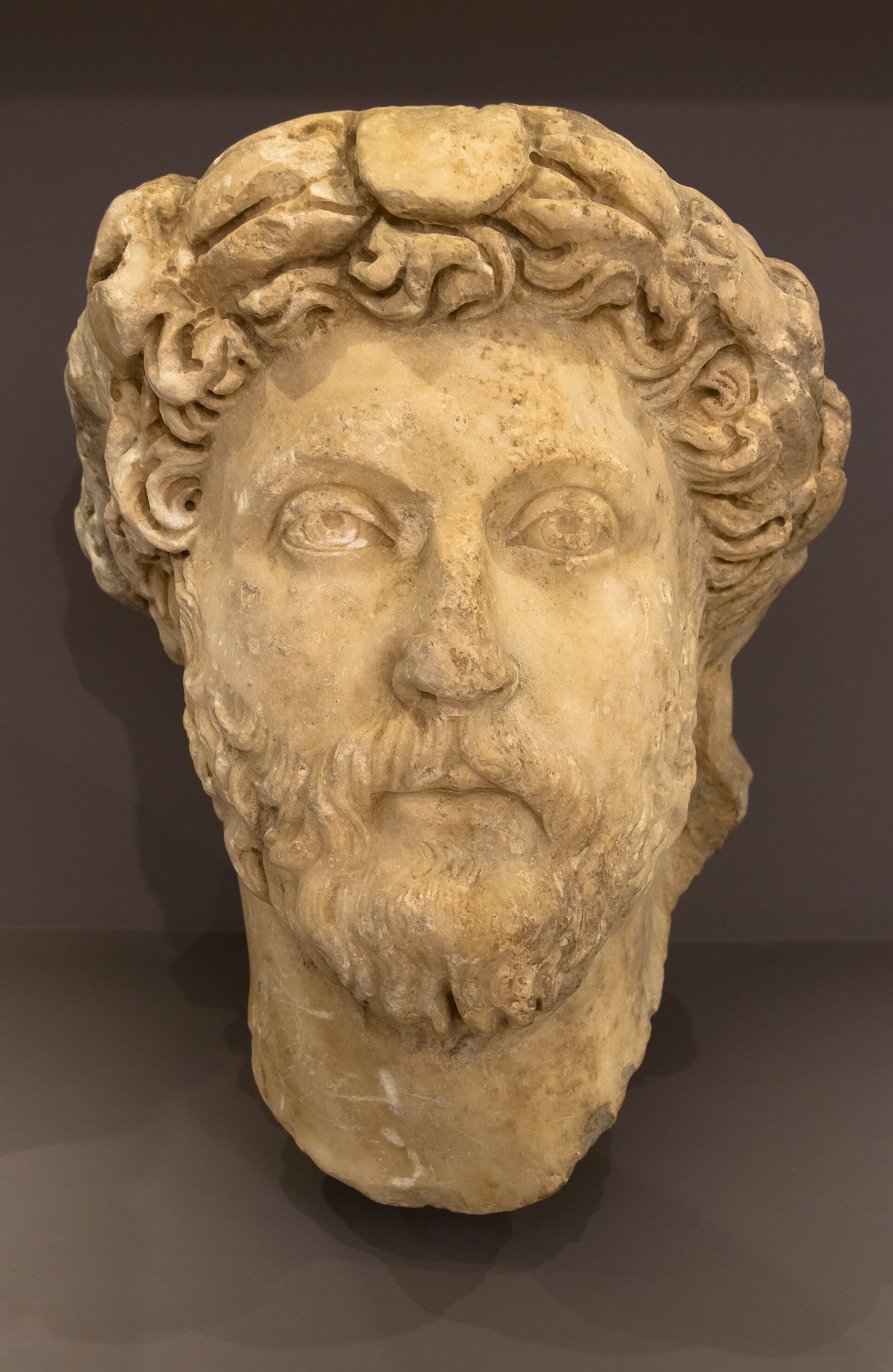 Marcus Aurelius