Who is Apollo?
Apollo retained his Greek name in Rome — unlike Mars or Venus, who translated Greek gods under Latin names, Rome adopted Apollo directly. His cult existed early, but it rose dramatically under Augustus, who associated Apollo with victory at Actium, moral renewal, prophecy, music, healing, and imperial order. The Palatine temple of Apollo stood close to Augustus's own residence.
Apollo combined prophecy, plague and healing, music, archery, and solar associations. He was never reducible to only “the sun god”: the full identification of Apollo with the sun is later and incomplete. In Rome his many powers were gathered, above all, into the ideology of the Augustan age.
Origins & history
Apollo's Roman cult was not new in the age of Augustus — it existed early — but it was Augustus who raised it to the center of Roman public life. After the victory at Actium, Apollo became the god of the new regime: patron of moral renewal, prophecy, music, and imperial order. The building of his temple on the Palatine, beside the emperor's residence, made the connection between god and ruler impossible to miss.
That elevation also tied Apollo's divine “order” to political power and civil-war victory. The god of harmony and prophecy became an emblem of a particular settlement of Roman politics — a reminder that Roman religion and Roman ideology were never fully separable.
Cult & worship
Apollo was patron of prophecy, medicine, music, and poetic order, and a protector against plague who could also send it. In Rome his worship rose above all under Augustus. The princeps associated Apollo with his victory at Actium and made the god a symbol of moral renewal and imperial order; the Palatine temple of Apollo, close to the emperor's residence, became the architectural heart of that program. Apollo's cult thus fused ancient functions — oracle, healer, musician — with the political needs of the new empire.
Greek equivalent
Apollo is the exception among the great Roman gods: he kept his Greek name. Where Mars and Venus are Latin names laid over Greek Ares and Aphrodite, Roman Apollo and Greek Apollo (Greek focus) are the same god, adopted directly. What changed in Rome was not his name but his standing: under Augustus, the god of prophecy, music, and healing was raised into an emblem of Actium's victory and the imperial order, given a great temple on the Palatine beside the emperor's house.
Famous myths & stories
Apollo, Actium, and Augustus
Apollo's dramatic rise came with Augustus, who tied the god to his victory at Actium and to a program of moral renewal and imperial order. The Palatine temple, close to the emperor's residence, made Apollo the divine face of the new regime — and bound his “order” to civil-war victory.
Prophecy and the road to Italy
In Virgil, Apollo's prophetic authority repeatedly directs the Trojan migration toward Italy. His oracles are instruments of destiny rather than free-standing personal advice — the god of prophecy becomes a voice of Rome's fate.
Failed desire
Apollo's myths are full of failed love. Daphne escapes him by being transformed into a laurel; Cassandra receives the gift of prophecy but is fated never to be believed; Hyacinthus dies. For a god of light and order, his desires end again and again in loss.
Legacy & influence
Apollo endures as an emblem of rational harmony. NASA's Apollo program carried his name to the moon; music, poetry, medicine, and solar art all still invoke him. Whenever a modern image reaches for clarity, order, and the union of the arts and sciences, it reaches, knowingly or not, for Apollo.
Symbolism
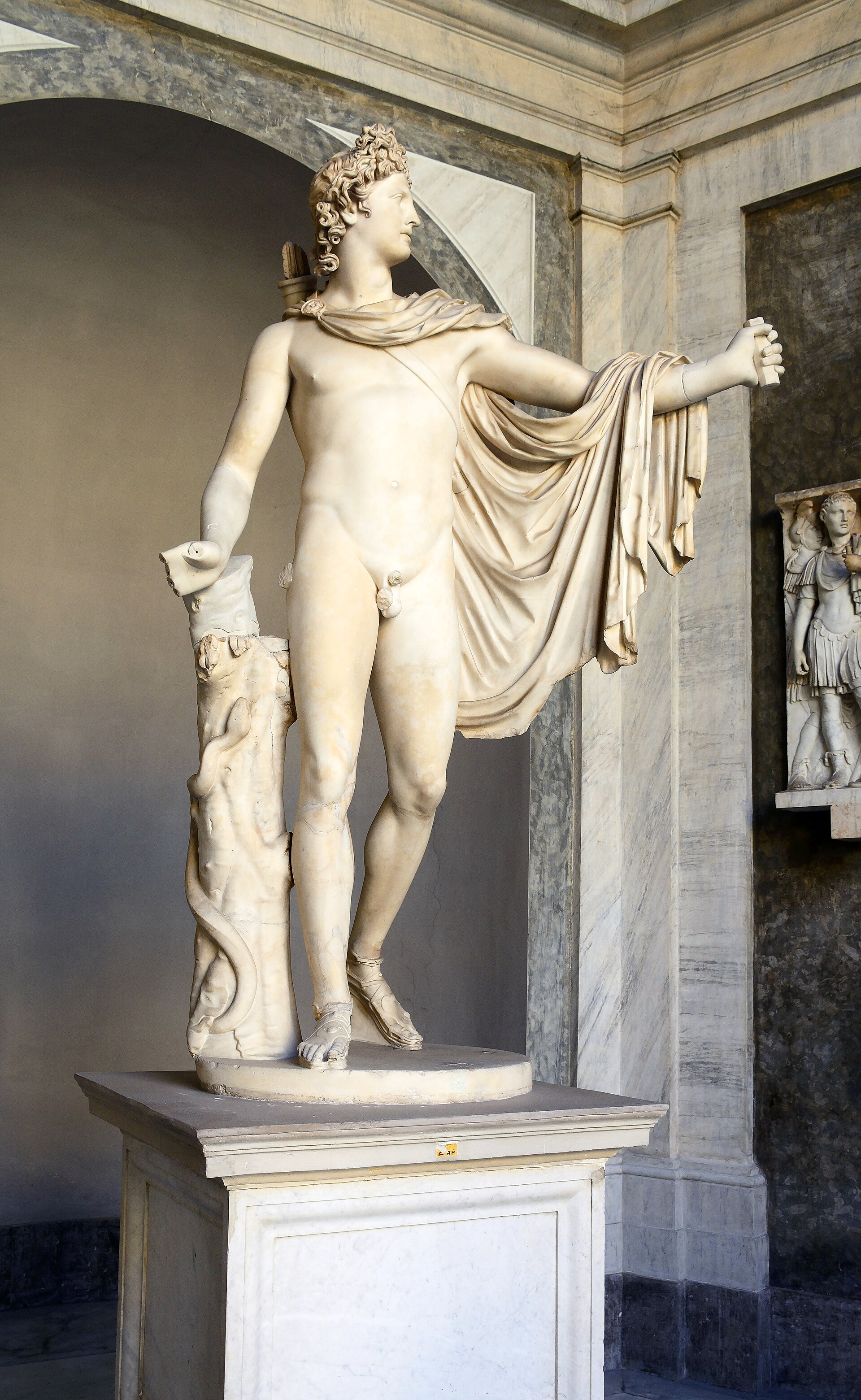
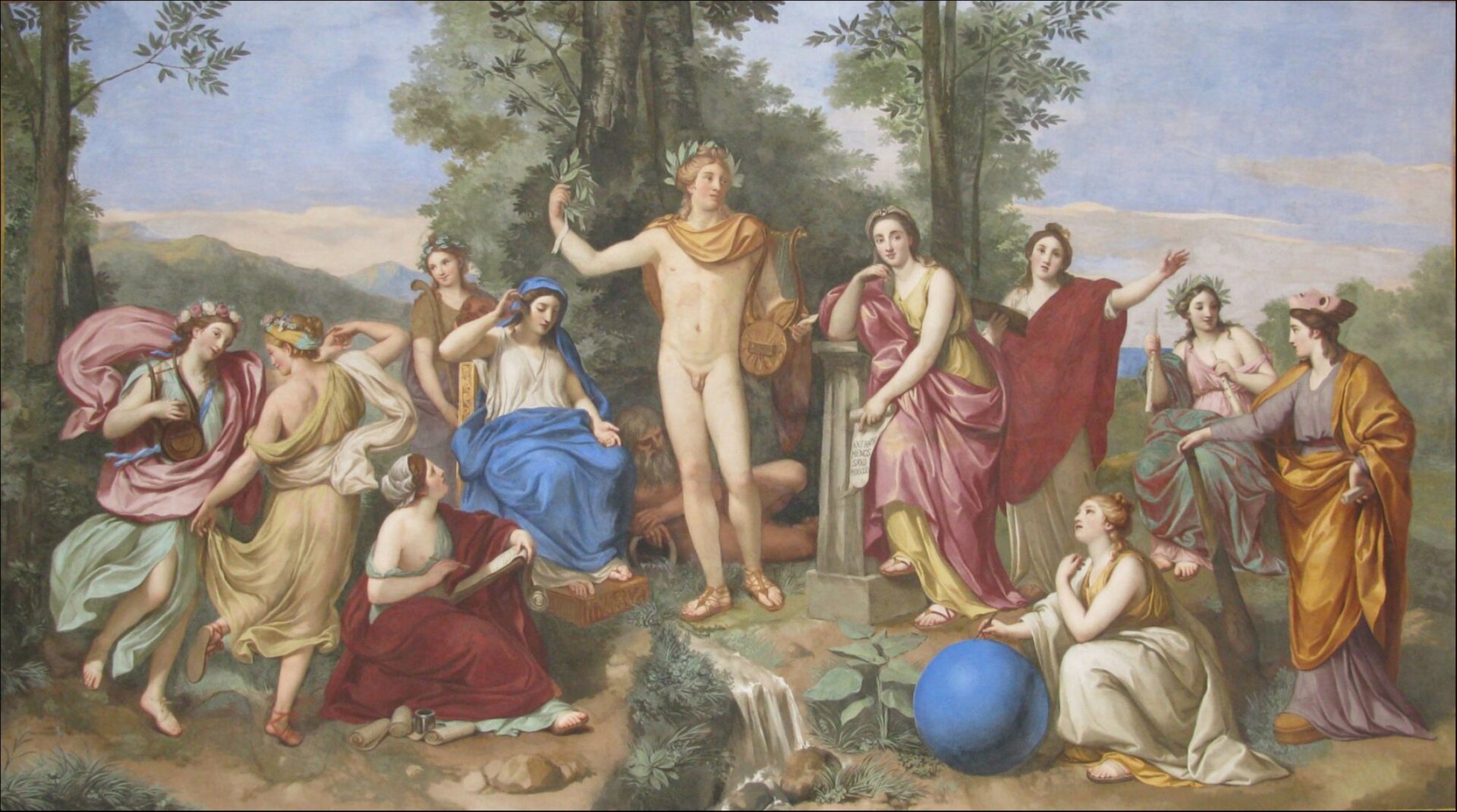
His emblems map his powers. The lyre is music and poetic order — harmony made audible. The bow and arrows carry his double edge: he both sends plague and protects against it. The laurel recalls Daphne and became the emblem of poetic and victorious honor. The sun marks his solar associations — though, in Roman terms, he was never simply the sun god. Together they present a god of clarity, prophecy, and order who is also capable of striking from a distance.
Famous public-domain depictions — click any image to view it full size.
Did Apollo have a different name in Rome?
No. Apollo kept his Greek name in Rome. His cult existed early but rose dramatically under Augustus, who tied Apollo to victory at Actium, moral renewal, prophecy, music, healing, and imperial order.
Why was Apollo important to Augustus?
Augustus associated Apollo with his victory at Actium and with moral renewal, prophecy, music, healing, and imperial order. The Palatine temple of Apollo stood close to Augustus's own residence, binding the god to the new regime.
Was Apollo the Roman sun god?
Not simply. Apollo combined prophecy, plague and healing, music, archery, and solar associations. The full identification of Apollo with the sun is later and incomplete — he was never reducible to only a sun god.
What was Apollo the god of?
Prophecy, medicine, music, and poetic order, along with archery and Augustan ideology. He was protector against plague as well as its sender.
 Michael Paycer