Who is Venus?
Venus began as an Italian goddess associated with growth and attraction, and became deeply identified with Greek Aphrodite. For Romans, however, she gained an exceptional political importance: Aeneas was said to be her son, making her the ancestress of the Roman line that mattered most. Julius Caesar promoted Venus Genetrix as ancestress of the Julian family, and Pompey had earlier favored Venus Victrix.
That range is the key to understanding her. Venus could be erotic desire, fertility, ancestral legitimacy, military victory, and even a cosmic generative force — far more than a goddess of beauty. Lucretius opens De Rerum Natura with an invocation to Venus as creative power, even though his Epicurean philosophy denied that the gods providentially micromanage the world.
Origins & history
Venus's oldest Italian identity was tied to growth and attraction, and her fusion with Aphrodite brought her the rich mythology of the Greek goddess of love. But her Roman career was shaped above all by the claim that Aeneas, the Trojan founder of the Roman people, was her son. That descent made her not just a goddess of desire but an ancestress of Rome itself.
Because of that ancestry, Venus became unusually political. Competing Roman leaders each claimed their own version of her: Caesar's Venus Genetrix cast her as mother of the Julian line, while Pompey's Venus Victrix claimed her as giver of victory. Divine symbolism, in her case, was flexible propaganda rather than a fixed theological statement.
Cult & worship
Venus was worshipped under many faces, and in Rome the most consequential were political. As Venus Genetrix — “Venus the Mother” or ancestress — Julius Caesar promoted her as founder of the Julian line, descended from her son Aeneas. As Venus Victrix — “Venus the Victorious” — Pompey had earlier favored her as a giver of military success. That two rival leaders could each build a cult around a different Venus shows how her worship carried ancestral legitimacy and victory as much as love and fertility.
Greek equivalent
Venus was identified with Greek Aphrodite, and much of her narrative mythology — her loves, her role in the Trojan War — is inherited from the Greek goddess through Latin poetry. But the identification is not the whole story. Aphrodite is the Greek goddess of love and beauty; Venus is that and the ancestress of Rome and a symbol of political victory. Reading the two side by side shows what Roman religion did with a borrowed goddess.
Famous myths & stories
Mother of Aeneas
Venus was the mother of Aeneas, the Trojan hero whose journey to Italy founds the Roman people. Through him she became protector of the Julian line and a divine ancestress of Rome — the myth that gave her cult its extraordinary political weight.
The Judgment of Paris
Her myths often connect desire with conflict. The Judgment of Paris — in which Venus is chosen as the fairest — ultimately helps trigger the Trojan War, binding the goddess of love to the great catastrophe from which Rome's own founding myth springs.
Venus as creative power
Lucretius opens De Rerum Natura with an invocation of Venus as the generative force that drives all life — a cosmic reading of the goddess. Yet his Epicurean philosophy denied that the gods providentially micromanage the world, so the invocation is poetic and philosophical rather than a claim of divine intervention.
Legacy & influence
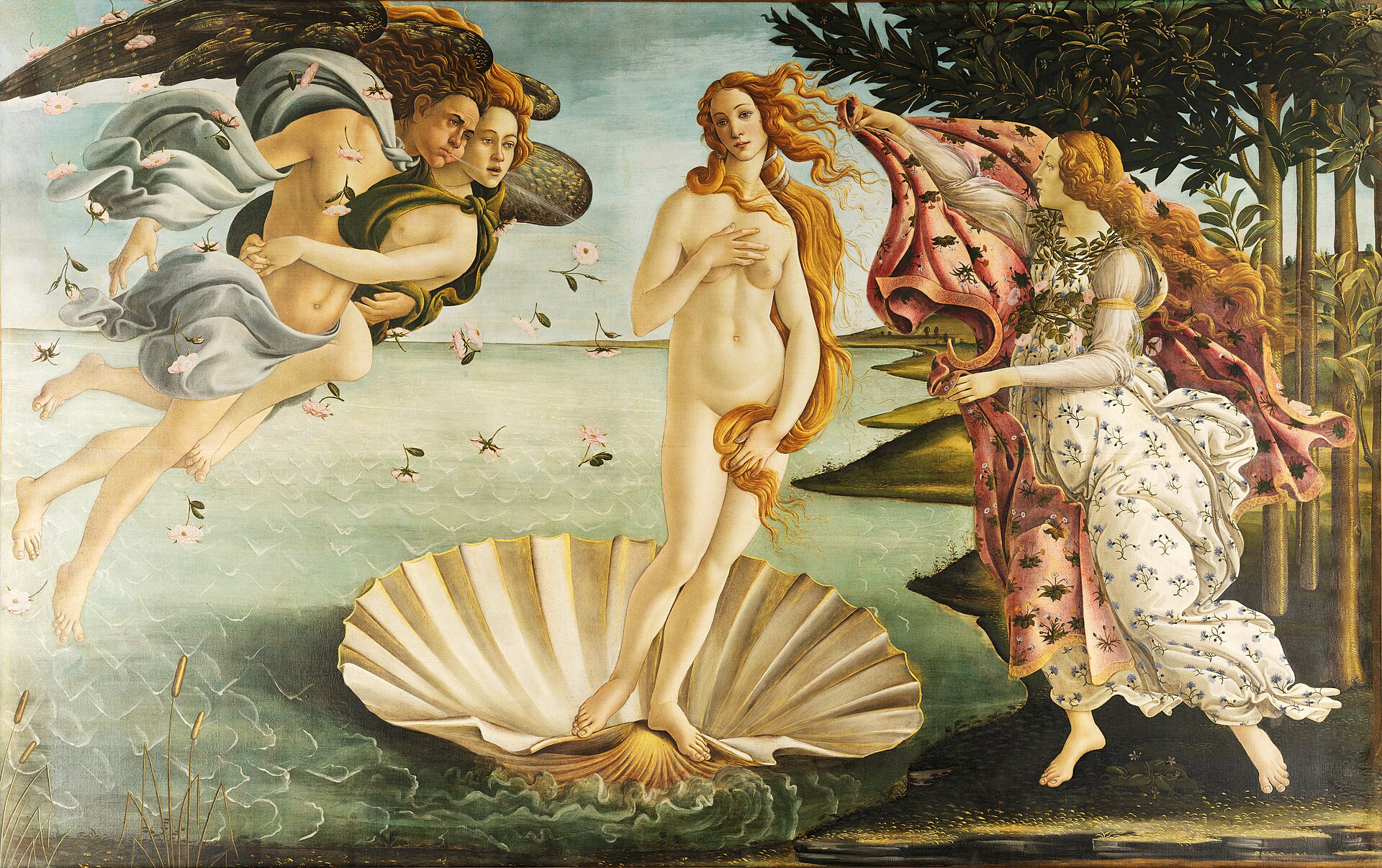
Venus's cultural afterlife is vast. The planet Venus carries her name, as does the female symbol ♀. She shaped visual ideals of beauty from antiquity onward, and Botticelli's Birth of Venus is among the most famous paintings in the Western tradition. The modern language of love and sexuality still reaches for her name.
Symbolism
Her emblems gather her many roles. The myrtle and rose are love, desire, and blossoming fertility; the dove is tenderness and attraction; the seashell recalls her emergence from the sea and her generative, sea-born power. Behind the imagery of beauty lies the deeper Roman claim: that this goddess of desire was also the source of a people, the giver of victory, and a creative force in the world.
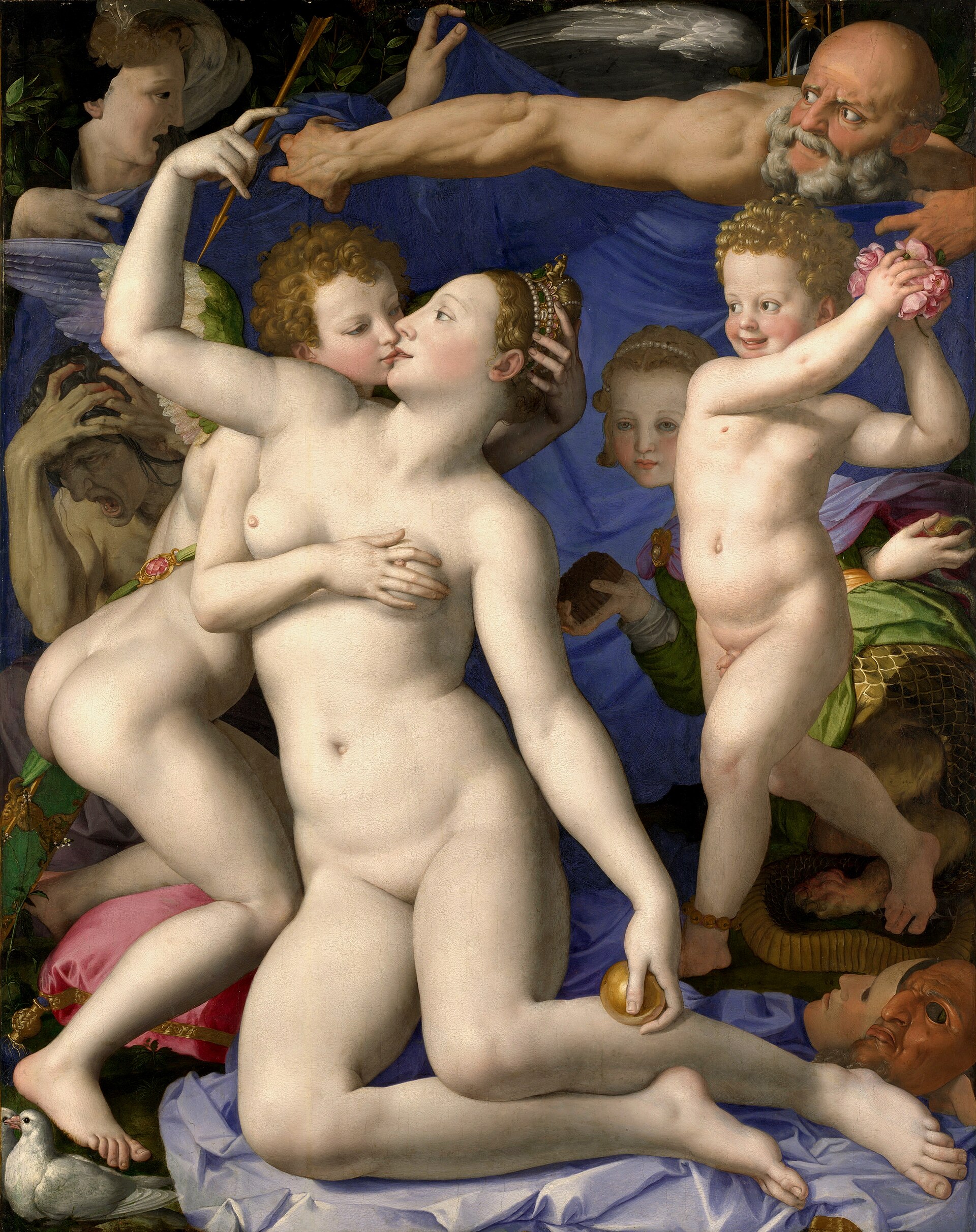
Famous public-domain depictions — click any image to view it full size.
Is Venus the same as Aphrodite?
Venus became deeply identified with Greek Aphrodite, but she began as an Italian goddess associated with growth and attraction, and she gained a distinctly Roman political importance as the mother of Aeneas and the ancestress of the Julian line.
What was Venus the goddess of?
Love, desire, and fertility, but also ancestral legitimacy, military victory, and even a cosmic generative force. In Roman poetry and politics she was far more than a goddess of beauty.
Why was Venus important to Julius Caesar and the Julian family?
Aeneas was said to be her son, so Julius Caesar promoted Venus Genetrix as the ancestress of the Julian line. Pompey had earlier favored Venus Victrix — proof that competing Roman leaders could each appropriate a different form of Venus.
What does Venus Genetrix mean?
Venus as mother or ancestress. Julius Caesar promoted Venus Genetrix to cast the goddess as the divine ancestress of his family, the Julian line, descended from her son Aeneas.
 Michael Paycer