Who is Mars?
Mars was far more important to Rome than Ares was to many Greek civic traditions. He was the father of Romulus and Remus, the protector of soldiers and fields, and one of the defining gods of Roman identity. The month of March (Martius) was named for him and originally opened the campaigning season, tying him to both the farming year and the start of war.
That double character is the key to understanding him. Roman Mars joined agriculture, virility, military discipline, ancestry, and state expansion; he was not simply a god of bloodlust in the way Greek myth often cast Ares. Under Augustus, Mars Ultor — “Mars the Avenger” — became central to the regime's moral and dynastic self-presentation.
Origins & history
Mars stands among the oldest and most Roman of the gods. As father of Rome's founder he was woven into the city's foundation legend from the start, and the naming of the first month of the old campaigning season after him shows how deeply the agricultural and the military calendars overlapped in his cult. He was worshipped as protector of soldiers on the march and of boundaries and fields at home.
His meaning shifted with Roman politics. By the age of Augustus he had been recruited into imperial ideology: Mars Ultor, the Avenger, gave a divine sanction to the new regime's claims of moral and dynastic renewal. Archaic Italian cult, Greek myth, and imperial ideology overlap in him but are not identical.
Cult & worship
Mars safeguarded armies and agricultural boundaries alike, embodying disciplined force in service of the community. The month of March, named for him, opened the season of both planting and war. Under Augustus his cult took on an explicitly political charge: as Mars Ultor — “Mars the Avenger” — he became central to the regime's moral and dynastic self-presentation, the god who avenged and guaranteed the new order. Roman devotion to Mars, however, cannot be separated from conquest: the same cultic language of virtue and defense could also legitimize aggressive warfare.
Greek equivalent
Mars was identified with Greek Ares, and much of his narrative mythology is shared with the Greek war-god through Latin poetry. But the identification understates him. Where many Greek civic traditions honored Ares only warily, Rome placed Mars near the center of its self-understanding — as ancestor of the founder, protector of fields, and, under Augustus, an emblem of the state itself. Reading the two side by side is the clearest way to see what was distinctly Roman about Mars.
Famous myths & stories
Father of the Roman race
Mars mythically fathered Romulus and Remus, Rome's founders, making him an ancestor of the Roman people. Virgil can therefore call Rome “the race of Mars,” and Ovid repeatedly addresses him as the father of the Roman founder. The war-god is also, in the founding story, the source of Roman blood.
Mars the Avenger
Under Augustus, Mars Ultor — “Mars the Avenger” — became central to the regime's moral and dynastic self-presentation. The god of the battlefield was made to underwrite a political program, showing how flexible Roman divine symbolism could be.
The god deceived
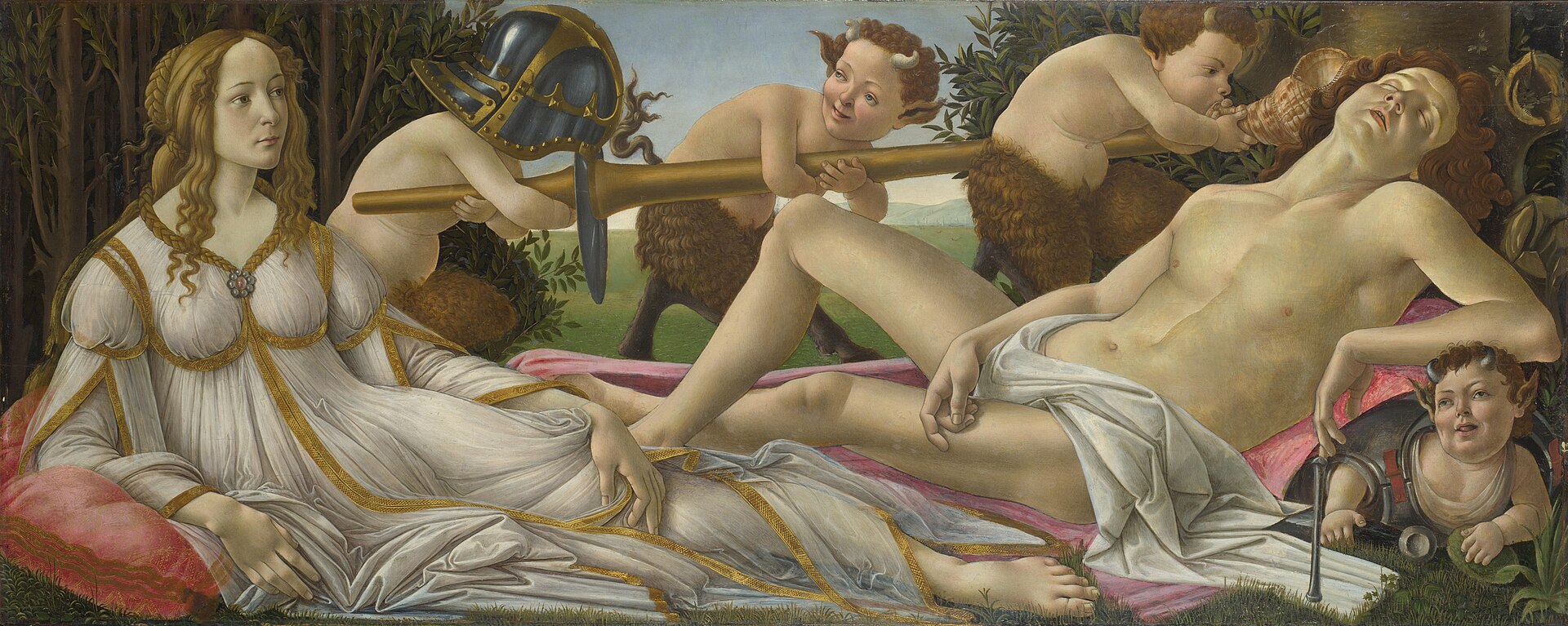
Mars is not always dignified. In Ovid's Fasti he becomes comic: seeking Minerva's love, he is deceived by the goddess Anna Perenna, who takes Minerva's place. The episode is a reminder that even Rome's fierce war-god could be made the butt of a joke.
Legacy & influence
Mars is everywhere in modern language and imagination. The planet Mars and the month of March carry his name; the adjective “martial” descends from him, along with a vast tradition of military symbolism. From science fiction to modern political rhetoric, the figure of Mars endures as the archetype of war — though the Roman god was always more than that.
Symbolism
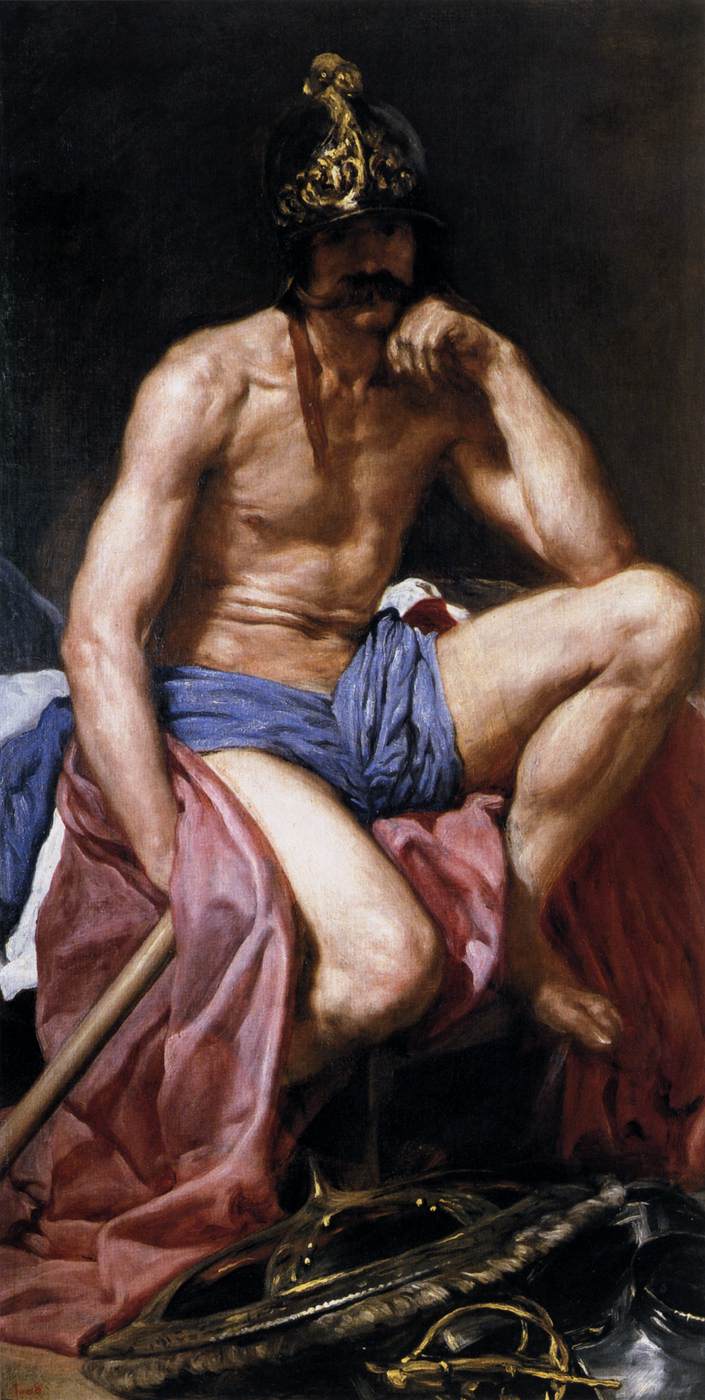
His emblems carry his double nature. The spear and shield are disciplined force — power exercised in service of the community rather than sheer fury. The helmet marks the soldier under order and command. The wolf recalls his fathering of Romulus and Remus and Rome's own origin story. Together they say what Roman religion meant by him: martial strength bound to ancestry, agriculture, and the survival of the state.
Famous public-domain depictions — click any image to view it full size.
Is Mars the same as Ares?
They were identified with each other, but Mars was far more important to Rome than Ares was to many Greek civic traditions. He was the father of Romulus and Remus, the protector of soldiers and fields, and one of the defining gods of Roman identity — joining agriculture, virility, and military discipline rather than mere bloodlust.
What was Mars the god of?
War and military discipline, but also agriculture, virility, ancestry, and state expansion. He was protector of soldiers and of fields, and one of the gods most central to Roman identity.
What does Mars Ultor mean?
“Mars the Avenger” (Mars Ultor). Under Augustus this form of Mars became central to the regime's moral and dynastic self-presentation.
Why is the month March named after Mars?
March (Martius) was named for Mars and originally opened the campaigning season, tying the god to both the farming year and the start of war.
 Michael Paycer