What are Roman mythological creatures?
The Romans populated their world with a vast cast of beings below the great gods: woodland spirits, water divinities, sea heralds, and outright monsters. Some inhabited real rivers and groves and received offerings; others were the villains and marvels of poetry, encountered by heroes and retold for their moral or dramatic charge. The category is not uniform, and reading it honestly means keeping those differences in view rather than flattening everything into a single “bestiary.”
An important caution runs through this whole class. A few of these beings had genuine cult: nymphs received inscriptions and offerings at actual springs and sacred places across the empire, and the rustic fauns belonged to real pastoral religion connected with the god Faunus. But most of the creatures here — the Gorgons, the Minotaur, the Chimera, the Sirens, Cerberus, Pegasus — are chiefly literary monsters inherited from Greek myth and reshaped through Latin poetry, drama, and art. They matter as story and image, not as objects of Roman state cult, and this page says so where it is true.
Nature spirits
These were the divinities of woods, fields, and fresh water — the porous boundary between local sacred presence and literary creature.
Fauns
Fauns were rustic woodland beings associated with the god Faunus and, in later art, drawn close to the Greek satyrs. They occupy the boundary between local nature spirit and literary creature, embodying the untamed countryside, fertility, prophecy, and the uncanny life of the woods. Because later art so often merges fauns and satyrs, strict distinctions became difficult. Their afterlife is enormous in fantasy, sculpture, and painting — think of Mr. Tumnus in C. S. Lewis’s Narnia. Evidence for them as spirits is real but literary and diffuse (grade B/D).
Satyrs
Satyrs were Greek rustic spirits adopted into Roman art and literature, associated with Dionysus/Bacchus, wine, music, sexuality, and wilderness. In Rome they are primarily mythic attendants and artistic figures rather than state gods. They carry Dionysian energy, comic release, and erotic chaos, standing as a foil to civilized restraint — though their myths often normalize sexual aggression and drunkenness, and their characterization is stereotyped and genre-dependent. The word “satyr” and the modern image of uncontrolled appetite descend from them. Strong as a literary and artistic tradition; essentially absent as distinctly Roman cult.
Nymphs
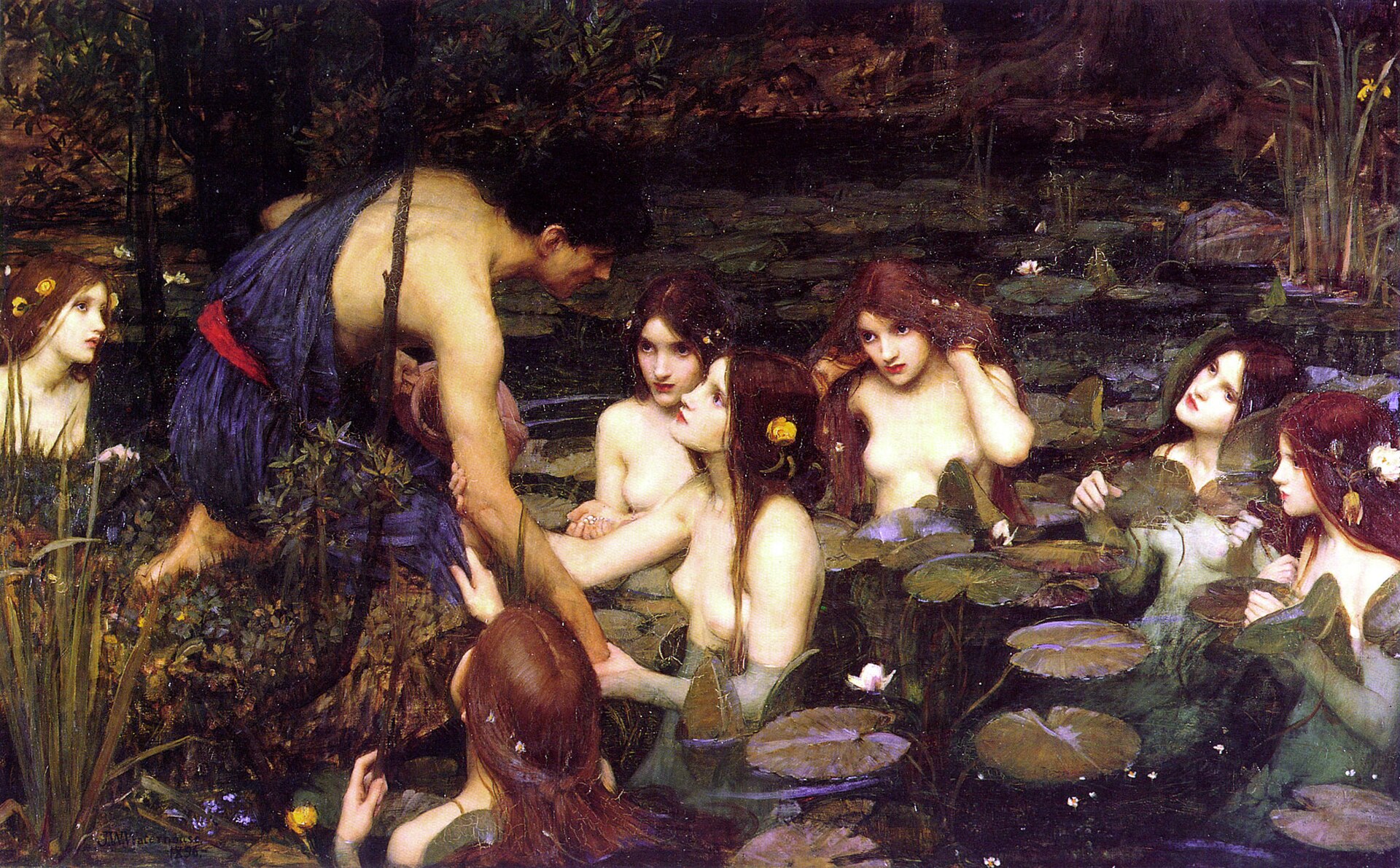
Nymphs were female nature divinities of springs, rivers, groves, mountains, and caves. This is the great exception to the “merely literary” rule: unlike modern fairies, Roman nymphs could receive real inscriptions and offerings at actual water sources, and Latin dedications commonly read NYMPHIS, “to the Nymphs.” They protected waters and landscapes and tied religion to local ecology. “Nymph” is a broad category, and local cults cannot be reduced to one standardized mythology. Their legacy runs through art, literature, ballet, and even the biological term “nymph” for an immature insect stage (grade A/B).
Dryads
Dryads were tree nymphs of Greek origin who entered Roman poetry and art as literary spirits expressing the animation and sacredness of trees. Roman poets mention them, but no independent Roman cult creed survives, and subtypes such as the Hamadryads are not always distinguished consistently. They are essentially Greek-derived literary mythology (grade D), living on in fantasy, environmental art, poetry, and games as the voice of the forest.
Naiads
Naiads were freshwater nymphs of springs, fountains, rivers, and streams. Like nymphs generally, they could be literary figures or genuine sacred presences at actual water sources, sometimes with fertility or healing associations. No universal first-person “creed” survives, and evidence varies greatly from place to place; “Naiad” is a Greek taxonomic term applied within Roman literary culture. They endure in art, fountain design, fantasy, and the botanical family name Naiadaceae (grade B/D).
Sea beings
The Mediterranean world gave Rome a retinue of marine powers, mostly decorative and mythic rather than cultic.
Tritons
Triton began as a sea god, son of Neptune and Amphitrite; the plural Tritons became a whole class of merman-like sea beings in Hellenistic and Roman art. In Roman contexts they are mainly mythic and decorative — sea heralds with shell trumpets, forming Neptune’s watery retinue. Virgil’s Aeneid ranks Triton among the marine powers, and Ovid uses him in the Metamorphoses to signal the retreat of the floodwaters. The shift from singular god to plural species makes the term fluid. Their legacy: fountains, maritime heraldry, fantasy, and Neptune’s moon Triton (grade B/D).
Sirens
Sirens were dangerous female beings whose irresistible song lured sailors to destruction. Roman authors inherited and reshaped the Greek tradition; the foundational encounter belongs to Homer’s Odyssey, to which Latin literature repeatedly alludes. They are primarily literary monsters and symbols of seductive danger, not cult figures. A key correction to popular culture: ancient Sirens were commonly bird-women, not the fish-tailed mermaids of later imagination, and their number and appearance vary. Their legacy is everywhere — the “siren song,” the warning siren, mermaid traditions, and the psychology of temptation (grade A/D).
Monsters
These are the great antagonists of myth — inherited from Greek story, retold by Virgil and Ovid, and never objects of Roman cult.
Gorgons
The Gorgons were monstrous sisters, most famously Medusa, whose gaze turned viewers to stone. Perseus killed Medusa, and her severed head became an apotropaic symbol — the Gorgoneion that guarded shields, armor, and architecture. So while they are primarily mythic monsters, the protective image did real visual work. Ovid retells Medusa’s story and Perseus’s use of the head in the Metamorphoses. Versions differ radically: Ovid’s famous account of Medusa’s transformation after violation by Neptune is not the only ancient tradition and should not be projected backward as the original. Their afterlife runs from the Versace logo to feminist reinterpretation, sculpture, and film (grade A/D).
Minotaur
The Minotaur was the bull-headed monster confined in the Cretan Labyrinth and killed by Theseus; Roman writers and artists inherited the Greek myth. It is a literary monster and a symbol of hidden violence, monstrous birth, and labyrinthine entrapment, and Ovid refers to the Minotaur and Theseus cycle in the Metamorphoses. No major Roman cult is known. It is often treated simply as a villain despite being born into confinement as a result of other characters’ actions. Its modern reach is remarkable — Borges, Picasso, film, games, and the enduring metaphor of the labyrinth (grade A/D).
Cyclopes
Cyclopes were one-eyed giants — but ancient tradition contains different groups: the Hesiodic divine smiths who forge thunderbolts and the Homeric pastoral monsters such as Polyphemus. Roman literature also linked Cyclopes with Vulcan’s forge: Virgil’s Aeneid visits the land of the Cyclopes in Book 3 and shows them smithing in Vulcan’s workshop in Book 8. Treating all Cyclopes as one uniform “species” conflates distinct ancient traditions. They live on in fantasy, film, geology folklore, and the word “cyclopean” for massive ancient masonry (grade A/D).
Harpies
Harpies were winged female beings associated with storms, snatching, pollution, and divine punishment. In Virgil’s Aeneid Book 3, the Harpy Celaeno prophesies that the Trojans will be driven by hunger to “eat their tables” — a frightening prediction fulfilled harmlessly later when the exiles eat the flat bread trenchers that served as their tables. They punish, pollute food, and carry prophetic warnings that build suspense. Their image changes across Greek and Roman art, and the modern use of “harpy” as a gendered insult distorts the mythic category. Their legacy includes heraldry, fantasy, and the harpy eagle’s common name (grade A/D).
Chimera
The Chimera was a composite monster — typically lion, goat, and serpent — killed by Bellerophon, and Roman authors inherited the Greek story as an emblem of impossible hybridity. Roman poets allude to the fire-breathing creature, but no cultic speech survives; the Roman evidence is reception rather than independent cult, and her biography is essentially the story of being slain. The word itself is her greatest legacy: a “chimera” is an impossible fantasy, and in biology and medicine it names an organism or individual containing genetically distinct cell populations (grade A/D).
Cerberus
Cerberus was the multi-headed hound guarding the entrance to the underworld. Capturing him was one of Hercules’ Twelve Labors, and in Virgil’s Aeneid Book 6 the Sibyl subdues him with a drugged, sleep-inducing morsel so Aeneas can pass. He keeps the dead from escaping and the living from entering freely — yet he is repeatedly overcome by exceptional heroes, which is narratively necessary but makes the supposedly invincible guardian surprisingly penetrable. His legacy stretches from Dante to security metaphors, astronomy, and countless fictional guard dogs (grade A/D).
Composite creatures
Half-human, half-animal, these hybrids dramatized the tension between reason and appetite — and, at their best, between wildness and wisdom.
Centaurs
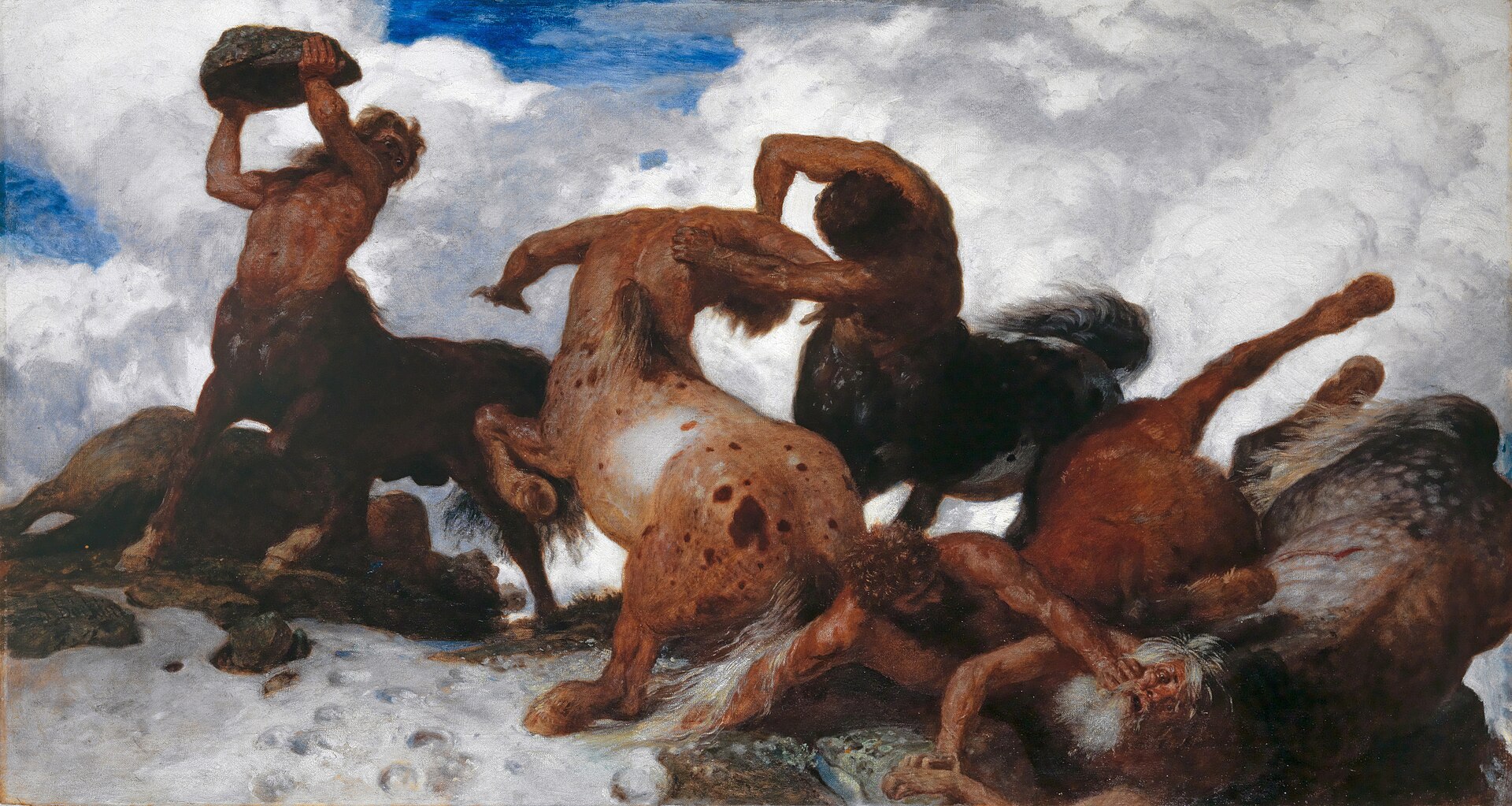
Centaurs had human upper bodies and equine lower bodies. Greek myth supplied most of their stories, but Roman art and poetry embraced them — Ovid’s Metamorphoses Book 12 gives an extensive account of the battle between the Lapiths and Centaurs. They often dramatize the conflict between civilization and uncontrolled appetite, though Chiron is the great exception: a wise healer and teacher of heroes. Most centaurs, by contrast, are stereotyped as drunken and violent, so the category is not morally uniform. They survive in art, the constellation Centaurus, fantasy, role-playing games, and the philosophy of human duality (grade A/D).
Pegasus
Pegasus was the divine winged horse born from Medusa’s blood in a major Greek tradition. Bellerophon rode him against the Chimera, and later traditions connected Pegasus strongly with the Muses and poetic inspiration — he was said to have struck open the Hippocrene spring. He is a mythic creature and literary symbol, not a Roman cult deity, and Ovid preserves elements of his tradition in the Metamorphoses. Modern retellings often merge incompatible versions and confuse him with any winged horse. His legacy: the constellation Pegasus, poetry, logos, aviation imagery, and children’s literature (grade A/D).
Famous public-domain depictions — click any image to view it full size.
 Michael Paycer