Spirits of fate and inspiration
Below the great gods, the Romans recognized clusters of divine powers that governed the deepest patterns of a human life: the destiny allotted at birth, the vengeance that follows a grave crime, the charm that binds people together, and the inspiration that makes song possible. These groups — the Furies, the Fates or Parcae, the Graces, and the Muses — are among the most enduring figures Rome handed down to later art and thought.
Their status was not uniform, and it is worth being honest about that. Some of these beings had genuine cult and were treated as real recipients of reverence — the Fates, the Muses, and the Graces all belong to that better-attested group. Others, like the Furies, live mainly in epic and tragedy as literary powers rather than as objects of ordinary state worship. Much of the material was inherited from Greek myth — the Moirai, Erinyes, Charites, and Mousai — and reshaped through Latin epic and elegy. Where the evidence is thin or the tradition varies, this page says so.
Fate and vengeance
Two powers governed the shape and the accounting of a life: the Parcae who measured it out, and the Furies who punished those who violated its deepest bonds.
The Furies (Furiae)
The Furies — Latin Furiae, Greek Erinyes, also called Dirae — were avenging powers of blood guilt, curses, violated kinship, and moral pollution. They personify the idea that some crimes generate a pursuing consequence beyond ordinary courts: a debt that the world itself collects. Virgil’s Aeneid gives the Fury Allecto a major role in unleashing war in Italy, showing how a single spirit of madness could tip a whole people toward violence. Their justice, though, can look indistinguishable from endless vengeance, and while the Greek Erinyes could be transformed into the “Kindly Ones,” Roman adaptations vary. The word “fury” and a long line of art, opera, and psychological metaphor descend from them (grade A/D — strong in literature, thin as ordinary cult).
The Fates (Parcae)
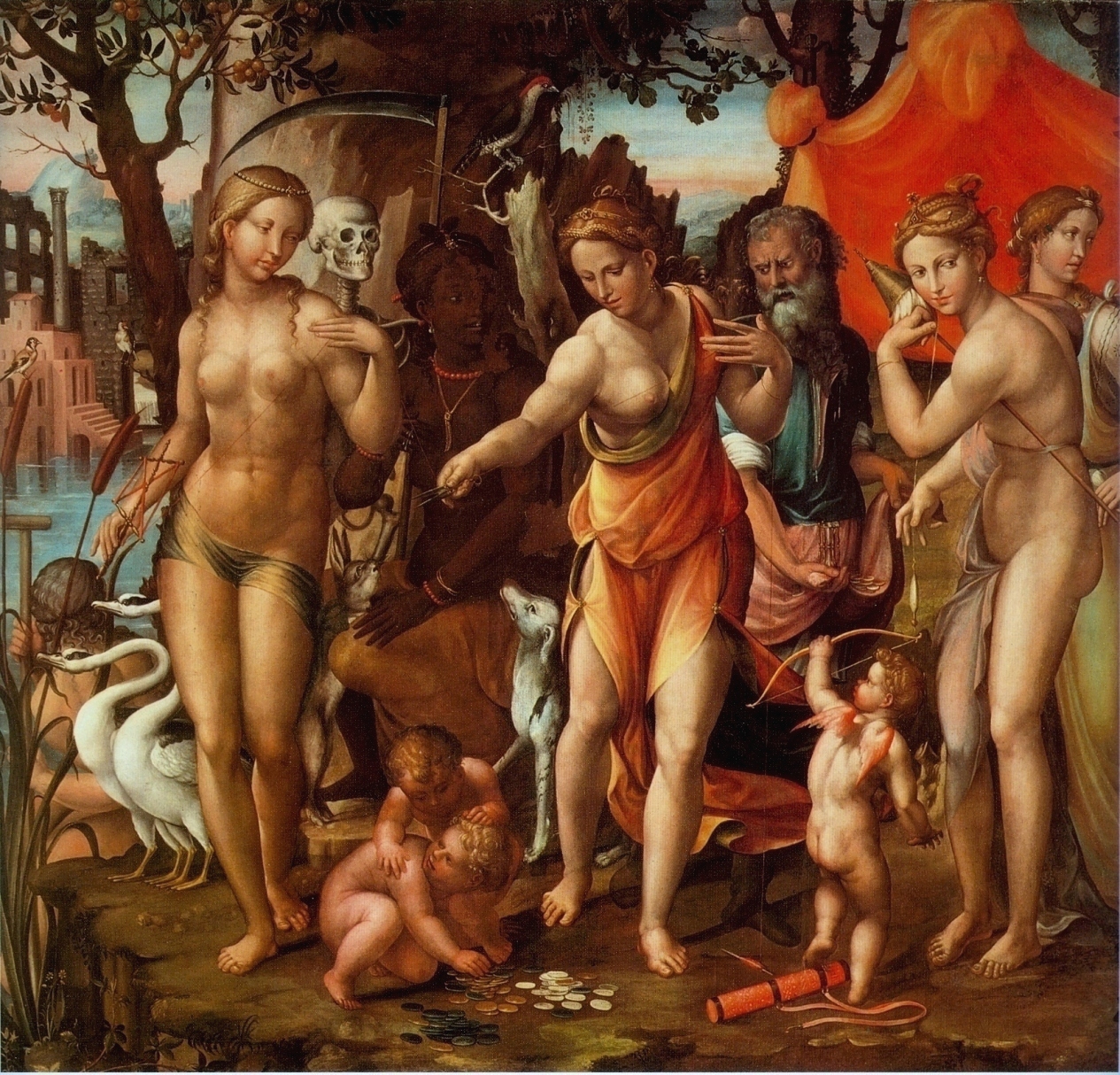
The Roman Fates were the Parcae, commonly named Nona, Decima, and Morta in later tradition and equated with the Greek Moirai. They governed birth, allotted the span of life, and presided over death. With them Roman thought reached one of antiquity’s deepest questions: how can divine providence, destiny, causation, and human responsibility coexist? Virgil repeatedly insists that even gods such as Juno cannot ultimately overturn fatum, fate — she can delay Rome’s destiny but not defeat it. Crucially, the ancients never produced one accepted answer to the free-will problem: mythic Fates, Stoic causation, astrology, and poetic destiny are not identical systems. The Stoics affirmed a causal order running through the whole cosmos while still working out accounts of responsibility — so “fate” here is a live philosophical tension, not a settled denial of freedom. The Parcae live on in the word “fate,” fairy-tale spinners, Shakespeare, and modern debates about determinism (grade A/B).
Grace and inspiration
Two groups governed the goods that make culture worth having: the charm that circulates favor, and the inspiration that authorizes song.
The Graces (Gratiae)
The Graces — Latin Gratiae, Greek Charites — were goddesses of charm, beauty, generosity, favor, and social reciprocity, most often three in number. They symbolized the circulation of benefits: the giving, receiving, and returning of favor that holds a society together, and Roman moralists could use them allegorically to discuss generosity. They preside over beauty and festivity and attend on Venus. Their individual names and number vary by source and place, so no single canonical account fixes them. Their afterlife in art is spectacular — Botticelli, Raphael, and Canova all painted or carved them — and the very word “grace” carries their meaning forward (grade A/B).
The Muses
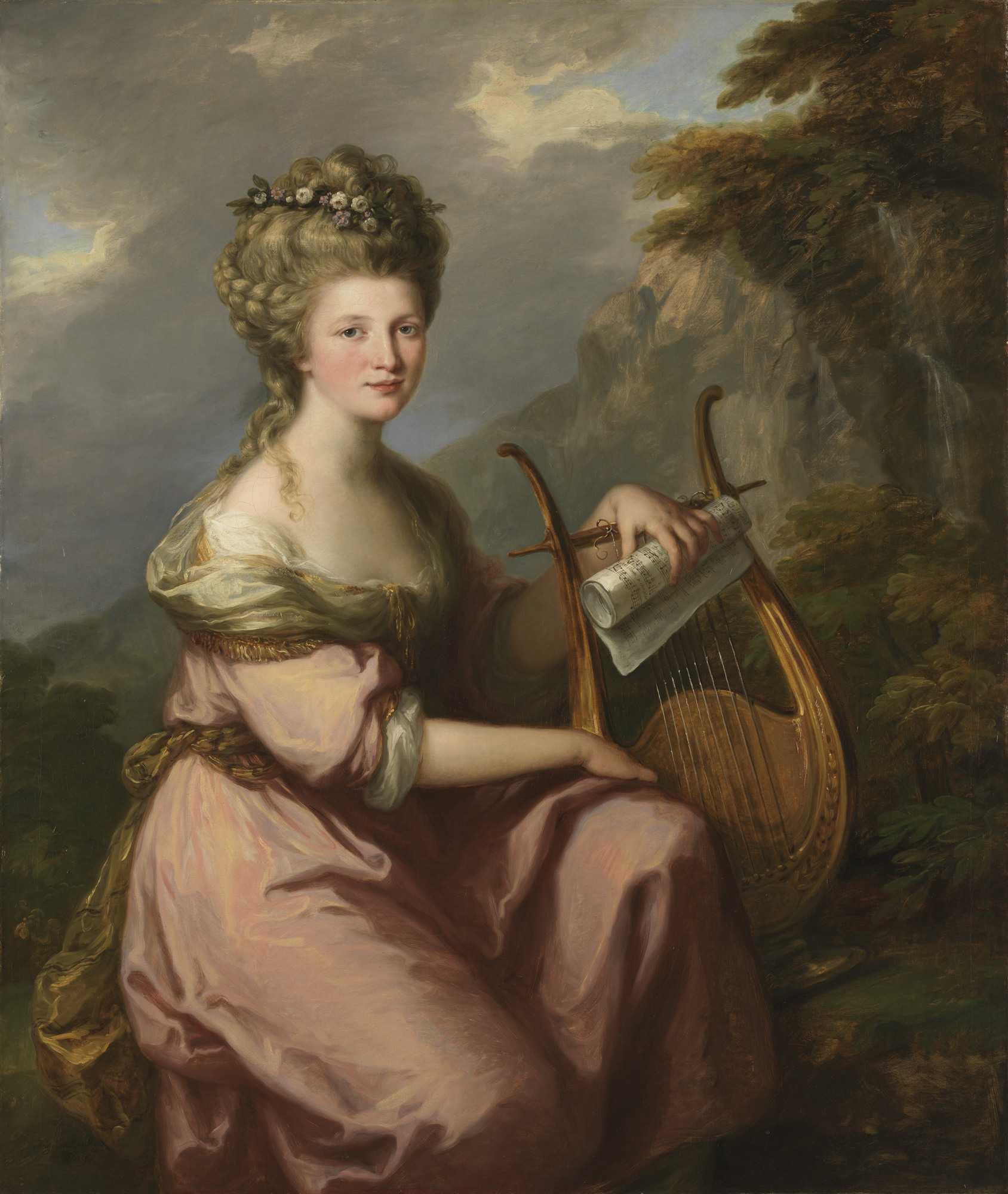
The nine Muses, Greek in origin, became central to Roman literary culture as patrons of poetry, history, music, tragedy, comedy, dance, and astronomy. They represent inspired knowledge disciplined by artistic form — and Roman poets invoked them not merely as decoration but as authorities for memory and song. Virgil opens major sections of the Aeneid by calling on a Muse; the epic begins, “Arms and the man I sing,” and soon turns to the Muse to explain the cause of Juno’s anger. The familiar fixed list of nine is Greek and not the only ancient configuration, and “inspiration” never eliminated human craft. Their legacy is embedded in everyday language: “museum” and “music” both descend from them, along with the artistic sense of a “muse” (grade A).
Famous public-domain depictions — click any image to view it full size.
Who were the Roman Fates?
The Roman Fates were the Parcae, commonly named Nona, Decima, and Morta in later tradition and equated with the Greek Moirai. They governed birth, allotted the span of life, and death, symbolizing a necessity beyond individual preference — one that even the gods, in Virgil, could not ultimately overturn.
Do the Parcae mean humans have no free will?
Ancient authors never produced one universally accepted answer. Mythic fate, Stoic causation, astrology, and poetic destiny are not identical systems. The Stoics strongly affirmed a causal order running through the cosmos while still developing accounts of human responsibility, so “fate” in Roman thought is a live philosophical problem, not a settled denial of freedom.
What is the difference between the Furies and the Fates?
The Furies (Furiae, Greek Erinyes) were avenging powers who punished blood guilt, broken kinship, and moral pollution — the pursuing consequence of grave crimes. The Fates (Parcae) instead allotted the length of a life. One measures destiny; the other punishes transgression against it.
Why did Roman poets invoke the Muses?
The nine Muses were patrons of poetry, history, music, and the arts, representing inspired knowledge disciplined by artistic form. Roman poets invoked them not as decoration but as authorities for memory and song. Virgil’s Aeneid opens “Arms and the man I sing” and soon calls on the Muse to explain Juno’s anger.
 Michael Paycer