Who is Vulcan?
Vulcan was Rome's god of fire in all its faces — the destructive blaze, the controlled furnace, and the volcanic force beneath the earth. He was the divine master of metalworking, the craftsman who forged weapons for gods and heroes, and, just as importantly, a protector against the ruinous fires that threatened a crowded ancient city.
That double nature is the key to him. Fire builds civilization and fire destroys it, and Vulcan holds both powers at once. Roman religion never let that ambivalence out of sight: it shaped when he was worshipped and even where his shrines could stand.
Origins & history
Vulcan was among Rome's older fire deities, concerned above all with the catastrophic power of fire in a city built largely of wood and packed with grain stores. As Greek myth entered Rome he was identified with Hephaestus, the lame smith of Olympus, and inherited his stories of the forge. Yet the Roman god retained a native, practical anxiety that the Greek figure lacks: the constant worry about fire getting loose.
Philosophical allegory could reinterpret him further. Just as Stoic thinkers read Jupiter as cosmic reason, Vulcan could be identified with elemental fire itself — one of the basic forces out of which the world is composed. A Roman could sacrifice at the Vulcanalia while a philosopher treated “Vulcan” as a name for the fiery element.
Cult & worship
Vulcan's festival, the Vulcanalia, fell in August — the season of greatest heat and greatest fire danger, when a spark could take a whole district. That timing was no accident: Romans honored the fire-god precisely when they most feared his power. Fittingly, his sanctuary was traditionally placed outside or at the edge of dense habitation, keeping the god of destructive fire — at least symbolically — away from the flammable heart of the city. His cult was as much about averting disaster as celebrating craft.
Greek equivalent
Vulcan was identified with Greek Hephaestus, and much of his narrative mythology — the lame smith, the forger of divine armor, the cuckolded husband — is inherited from the Greek tradition. But the identification is not the whole story. Hephaestus is chiefly the Olympian craftsman; Vulcan is that and a Roman guardian against catastrophic fire, honored in a festival built around the city's real fear of burning. Reading the two together shows what was practical and native in Roman religion.
Famous myths & stories
The master of the forge
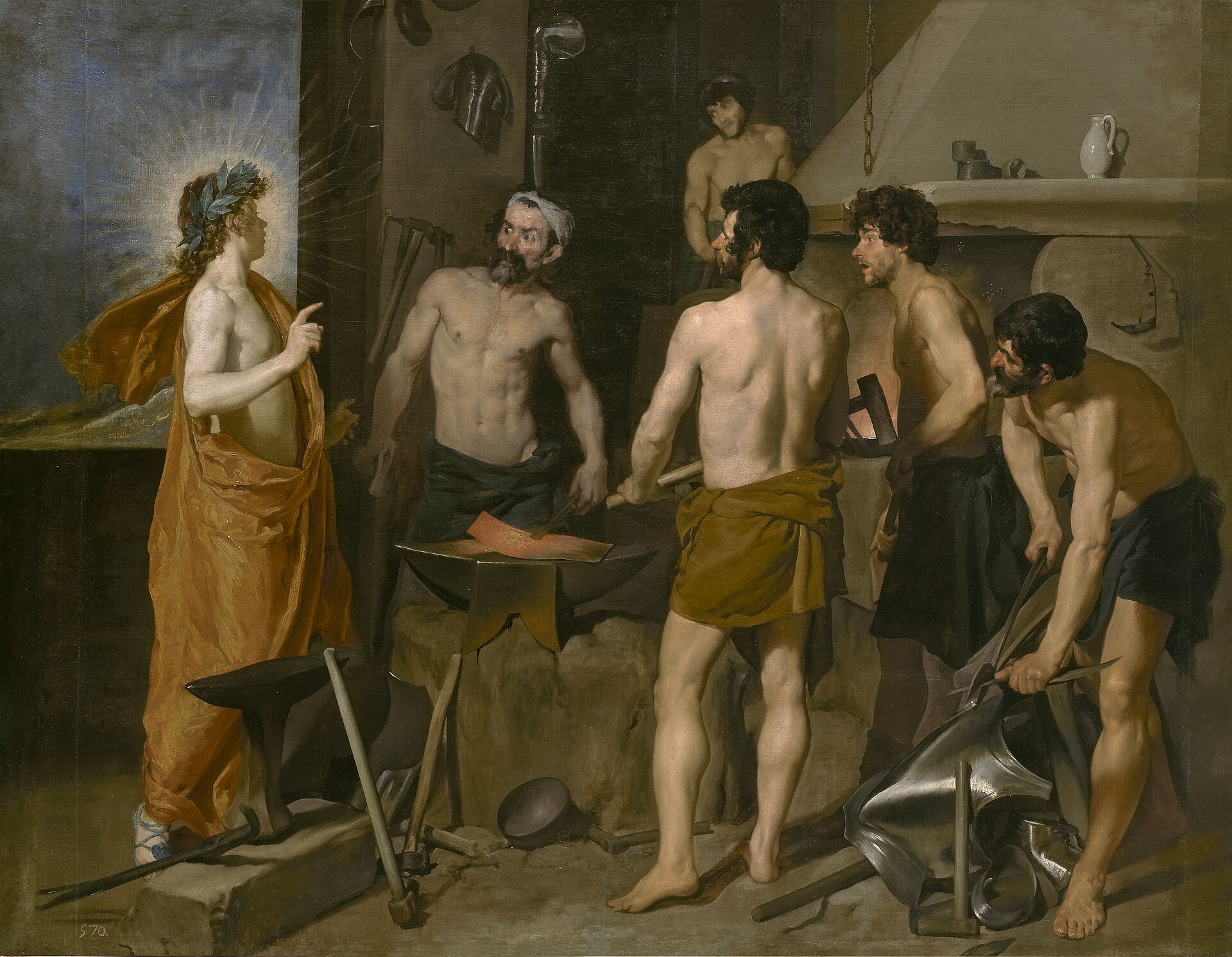
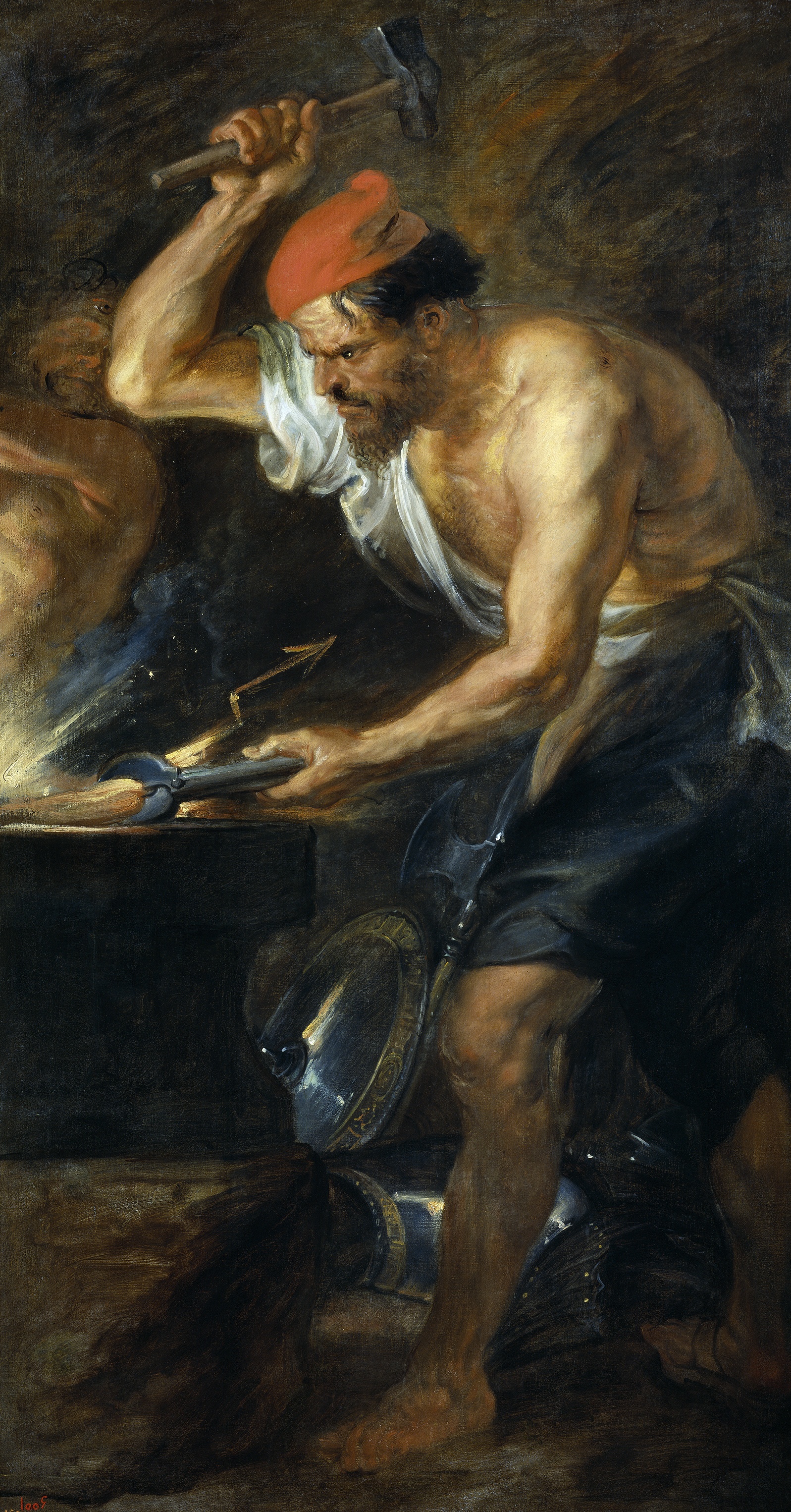
In Greco-Roman myth Vulcan is the supreme craftsman, forging weapons and armor for gods and heroes. His workshop turns raw metal into instruments of war and wonder — the mythic image of technology's power to transform matter into something greater than itself.
The mocked god
Ancient myth often mocks Vulcan for physical disability and for being cuckolded. Those stories say more about ancient social prejudice than about any divine “failure” — the god who makes everything of value is the one the other gods laugh at, an irony the myths never quite resolve.
Fire that builds and burns
Vulcan embodies a force that is morally neutral: the same fire warms the hearth, fires the furnace, and levels a city. His August festival and his out-of-town shrines are Roman religion's way of holding that contradiction — honoring the maker while guarding against the destroyer.
Legacy & influence
Vulcan's name is written across the modern world. Volcanoes carry it directly; the hypothetical planet “Vulcan” of nineteenth-century astronomy and later science fiction borrowed it; metallurgy and the very idea of “vulcanizing” rubber descend from him. So does the enduring archetype of the brilliant smith — the maker whose craft powers civilization. Whenever a story reaches for a master of fire and forge, it is reaching for Vulcan.
Symbolism
His symbols encode his nature: the hammer and anvil are the tools of transformation, turning raw metal into finished work; the tongs grip what is too hot to touch, the mark of controlled fire; the flame itself is his double gift and threat — the force that makes and unmakes. Together they say what Roman religion meant by him: creative power that must always be handled with care.
Famous public-domain depictions — click any image to view it full size.
Is Vulcan the same as Hephaestus?
Vulcan was identified with Greek Hephaestus and shares his role as the divine smith who forges the gods' weapons. But Roman Vulcan kept a distinctly Roman concern with preventing catastrophic fire, reflected in his August festival and in shrines placed at the edge of habitation.
What was Vulcan the god of?
Fire in both its destructive and controlled forms — metalworking, furnaces, and volcanic force. He was the master craftsman of divine weapons and a protector against ruinous fire.
What was the Vulcanalia?
Vulcan's festival, held in August during the dangerous heat when fire posed the greatest threat to the city and its stores. It reflects his double nature as both the sender and the averter of destructive fire.
Why were Vulcan's temples placed outside the city?
His sanctuary was traditionally sited outside or at the edge of dense habitation. Keeping the fire-god's cult away from the crowded center reflected fire's ambivalent power — the same force that builds civilization can also burn a city down.
 Michael Paycer