Religion · Philosophy of Religion

Can faith and reason
share a room?

Some people treat faith and reason as sworn enemies, where every step one takes is a defeat for the other. Others treat them as strangers who simply live in different neighborhoods. And a long tradition treats them as partners who need each other to see straight. The question is not just academic; how you answer it shapes what you will let yourself believe, and why.

Michael Paycer Michael Paycer
In brief

The question

Can faith and reason share a room?

Three models

Conflict, independence, integration

The poles

Aquinas' harmony vs. Kierkegaard's leap

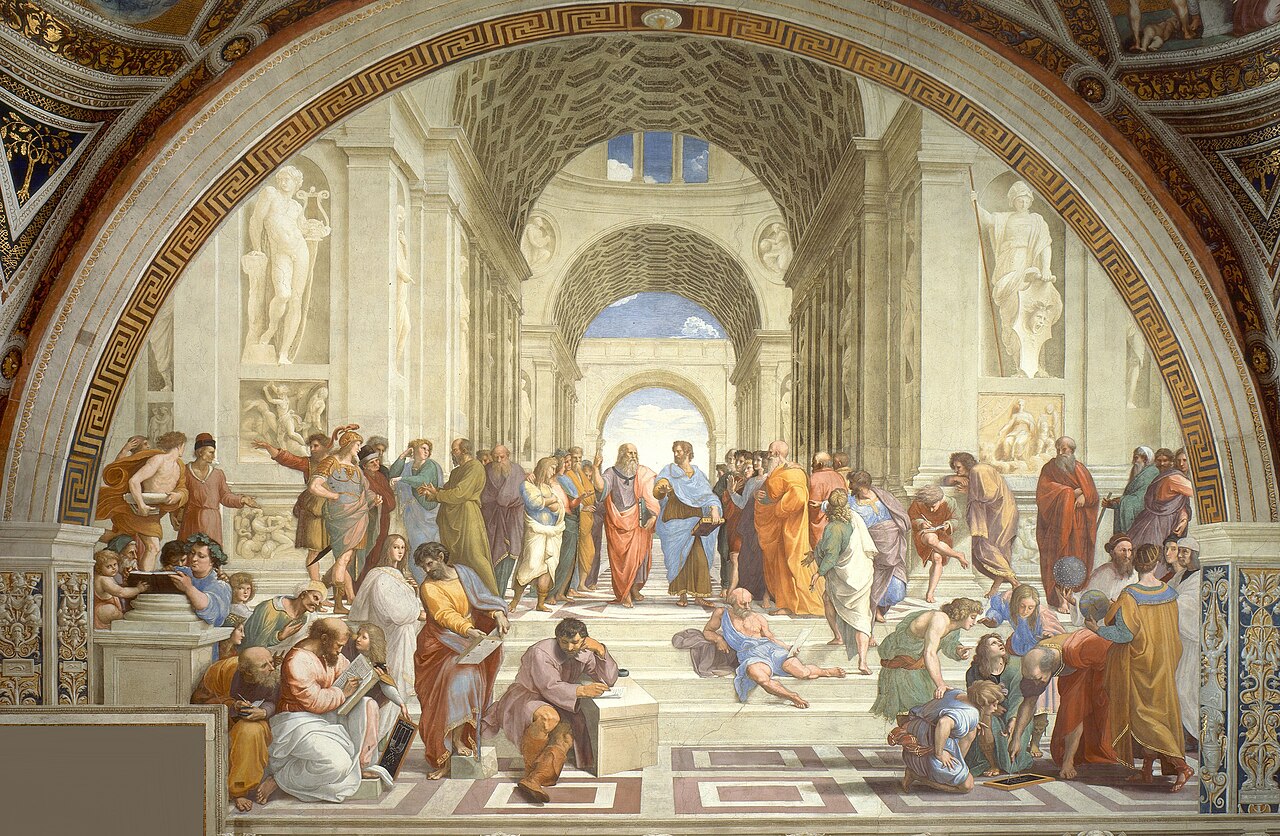
Raphael, The School of Athens
The School of Athens. Raphael gathers the philosophers of antiquity under one roof, reason's own cathedral. The question this page asks is whether faith belongs in the room. Raphael, 1509–1511 · Public domain via Wikimedia Commons
The map

Three ways they can relate

ModelThe claimA voice for it
ConflictFaith and reason contradict; one must yieldTertullian; the New Atheists
IndependenceThey answer different questions and never really meetStephen Jay Gould's "non-overlapping magisteria"
IntegrationThey inform and correct each otherAquinas; "faith seeking understanding"
The positions

Four thinkers, four settlements

Aquinas — harmony

Aquinas gave the confident answer for the integration camp. Faith and reason both come from God, so they cannot finally contradict; where they seem to, we have misread one or the other. Reason can walk part of the way on its own, proving what he called the preambles of faith, such as that God exists. Beyond that, revelation carries truths reason could never have reached alone. On this picture, grace does not cancel nature; it completes it.

Tertullian — suspicion

At the other pole stands the early Christian writer Tertullian, who asked what Athens has to do with Jerusalem, philosophy with the church. On this view, worldly reason is not a ladder up to God but a distraction from him, and the heart of faith is precisely its refusal to wait for proof. This is the seed of fideism, the position that faith neither needs nor benefits from rational support.

Kierkegaard — the leap

Soren Kierkegaard made suspicion into something almost heroic. Faith, he argued, is not a conclusion you are argued into; it is a passionate commitment made in the teeth of objective uncertainty. If God could be proven, there would be no risk, and without risk there is no faith. So faith is a leap, a decision that reason can neither compel nor forbid, and its whole seriousness lies in being made without a net.

Clifford and James — the ethics of belief

The modern version of the fight is about evidence. W. K. Clifford drew the hard line: it is wrong, always and for anyone, to believe anything on insufficient evidence. William James pushed back. When a choice is live, forced, and momentous, and evidence cannot settle it, he argued, we have a right to believe, because refusing to decide is itself a decision with consequences. Between them sits most of the argument people still have today.

Faith seeking understanding. I do not seek to understand in order to believe, but I believe in order to understand.

Anselm of Canterbury, after Augustine

It is wrong always, everywhere, and for anyone, to believe anything upon insufficient evidence.

W. K. Clifford, The Ethics of Belief
Where it stands

No settlement has won. The honest map runs from strict evidentialism, where belief must earn its keep, to full fideism, where faith answers to nothing but itself, with most people camped somewhere in the uneasy middle.

Common questions

People also ask

What is the relationship between faith and reason?

Three main views. Conflict holds they contradict, so one must give way. Independence holds they answer different questions and never meet. Integration holds they inform and correct each other. Thinkers from Aquinas to Kierkegaard land at different points across that range.

What did Aquinas say about faith and reason?

That they are compatible because both come from God, so they cannot finally conflict. Reason can establish some truths on its own, such as that God exists, which he called preambles of faith. Other truths, like the Trinity, are above reason and known through revelation.

What is the leap of faith?

Associated with Kierkegaard, it holds that faith is not the conclusion of an argument but a passionate commitment made in the face of objective uncertainty. Because proof would remove the risk that makes faith meaningful, faith is a leap beyond what reason can secure.

What is the difference between evidentialism and fideism?

Evidentialism, argued by Clifford, holds it is wrong to believe anything on insufficient evidence. Fideism holds that faith does not need, and may even be harmed by, rational proof. William James took a middle path: we may believe when a genuine choice cannot be settled by evidence alone.

Sources
The day job

Built by a SQL Server consultant

When I’m not refereeing faith and reason, I tune databases, design high-availability systems, and run cloud migrations.

See what I do →