Religion · The Arguments

Something exists.
What could it all hang from?

The cosmological argument starts from the least controversial fact there is, that anything exists at all, and asks what must be true for it. Trace the chain of causes back far enough and, the argument says, you reach a first cause that depends on nothing else. Whether that first cause is God, or just the universe wearing a crown, is the fight.

Michael Paycer Michael Paycer
In brief

The claim

Everything needs a first, uncaused cause

Forms

Aquinas, Leibniz, the Kalam

The objection

Why not the universe itself?

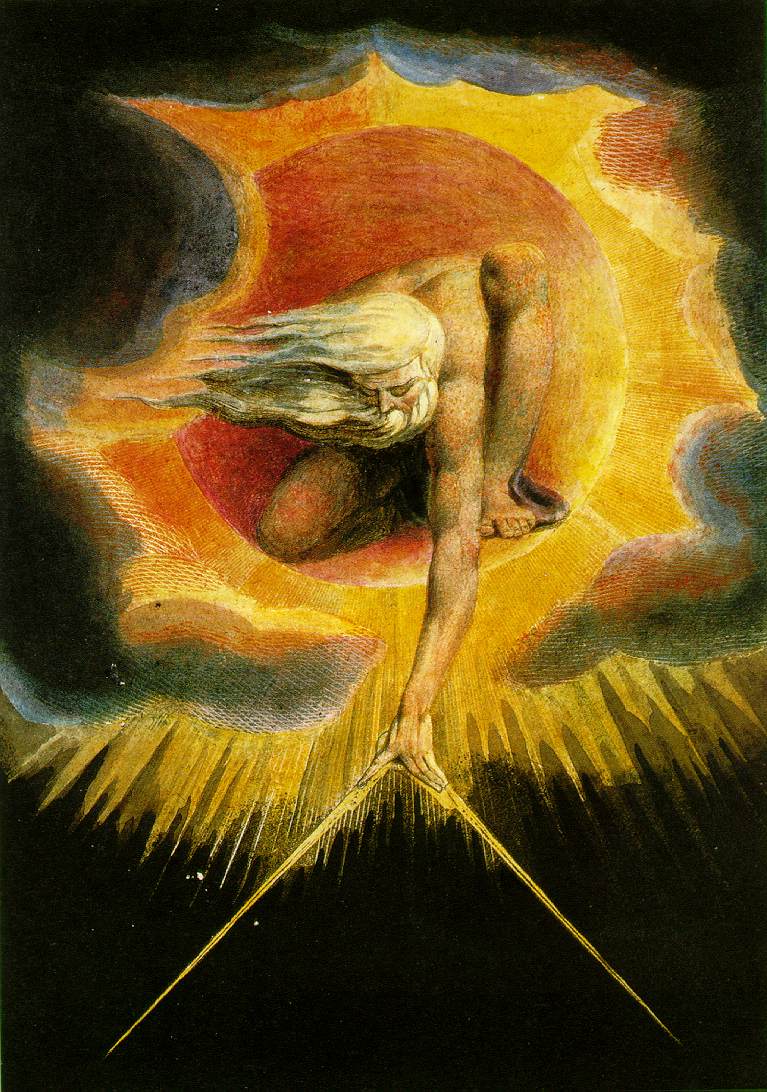
William Blake's The Ancient of Days
The Ancient of Days. William Blake's creator leans out of the sun with a compass to measure the void below: a first cause imposing order on everything that follows. William Blake, 1794 · Public domain via Wikimedia Commons
The case for

Three ways to run it

Aquinas — the first cause

In the Summa, Aquinas offers versions of the argument in his first three Ways. Things are moved by other things, and caused by other things, but the chain of movers and causes cannot stretch back forever, because then it would never have gotten started. So there must be a first mover, itself unmoved, and a first cause, itself uncaused. Aquinas inherited the shape of this directly from Aristotle's Unmoved Mover.

Leibniz — the argument from contingency

Leibniz sharpened it into a single question: why is there something rather than nothing? Every contingent thing, everything that could have failed to exist, needs an explanation outside itself. The whole collection of contingent things needs one too. That explanation cannot itself be contingent, or it would need explaining in turn, so it must be a necessary being that exists by its own nature. That, he says, is God.

The Kalam — the universe began

The version most debated today comes from medieval Islamic thinkers like al-Ghazali and has been revived by William Lane Craig. It is tight: whatever begins to exist has a cause; the universe began to exist; therefore the universe has a cause. Its defenders lean on Big Bang cosmology to argue that the universe is not eternal but had a first moment, and so needs something beyond it to explain that beginning.

Why is there something rather than nothing? For nothing is simpler and easier than something.

Gottfried Wilhelm Leibniz
The case against

Where the objections push

"Who made God?"

The popular objection is that if everything needs a cause, then God needs one too. Defenders answer that the argument never says everything needs a cause; it says everything contingent, or everything that begins, needs one. God is proposed precisely as the necessary, uncaused being that stops the regress. So the sharper question is not who made God, but whether a necessary being makes sense at all.

Why not the universe itself?

The strongest reply turns the argument's own move against it. If we are allowed one thing that just exists by its nature and needs no cause, why not let that thing be the universe, or the quantum fields beneath it? Bertrand Russell put the deflationary version bluntly: the universe is just there, and that is all. If matter-energy can be the brute fact, God becomes an extra step.

From a first cause to God

Even granting a first cause, critics note the gap between the conclusion and any actual religion. The argument, at best, delivers something uncaused, necessary, and enormously powerful. Getting from there to a personal God who is good, who hears prayers, and who acts in history takes a great deal more, none of which the cosmological argument itself supplies.

I should say that the universe is just there, and that's all.

Bertrand Russell, in his 1948 radio debate with Frederick Copleston
Where it stands

The argument survives the schoolyard version of "who made God." It stalls on a harder question: if one thing gets to exist without a cause, who says it has to be God rather than the universe?

Common questions

People also ask

What is the cosmological argument?

The argument that because things exist and depend on other things, there must be a first, uncaused cause that everything traces back to, which theists identify as God. It comes in several forms: Aquinas' first cause, Leibniz's contingency, and the Kalam.

If everything needs a cause, who caused God?

Defenders say this misreads the argument. The claim is not that everything needs a cause, but that everything contingent, or everything that begins, needs one. God is proposed as the necessary, uncaused being that ends the regress. Whether such a being is coherent is the real debate.

What is the Kalam cosmological argument?

A modern version revived by William Lane Craig: whatever begins to exist has a cause; the universe began to exist; therefore the universe has a cause. Supporters cite Big Bang cosmology as evidence the universe had a beginning.

What is the strongest objection?

That the universe itself, or the fields underlying it, could be the necessary, eternal thing, removing the need for God. Critics also question whether everything must have an explanation, and note that a first cause is not yet the personal God of any religion.

Sources
The day job

Built by a SQL Server consultant

When I’m not chasing first causes, I tune databases, design high-availability systems, and run cloud migrations.

See what I do →