Religion · The Arguments

Reason can't decide.
So how should you bet?

Blaise Pascal was a mathematician who helped invent probability theory, and he aimed it at the biggest uncertainty of all. If reason cannot prove whether God exists, he said, then belief is not a conclusion, it is a wager. And once you lay out what you stand to win and lose, one side of the bet looks a lot smarter than the other. This is the only argument here that does not care whether God exists.
Michael Paycer Michael Paycer
In brief

The move

Belief as a bet, not a proof

The logic

Infinite gain vs. finite loss

The objections

Which God? Can you choose belief?

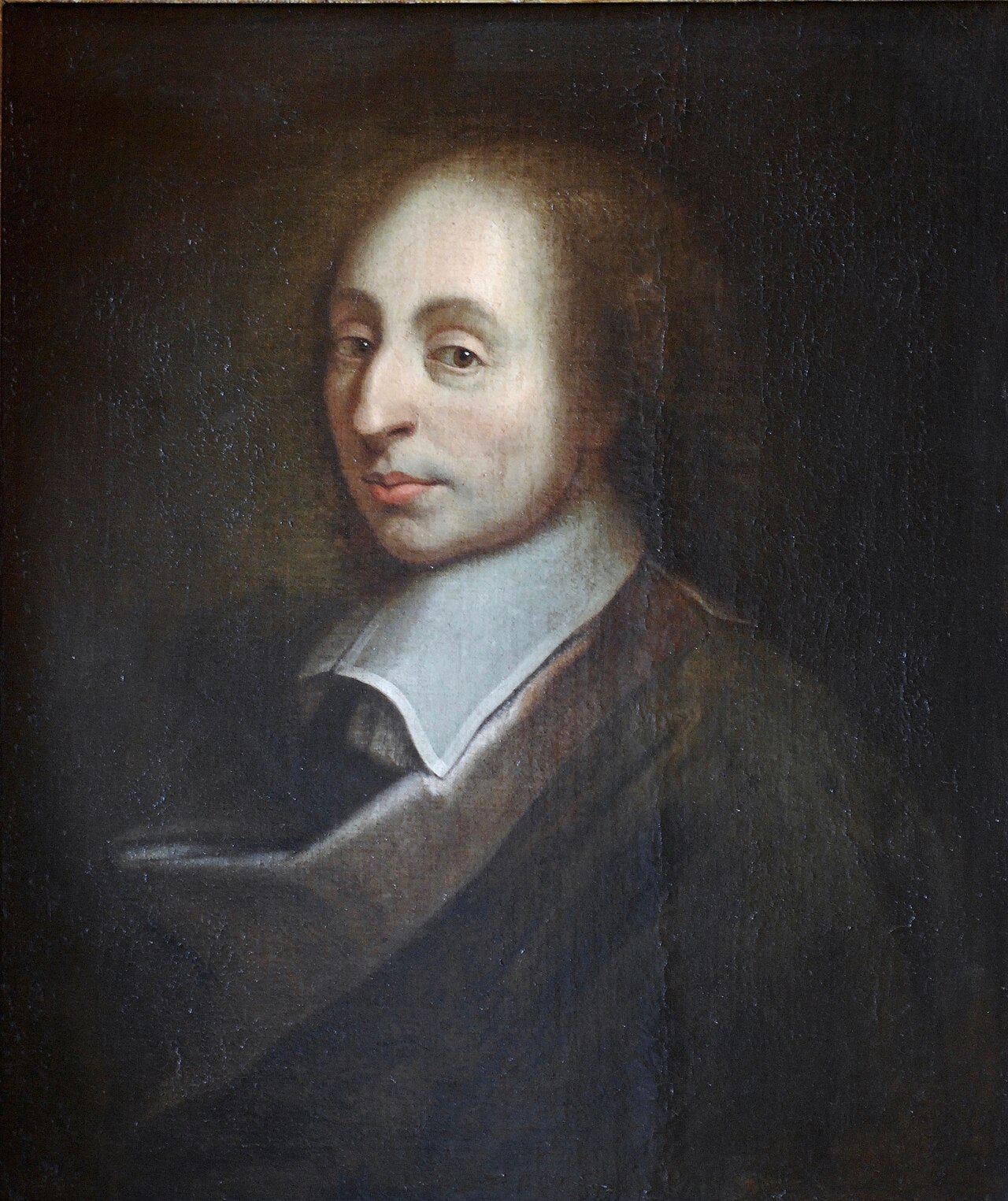
Portrait of Blaise Pascal
Blaise Pascal. The mathematician who helped invent probability theory, then aimed it at the one uncertainty it could not calculate. Portrait, c. 1690, Palace of Versailles · Public domain via Wikimedia Commons
The case for

The bet, laid out

Pascal's move is to stop arguing about the odds and start weighing the stakes. Four outcomes, two choices.

You bet on God

If God exists: infinite gain. If not: you lose a little, some pleasures, some pride.

vs

You bet against God

If God exists: infinite loss. If not: you gain a little, the same small pleasures.

Set beside an infinite prize, the finite comforts on the other side barely register. So even if the odds of God are low, the math of the bet still points one way: wager on God. Pascal knew this would not produce belief on the spot, so he added a practical coda. Act as if you believed, he said, keep the practices, the habits, the company of the faithful, and belief will follow the way it usually does, through what you do rather than what you decide.

If you gain, you gain all; if you lose, you lose nothing. Wager, then, without hesitation, that He exists.

Blaise Pascal, Pensées
The case against

Three ways the bet goes wrong

Which God?

The wager quietly assumes a two-horse race: the Christian God, or nothing. But the table has more rows. There are many possible gods, and some might reward the very belief another punishes. Once the options multiply, betting on any one God stops being the obvious way to protect yourself, because you might be placing your chips on exactly the wrong deity.

You cannot bet on belief

Belief is not a lever you can pull. Try to believe, right now, that there is a teapot orbiting the sun, and you will find you cannot do it just because it would pay. If belief cannot be chosen, the wager asks the impossible. Pascal's reply, that habit can grow belief over time, only relocates the worry: is a belief cultivated for the payoff the same as one held because it is true?

A God worth believing in

A deeper unease is moral. If God is the kind of being the tradition describes, would that God be impressed by a bet placed to hedge against hell? Belief adopted as an insurance policy looks less like faith than like flattery. The critic's point is not that the math is wrong but that the whole frame cheapens the thing it is trying to reach.

The heart has its reasons, which reason knows nothing of.

Blaise Pascal, Pensées
Where it stands

As decision theory it is clever and still studied. As a route to real faith it strains, because the God at the end of the argument might not want to be reached by a calculation.

Common questions

People also ask

What is Pascal's wager?

The argument that, since reason cannot settle whether God exists, you should treat belief as a bet. Believe and God exists: infinite reward. Believe and God does not: you lose little. Disbelieve and God exists: infinite loss. Weighing the outcomes, Pascal says betting on God is rational.

What is the many-gods objection?

The wager assumes a bet between the Christian God and no God, but there are many possible gods, some of whom might reward different beliefs. Once you allow many options, betting on any single God no longer clearly maximizes your odds.

Can you choose to believe in God?

Critics say you cannot decide to believe something you find unconvincing, so the wager asks the impossible. Pascal advised acting as if you believed, through habit, expecting belief to follow. Whether belief manufactured that way is genuine is part of the debate.

Is the wager a proof that God exists?

No, and Pascal did not claim it was. It is a practical argument about how to act when the evidence is inconclusive, not a proof. It belongs to decision theory, which is why it sits apart from the cosmological, design, and ontological arguments.

Sources
The day job

Built by a SQL Server consultant

When I’m not running the numbers on Pascal, I tune databases, design high-availability systems, and run cloud migrations.

See what I do →