Who is Mithras?
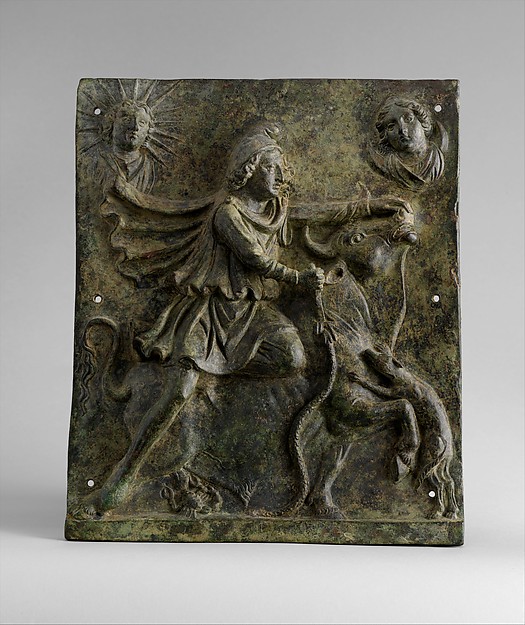
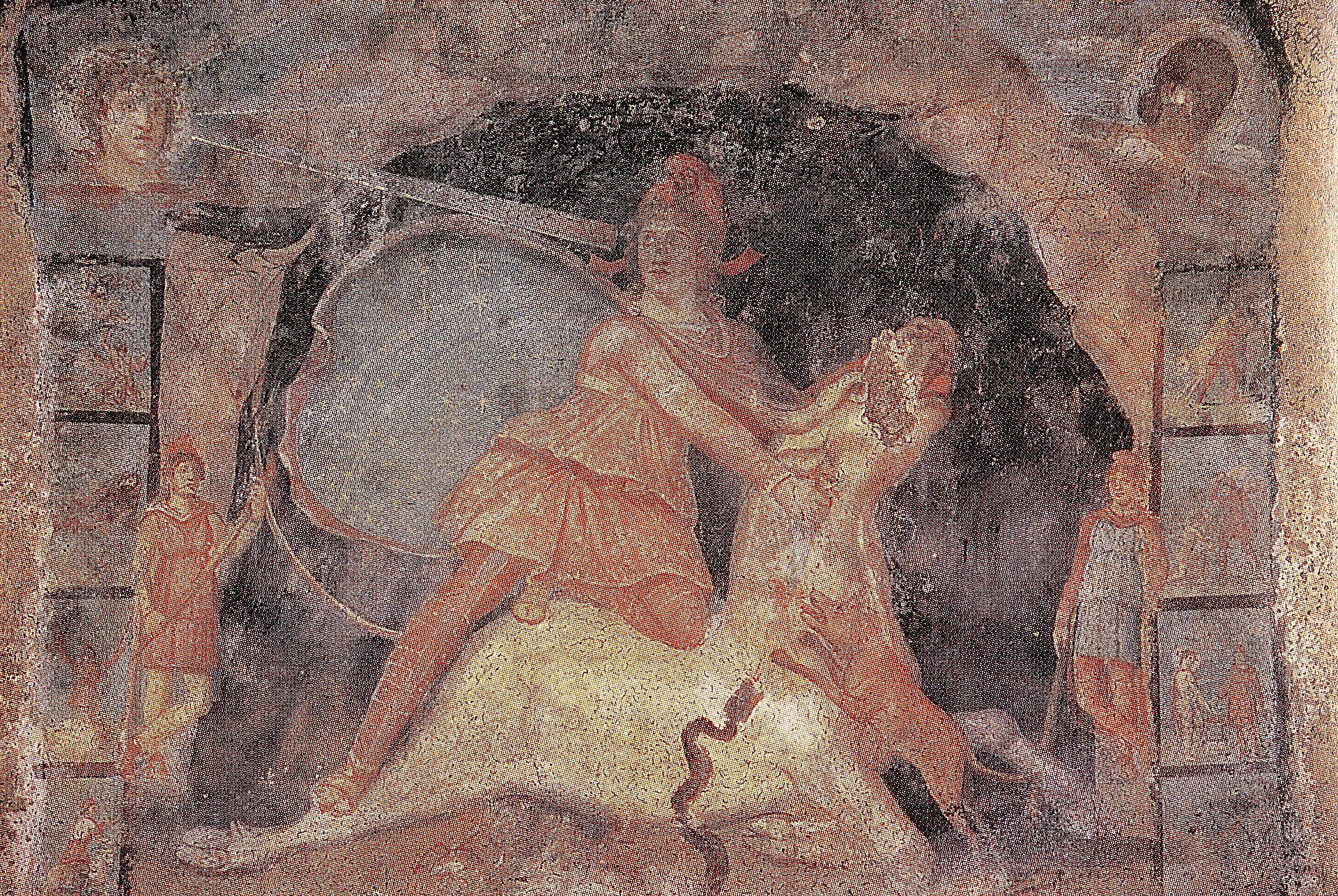
Mithras was the god of a Roman mystery cult that flourished especially from the late first through the fourth centuries CE. Worship took place in cave-like shrines called mithraea, and at the center of each stood the same striking image: Mithras killing a bull, the tauroctony. The cult is attested archaeologically across much of the empire, and it was carried above all by soldiers, administrators, and other mobile communities.
What makes Mithras distinctive is also what makes him hard to know. His worshippers left no surviving doctrinal handbook. We can map where they met, what they carved, and how their communities were organized, but the theology behind the images remains disputed. This is a cult we read through stone and space rather than through a creed.
Origins & history
The Roman cult of Mithras is related in name and distant background to the Iranian Mithra, but the two should not be collapsed together. Simplistic claims that Roman Mithraism was merely imported Persian religion are no longer adequate: what we find in the Roman evidence is a distinctively Roman development, whatever its far-off roots. The cult grew and spread with the movement of people across the empire, tracing the roads, forts, and ports of imperial mobility. Modern scholarship increasingly emphasizes local practice, place, and material culture over the idea of one uniform secret church.
Cult & worship
Mithraic communities met in mithraea — small, deliberately cave-like shrines that recreated a sacred cavern. Initiation was organized in grades, a ladder of ranks through which members advanced. The evidence is overwhelmingly male; women are largely absent from what survives. Beyond that structure, the precise content of belief and ritual is uncertain, because no insider left a surviving account. This is why the cult is studied primarily through its archaeology: the layout of the shrines, the images they held, and the objects left behind are our most reliable guides.
Roman adoption & context
Mithras is not a Greek god with a Latin name, so there is no “Greek equivalent” to set beside him. The relevant context is his place among foreign cults in the Roman world. Like the cult of Isis, Mithraism offered initiation and a tightly knit community rather than the open, civic worship of a god such as Jupiter. But where Isis reached a broad public, Mithras built a dense network of small, closed, initiatory cells, spread by the army and imperial administration. The cult shows how a “foreign” identity could be reorganized into something thoroughly Roman while keeping an exotic, eastern flavor in its imagery.
Key episodes
The tauroctony
The bull-slaying scene is the cult's defining image, repeated in mithraeum after mithraeum: Mithras plunging a knife into a bull. It is one of the most recognizable sacred images to survive from antiquity. Its meaning is genuinely debated — without a surviving text to explain it, interpretation rests on the iconography itself.
The cave and the grades
Worship in cave-like mithraea, combined with an initiation organized in grades, gave the cult its shape: intimate, hierarchical, and staged as a passage into deeper mysteries. The recreated cavern was itself part of the meaning, a sacred space set apart from the ordinary world.
A soldiers' network
Mithraism spread through the mobility of the empire, taking particular hold among soldiers and administrators. The result was a dense web of small initiatory communities linked less by a central church than by shared images, spaces, and grades of initiation carried from post to post.
Legacy & influence
Mithras looms large in the archaeology of Roman religion and in the study of ancient mystery cults. He also looms large in modern imagination — often too large. The cult has become a magnet for popular alternative-history claims and for esoteric speculation, much of which runs far ahead of the evidence. Its genuine legacy is scholarly: a superb test case for how to reconstruct a religion from material remains when the words of its believers are lost.
Symbolism
The cult speaks almost entirely through symbols. The tauroctony concentrates its identity in a single act of bull-slaying whose meaning we can debate but not decode with certainty; the cave of the mithraeum turns architecture into theology, staging worship inside a recreated cavern; and the grades of initiation map a spiritual ascent onto the community itself. Together they describe a religion built to be entered and experienced rather than read.
Famous public-domain depictions — click any image to view it full size.
What was the Roman cult of Mithras?
A Roman mystery cult of the late first through fourth centuries CE, attested archaeologically across the empire, especially among soldiers. Worship took place in cave-like mithraea centered on the tauroctony, the image of Mithras killing a bull.
Was Mithras just imported Persian religion?
No. The cult is related in name and distant background to the Iranian Mithra, but simplistic claims that it was merely imported Persian religion are no longer adequate. It was a distinctively Roman development.
What is the tauroctony?
The central image of Mithras killing a bull, found in mithraea across the Roman world — one of antiquity's most recognizable sacred images, though its precise meaning is disputed because no doctrinal handbook survives.
Was Mithraism a rival to Christianity?
Popular claims that Mithraism was Christianity's near-identical rival, that Mithras had twelve disciples, or that Christian doctrines were copied from Mithras routinely exceed the evidence. The cult is known mainly from archaeology, not a surviving creed.
 Michael Paycer