Who is Cybele?
Cybele was the Anatolian Great Mother goddess, worshipped in Asia Minor long before she reached Rome. When the Romans adopted her during the Second Punic War she became Magna Mater deum Idaea — the Great Idaean Mother of the Gods — an officially imported deity charged with protecting the city itself.
Her story is the clearest single answer to a common misconception: that Roman state religion was a closed, native system. It was not. Rome deliberately brought in a foreign goddess and set her at the heart of public cult. At the same time, that adoption never fully dissolved Roman unease about the more ecstatic sides of her worship. She could be foreign, officially Roman, imperial, ecstatic, maternal, and politically prestigious all at once.
Origins & history
Cybele's origins lie in Anatolia, where she was venerated as a powerful mountain mother. Her cult centered on Pessinus, and it was from there that her sacred stone was carried to Rome in 204 BCE. Roman tradition framed the transfer as a response to prophetic books consulted during the war against Hannibal: the goddess was summoned for the safety of the state.
Once in Rome she was not treated as a marginal import. The Great Mother received a temple on the Palatine and her own annual festival, the Megalesia, with games and public honors. What arrived was translated and reorganized into Roman terms rather than simply copied — a pattern typical of how Rome absorbed foreign cults without erasing their non-Roman origins.
Cult & worship
As Magna Mater, Cybele was worshipped through official public cult, complete with temple, festival, and games. Yet her priesthood included the galli — ecstatic, self-castrated priests whose rites struck many Roman observers as alien. The result was a lasting tension: the state honored the goddess while Roman elites kept a wary distance from parts of her worship. It is important to read those Roman narratives of “foreign excess” with caution, because they can reflect elite prejudice as much as anything the cult actually did, and the meaning of the ecstatic rites varied by period and community.
Roman adoption & context
Cybele is not a Greek deity given a Latin name, so there is no simple “Greek equivalent” to line her up against. What matters instead is the mechanics of her Roman adoption. In 204 BCE, at a moment of military crisis, the Romans made a foreign Anatolian goddess an official instrument of state religion. This overturns the idea that Rome's public cult was sealed against outsiders. The adoption was selective and political: Rome took the protective, maternal, prestigious goddess it wanted, gave her a place on the Palatine, and hedged the ecstatic elements it distrusted. Set beside a native civic god such as Jupiter, Cybele shows the other face of Roman religion — its capacity to import and reorganize divine identities from across the Mediterranean.
Key episodes
The stone from Pessinus
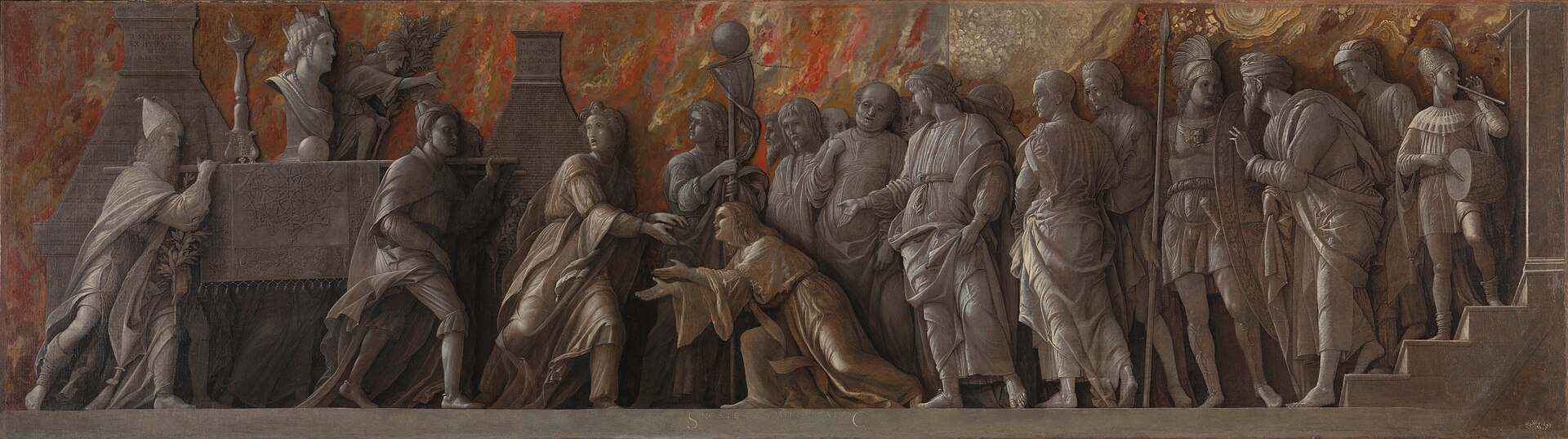
The defining episode is the transfer itself. After the prophetic books were consulted during the Second Punic War, the sacred stone of the goddess was brought from Pessinus to Rome in 204 BCE and installed as Magna Mater. A foreign object became a Roman guarantor of the city's safety — one of antiquity's most striking acts of official religious adoption.
Claudia Quinta and the stranded ship
Ovid's Fasti dramatizes the arrival through the noblewoman Claudia Quinta. When the ship carrying the goddess ran aground, Claudia, her chastity under suspicion, prayed to the Great Mother and freed the vessel by her own hand, her virtue miraculously vindicated. The tale is religious legend, not verifiable history — a story built to sanctify the moment the goddess entered Rome.
The galli and Roman ambivalence
The self-castrated galli priests kept the cult forever slightly foreign in Roman eyes. Their ecstatic rites were honored as part of the Great Mother's worship yet viewed with unease by the Roman establishment. That contradiction — official prestige alongside cultural anxiety — is the cult's most revealing feature.
Legacy & influence
Cybele remains central to the study of ancient religion. She anchors modern work on mother-goddess cults, late antique religion, and the history of religious mobility across the Roman world. Her cult figures in debates about gender history and about what we now call religious globalization — how gods traveled, were translated, and were politically reorganized. As a case study she is almost unmatched: a foreign goddess whom Rome itself chose to make Roman.
Symbolism
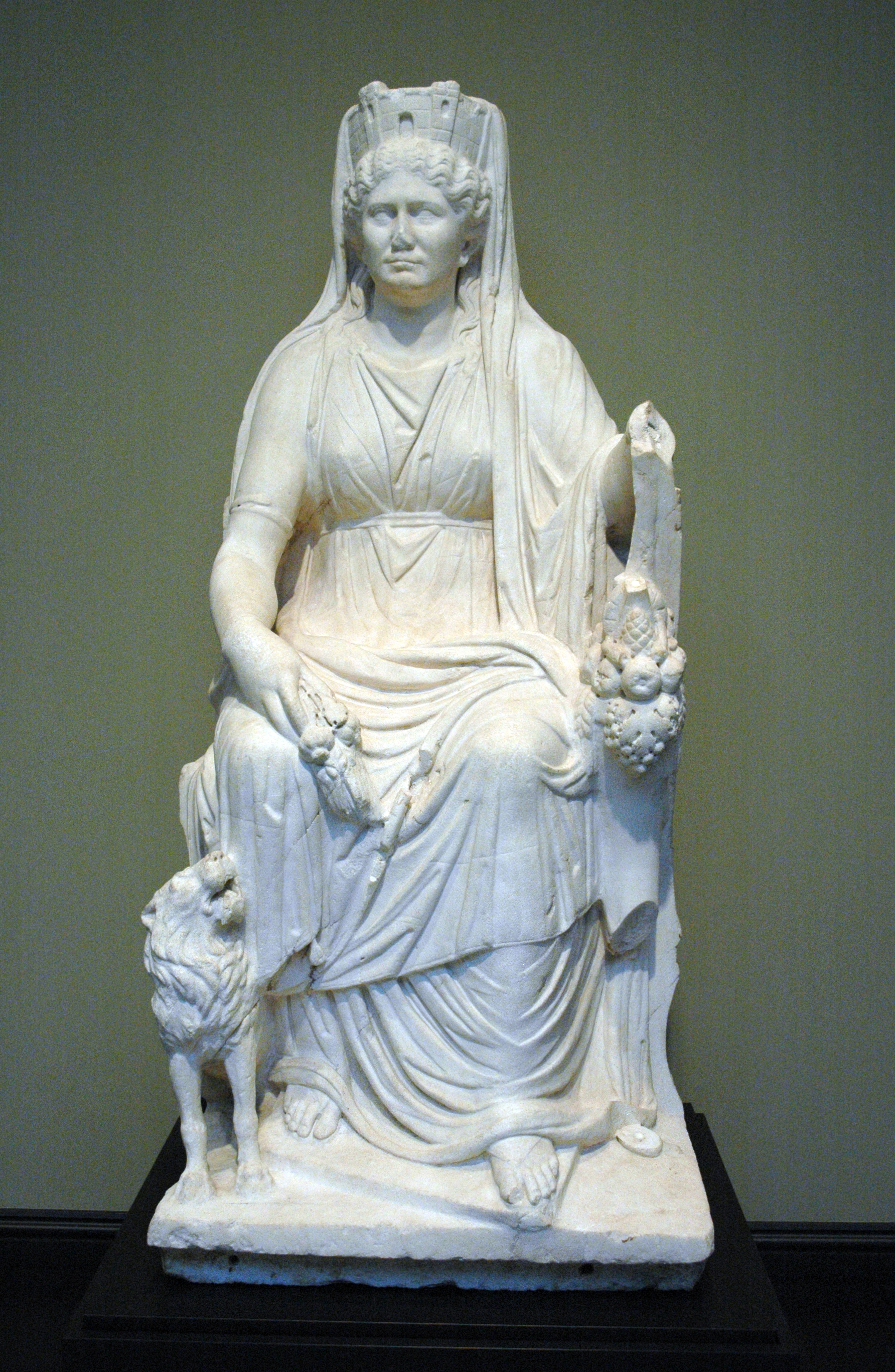
Her attributes read as signs of power and protection. The turreted (mural) crown marks her as guardian of cities and walls; the lions that flank or draw her chariot signal a wild, sovereign power that she alone commands; and the sacred stone brought from Pessinus embodies the very act of adoption that made her Roman. Together they express what the cult meant: a maternal, protective, but never fully tamed force installed at the center of the state.
Famous public-domain depictions — click any image to view it full size.
Who was Cybele, the Magna Mater?
The Anatolian Great Mother goddess. Rome officially imported her in 204 BCE and worshipped her as Magna Mater deum Idaea, protector of the city — proof that Roman state religion was not closed to foreign gods.
Why was Cybele brought to Rome in 204 BCE?
During the Second Punic War, after prophetic books were consulted, the sacred stone of the goddess was carried from Pessinus to Rome for the city's protection, making a foreign goddess an instrument of Roman state religion in a crisis.
Who were the galli?
The ecstatic, self-castrated priests of Cybele's cult. Rome honored the Great Mother officially, yet remained uneasy about the galli, so the goddess was foreign, officially Roman, and a source of anxiety at the same time.
Is the story of Claudia Quinta history?
No. Ovid's Fasti tells how Claudia Quinta miraculously freed the goddess's stranded ship and so proved her chastity. It is religious legend dramatizing the arrival, not an independently verifiable historical event.
 Michael Paycer