The Greek Bridge · 19th Century · Values
Nietzsche: Create Your Own Values
The German thinker who declared the old certainties dead and challenged each of us to create meaning and values for ourselves.
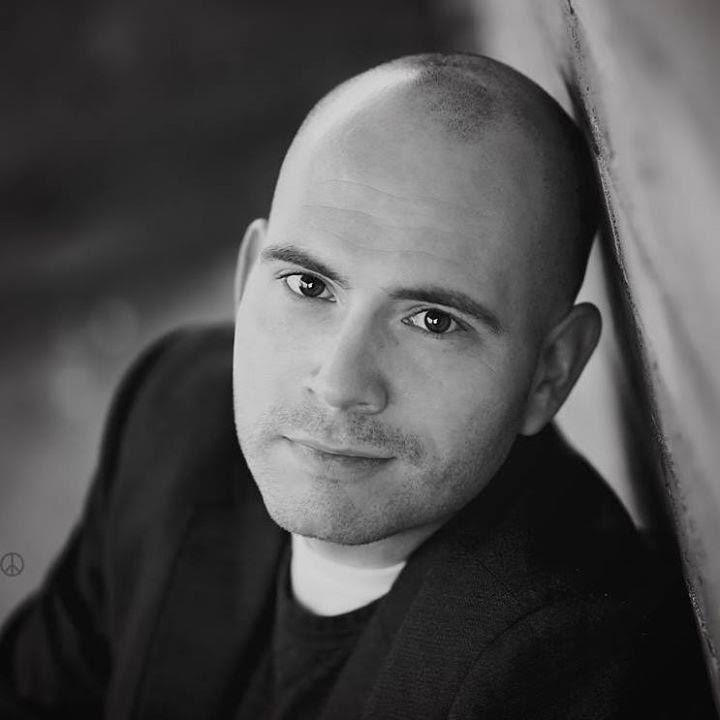 Michael Paycer
The German thinker who declared the old certainties dead and challenged each of us to create meaning and values for ourselves.
Michael PaycerLived
1844–1900
Era
19th-century Germany
Lens
Create your own values
Key works
The Birth of Tragedy; Thus Spoke Zarathustra
Friedrich Nietzsche is the most provocative of modern philosophers — a former classics professor who diagnosed the collapse of traditional values and asked what we should do once the old foundations were gone.
His lens, easy to misread: not "overcome weakness," but create your own values. With inherited religious and moral certainties crumbling, Nietzsche urged each person to face that freedom honestly and forge meaning rather than drift into nihilism.
Nietzsche began as a brilliant young scholar of Greek culture before turning to philosophy. Chronic illness forced him from academia, and he wrote his most influential books in restless solitude across the 1880s.
In 1889 he collapsed into a mental breakdown and never recovered, dying in 1900. His work was later distorted — notoriously by his sister's editing and by political misuse — which is why reading him carefully, rather than through slogans, matters.
In The Birth of Tragedy, Nietzsche set Apollo (order, form, reason) against Dionysus (ecstasy, music, chaos), arguing that great art and a full life need both in tension. This is his most direct link to Greek myth.
Nietzsche's famous line is a diagnosis, not a boast: the religious and moral framework that once grounded Western meaning has lost its hold. The danger is nihilism — and the task is to create new values without it.
He saw life as a striving to grow, create, and overcome — the 'will to power' — and urged amor fati, the love of one's fate: to affirm your life so fully you would will it to recur eternally.
In Thus Spoke Zarathustra, Nietzsche imagines the "overman" (Übermensch) — not a tyrant, but a person who creates their own values and affirms life fully, beyond inherited morality. It is among his most powerful and most misused ideas.
Nietzsche's great thought-experiment: what if you had to live your life over and over, exactly the same, forever? To embrace that — to want it — is the ultimate test of whether you truly affirm your existence.
Nietzsche became one of the most influential thinkers of the modern age, shaping existentialism, psychoanalysis, postmodern philosophy, and literature from Mann to Camus. His diagnosis of nihilism and his call to create meaning still frame how the secular West thinks about value.
His work was also gravely distorted — by his sister's editing and by political misuse he would have despised — which is why reading him carefully, through his actual texts rather than slogans, remains essential. Through his Apollo-versus-Dionysus contrast, he is also the modern endpoint of the Greek bridge.
The misuse of his ideas. No philosopher has been more distorted. The "will to power" and "overman" were twisted by his sister and later by propagandists into something Nietzsche, a fierce critic of nationalism and antisemitism, would have despised. Separating the thinker from the slogans is itself a major theme of Nietzsche scholarship.
Master and slave morality. Nietzsche's genealogy of morals — the claim that our values have a hidden, often resentful history — is among his most powerful and contested ideas. Does exposing where a value came from tell us whether it is true or good? The question cuts to the heart of ethics.
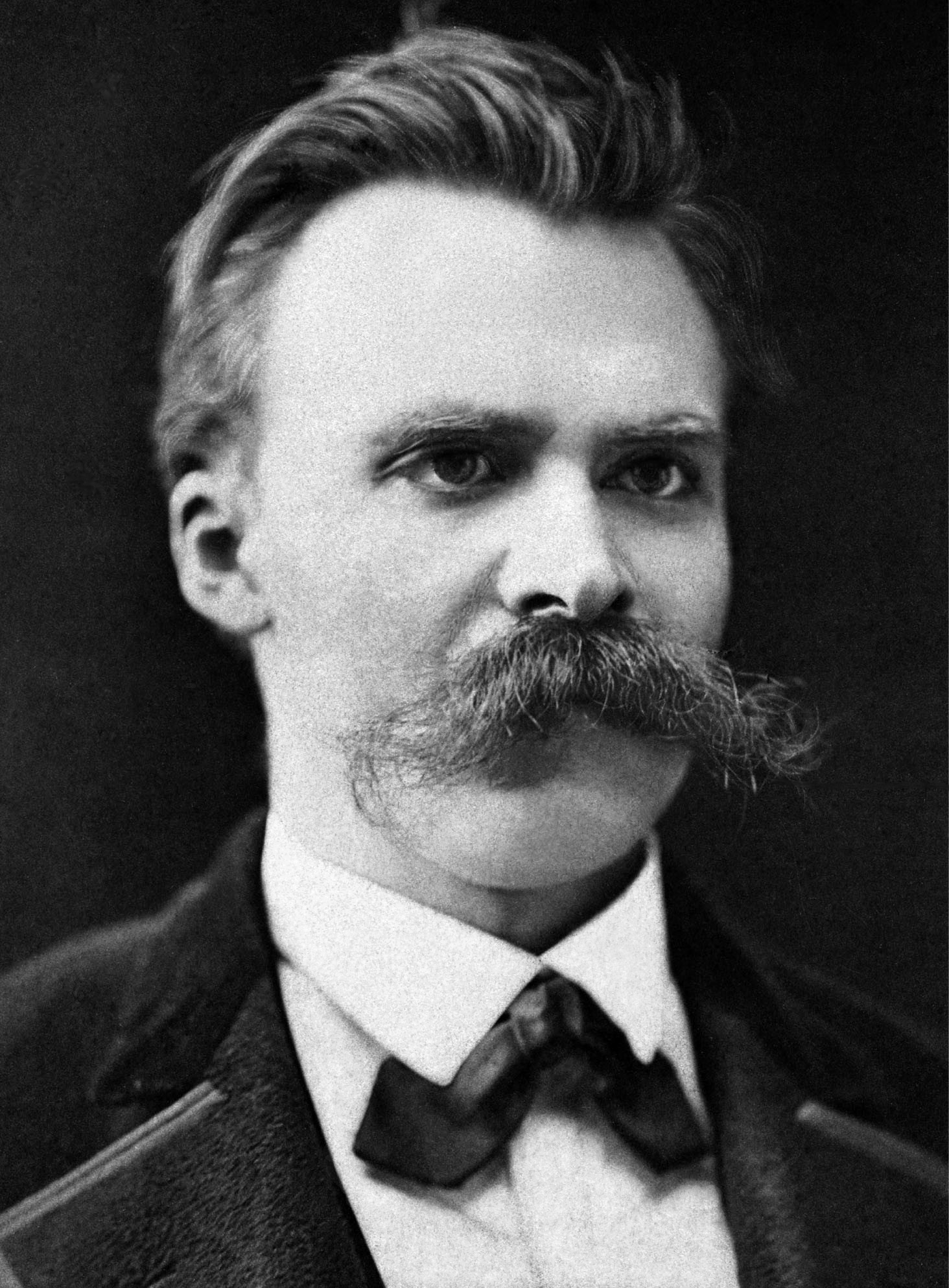
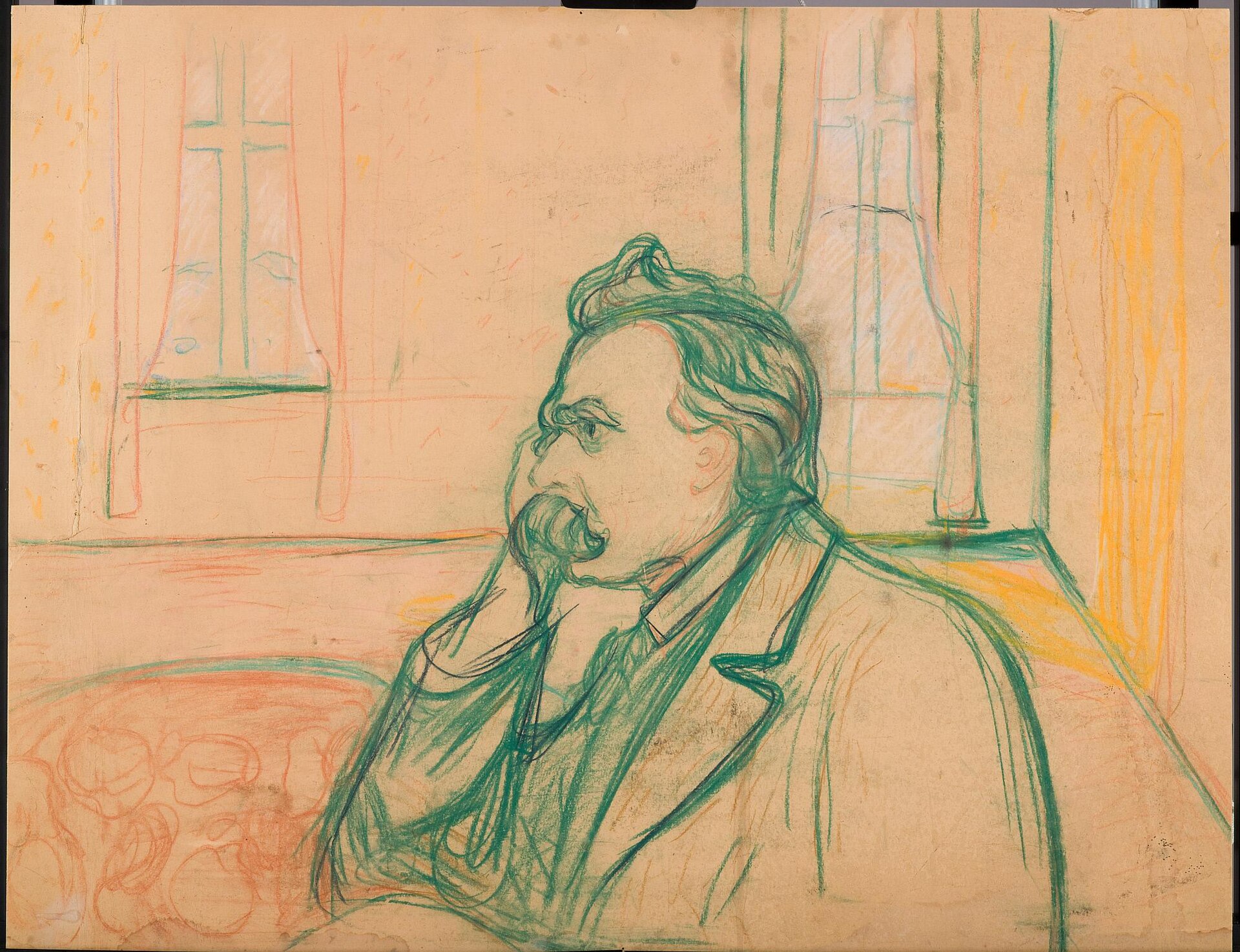
Public-domain portraits and depictions — click any image to view it full size.
“It is only as an aesthetic phenomenon that existence and the world are eternally justified.”
Nietzsche, The Birth of Tragedy
“He who has a why to live can bear almost any how.”
Nietzsche, Twilight of the Idols
“You must have chaos within you to give birth to a dancing star.”
Nietzsche, Thus Spoke Zarathustra
Nietzsche's lens is to create your own values — to face the loss of inherited certainties without flinching, and forge meaning rather than inherit it.
Nietzsche leaned on Greek myth harder than any modern philosopher. His Apollo-versus-Dionysus contrast is the cleanest example of a pair of gods becoming a tool for thinking about art, culture, and how to live.
That makes him the natural end of the myth-to-philosophy bridge: he returns to the Greek source to ask the modern question — what now?
Form, reason, measure — the drive that makes life intelligible.
Ecstasy, chaos, music — the drive that makes life worth living.
Not a celebration but a diagnosis: the religious and moral framework that once grounded Western values had lost its authority. The challenge is to create new meaning without collapsing into nihilism.
From The Birth of Tragedy: Apollo stands for order, form, and reason; Dionysus for ecstasy, chaos, and music. Nietzsche argued that great art and a full life require both.
No — he diagnosed nihilism as the danger of his age and spent his work trying to overcome it by creating new, life-affirming values. He is often misread on exactly this point.
'Love of fate' — Nietzsche's call not merely to endure what happens but to affirm one's life so completely that one would will it to recur eternally.
When I am not reading Homer or Nietzsche, I tune databases, design high-availability systems, and run cloud migrations.