Stoicism · Rome · Time
Seneca: Live Now
A wealthy statesman, playwright, and Stoic who wrote the most readable advice in antiquity — and whose own life tested every word of it.
 Michael Paycer
A wealthy statesman, playwright, and Stoic who wrote the most readable advice in antiquity — and whose own life tested every word of it.
Michael PaycerLived
c. 4 BCE–65 CE
Role
Statesman, playwright, Stoic
Lens
Use your time; life is long if you live it
Key works
Letters to Lucilius; On the Shortness of Life
Seneca the Younger was a Roman senator, dramatist, and one of the most quotable of the Stoics. His letters and essays turn Stoicism into warm, practical counsel on anger, grief, wealth, and above all time.
His lens is urgency well spent: life is not short, he argues — we make it short by squandering it. The remedy is to live deliberately now, treating each day as a complete life and time as the only thing we can never get back.
Born in Spain and raised in Rome, Seneca rose to the heights of imperial politics as tutor and adviser to the young emperor Nero — a role that brought him wealth, power, and grave moral compromise as Nero grew cruel.
Accused of conspiracy, Seneca was ordered by Nero to take his own life in 65 CE, which he did with Stoic composure. His death, like Socrates', became an emblem of philosophy meeting its final test — and a favorite subject for later painters.
"It is not that we have a short time to live, but that we waste much of it." Seneca's most famous essay argues that life is long enough if we stop frittering it away on distraction, vanity, and other people's demands.
Seneca wrote one of antiquity's great analyses of anger — a temporary madness, he called it, that we can learn to forestall by examining our judgments before they harden into rage. A strikingly modern psychology of emotion.
He advised rehearsing hardship in advance — imagining loss, poverty, and death — not to be gloomy, but to rob misfortune of its shock and to be grateful for what we have while we have it.
Seneca's essays and letters were treasured through the Middle Ages and Renaissance, admired by Montaigne, and his tragedies shaped European drama down to Shakespeare. On the Shortness of Life remains one of the most-read pieces of practical philosophy ever written.
With Epictetus and Marcus Aurelius, he is one of the three great Roman Stoic voices, and the warmest — the entry point through which many readers first discover the tradition.
Did Seneca live his philosophy? The richest debate around Seneca is the gap between his Stoic ideals and his life — vast wealth, and service to the murderous Nero. Was he a hypocrite, or a flawed man doing his honest best in impossible circumstances? Readers have argued it for two thousand years.
Can you be rich and Stoic? Seneca defended the possibility: it is not wealth that corrupts, he argued, but attachment to it. Critics then and now wonder whether that is wisdom or convenient self-justification — a live question wherever philosophy meets privilege.
Public-domain portraits and depictions — click any image to view it full size.
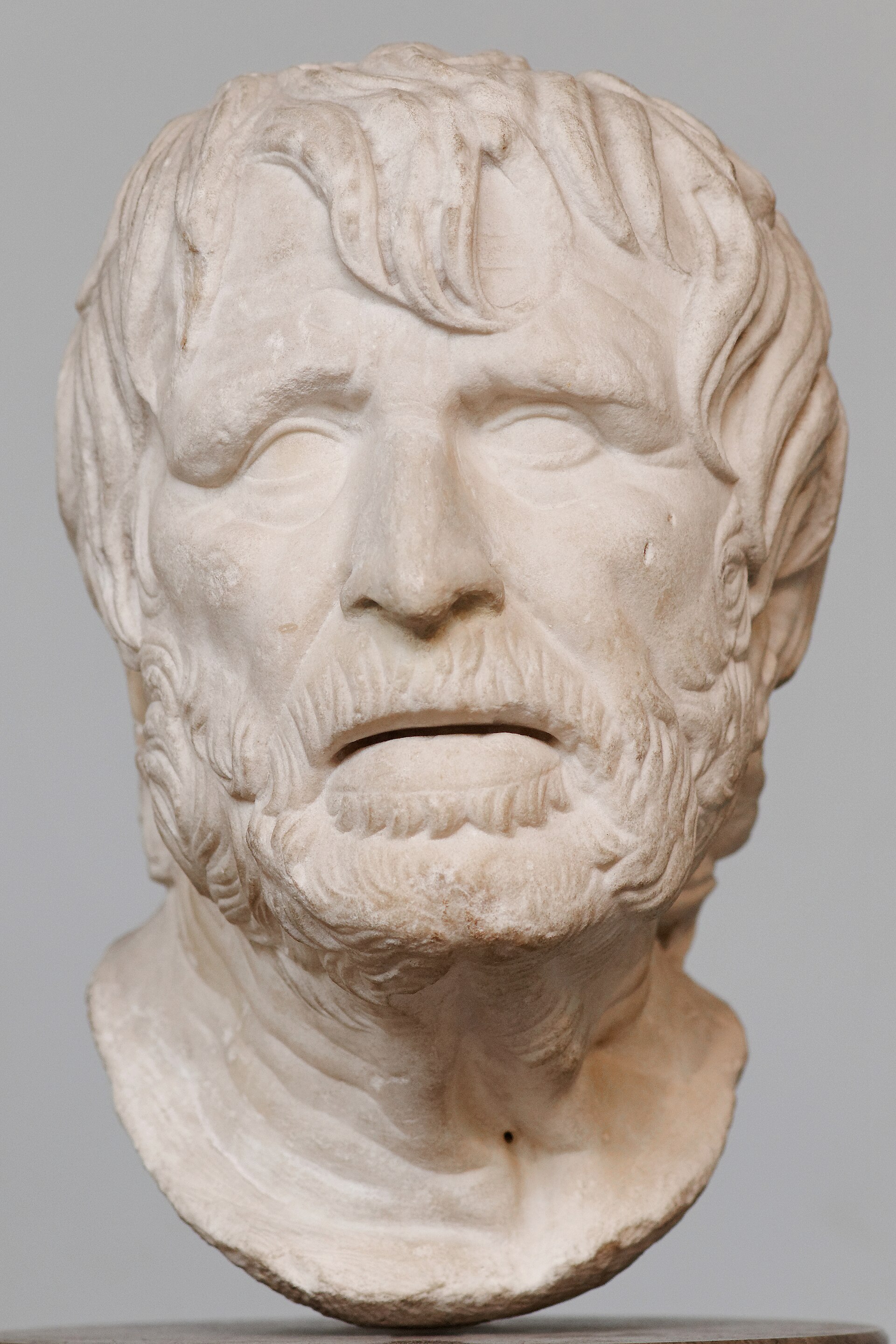
“It is not that we have a short time to live, but that we waste much of it.”
Seneca, On the Shortness of Life
“We suffer more often in imagination than in reality.”
Seneca, Letters to Lucilius
Seneca brings the Stoic lens down to earth: use your time, govern your anger, rehearse adversity — and stop postponing the life you mean to live.
More than any other Stoic, Seneca writes like a friend giving advice, which is why his letters still read so freshly. He makes Stoicism feel less like a system and more like a conversation about how to spend a life.
His own compromised career — serving a tyrant while preaching virtue — also makes him the most human of the Stoics: a reminder that the philosophy is something we practice imperfectly, under pressure, in a messy world.
Live deliberately now; guard your time as the one thing you cannot regain.
Always postponing real life, consumed by tasks, distraction, and others' demands.
Seneca the Younger was a Roman statesman, playwright, and Stoic philosopher, famous for his letters and essays and for serving as adviser to the emperor Nero, who later ordered his death.
Seneca's argument that life is not too short — we simply waste most of it on distraction and trivial pursuits. Lived deliberately, he says, life is long enough.
Implicated in a conspiracy against Nero, Seneca was ordered to take his own life in 65 CE, which he did with Stoic calm — a death often compared to that of Socrates.
When I am not reading Homer or Nietzsche, I tune databases, design high-availability systems, and run cloud migrations.