Stoicism · Rome · Freedom
Epictetus: Control What You Can
Born a slave, he became the most influential Stoic teacher of all — and taught that true freedom is a matter of the mind, not the body.
 Michael Paycer
Born a slave, he became the most influential Stoic teacher of all — and taught that true freedom is a matter of the mind, not the body.
Michael PaycerLived
c. 50–135 CE
Role
Stoic teacher; former slave
Lens
Master your judgments; accept the rest
Key text
Enchiridion
Epictetus spent his early life enslaved in Rome, yet became the most influential teacher of Stoicism — proof, in his own person, of his central claim: that freedom is not about your circumstances but about your mind.
His lens is the famous "dichotomy of control": some things are up to us (our judgments, desires, and actions) and some are not (our body, reputation, fortune, other people). Invest only in the first, and nothing can truly enslave you.
Enslaved to a wealthy member of Nero's court, Epictetus was permitted to study philosophy and was eventually freed. When the emperor Domitian banished philosophers from Rome, he founded a school in Greece that drew students from across the empire.
Like Socrates, he wrote nothing himself; his teachings survive because a student, Arrian, recorded them as the Discourses and condensed them into the Enchiridion — the "handbook" that has guided readers ever since.
The opening move of the Enchiridion: separate what is in your power from what is not. Bind your well-being only to what you control — your own choices — and no person or event can disturb your peace.
Having been a slave, Epictetus knew that chains bind the body, not the will. The truly free person is the one whose contentment depends on nothing external — a radical and durable idea about where freedom really lives.
For Epictetus, philosophy was not theory but training, like an athlete's. You rehearse difficulty, examine your reactions, and build the habits of judgment that let you meet whatever comes with steadiness.
Epictetus shaped Marcus Aurelius, who quotes him directly, and through the Enchiridion he has guided readers from antiquity to the present. The U.S. Navy pilot James Stockdale famously credited Epictetus with sustaining him through years as a prisoner of war.
His insight that our judgments, not events, cause our suffering became a foundation of modern cognitive behavioral therapy — making him perhaps the most quietly influential of all the Stoics on everyday life today.
Is the dichotomy of control too simple? Critics note that almost nothing is purely "up to us" — our choices are shaped by upbringing, circumstance, and chance. Epictetus's sharp line is bracing, but where exactly it falls is the perennial Stoic debate.
Detachment or engagement? If you invest only in what you control, do you stop caring about the world? Epictetus answers that you act fully in your roles — as citizen, parent, friend — while releasing attachment to outcomes. Holding both is the practice.
Public-domain portraits and depictions — click any image to view it full size.
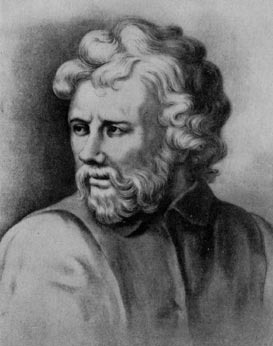
“Some things are within our power, and some are not.”
Epictetus, Enchiridion
“Men are disturbed not by the things which happen, but by the opinions about the things.”
Epictetus, Enchiridion 5 (trans. George Long)
Epictetus distills the Stoic lens to its sharpest point: master what is yours — your judgments and choices — and release everything else. Freedom is an inner achievement.
That a former slave became the great teacher of freedom is the whole argument in a single life. External conditions did not define him; his judgments did. It is Stoicism at its most uncompromising and most liberating.
His Enchiridion — small enough to carry — has been a companion to soldiers, prisoners, and seekers for two thousand years, and sits at the root of modern cognitive therapy's insight that it is our beliefs about events, not the events themselves, that disturb us.
Freedom of the mind — contentment that depends on nothing external.
Power over bodies — which can chain a person but never their judgments.
A Stoic philosopher, born a slave in the Roman Empire, who became its most influential teacher of Stoicism. His teachings survive in the Discourses and the Enchiridion, recorded by his student Arrian.
Epictetus's core idea: distinguish what is in your power (your judgments and choices) from what is not (events, reputation, fortune). Focus only on the first, and accept the rest.
No — like Socrates, he taught orally. His student Arrian recorded his lessons as the Discourses and summarized them in the short handbook called the Enchiridion.
When I am not reading Homer or Nietzsche, I tune databases, design high-availability systems, and run cloud migrations.