Who was Commodus?
Commodus was born in AD 161 — the very year his father became emperor. He arrived into a large imperial family, but one repeatedly broken by early death: after his brothers died, he became Marcus's surviving male heir. Marcus named him Caesar, then raised him to full co-emperor in AD 177, so that for the last years of the reign father and son ruled together. When Marcus died in AD 180, Commodus succeeded him — a biological son inheriting directly, ending the run of adoptive successions that had produced Rome's "Five Good Emperors."
The great contradiction
Here is the problem that no admirer of the Meditations can avoid. Marcus Aurelius is remembered for judgment, self-discipline, and stability of character — the man who reminded himself each night to be patient, humble, and just. And he handed the empire to a son whose reign became, in the historical memory, a byword for the exact opposite. It is the hardest single problem in Marcus's legacy, and it cannot be argued away. The most self-controlled emperor produced the succession that helped undo the peace he spent his life defending.
Commodus began with real advantages. He inherited one of the ancient world's most powerful states, a body of experienced advisers, and the unquestioned legitimacy of being Marcus's biological son. What he made of them is a separate and darker story.
On the words we do not have
There is no authentic self-quotation from Commodus about his father that can honestly be placed here — so none is invented. What survives instead is hostile ancient testimony. Writing of the young Commodus during the crisis of Avidius Cassius's revolt, the historian Cassius Dio describes him as below. Read it as a hostile witness's judgment, not as Commodus speaking for himself.
“too young and also rather simple-minded.”
Cassius Dio, on the young Commodus · hostile ancient testimony, not Commodus's own words
What his reign became
The elite education and the capable advisers did not hold. Commodus's rule slid into personal extravagance, court instability, executions, and a deterioration of ordinary imperial government. He became notorious for putting himself in the arena as a gladiator — an emperor performing the role of a slave-fighter, a spectacle that scandalized the Roman aristocracy. In AD 192 he was assassinated, and his death did not restore order. It helped tip the empire into the chaotic Year of the Five Emperors, the violent scramble for the throne that Marcus's careful reign had been meant to forestall.
Was it Marcus's failure?
Through Marcus's own eyes, Commodus was two things at once: a son and a succession project. Marcus brought him into imperial power deliberately and took him to the northern frontier, plainly trying to prepare him to rule. The decision was not reckless whim. There are real mitigating circumstances — the weight of hereditary expectation, the absence of any surviving brother to choose instead, and the genuine danger that passing over his own son could trigger civil war.
And yet the mitigations do not dissolve the verdict. Marcus taught himself, through Antoninus Pius, how an emperor should behave; he could not transfer it to his heir. The blunt judgment stands: among all the choices of a long and thoughtful reign, the succession to Commodus was Marcus's gravest political failure. Set against the whole circle around him — the teachers who formed him, the generals who died for him — his own son is the spoke that leads nowhere good.
It is also why Commodus matters to anyone reading Marcus Aurelius seriously. The Meditations is a book about doing one's duty and accepting what one cannot control. Marcus's son is the point where those two things collide: the duty to secure the succession, and a result he could not, in the end, control.
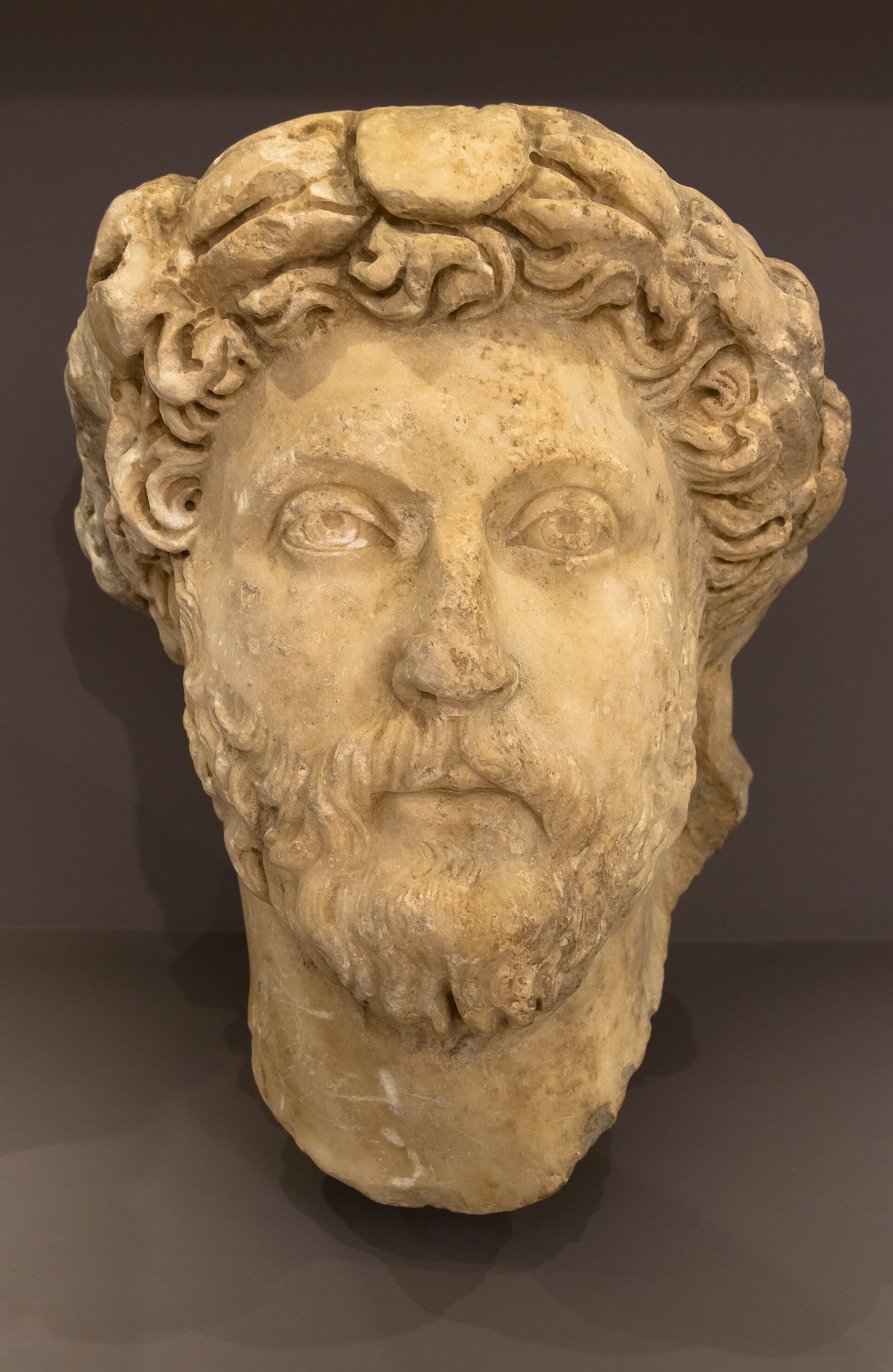 Marcus Aurelius