Who was Antoninus Pius?
Antoninus became emperor in AD 138 after Hadrian adopted him — on the condition that he, in turn, adopt Marcus Aurelius and Lucius Verus. Marcus thus grew up as the designated heir, ruling in the shadow of a man he had two decades to study. Antoninus's reign was long, stable, and unusually peaceful, and he was not a philosopher in any formal sense. Yet Marcus regarded him as a supreme example of practical virtue — proof that you did not need a school affiliation to embody the thing the schools argued about.
What he gave Marcus
The gift Antoninus gave Marcus was an apprenticeship no book could provide: years of watching, up close, how a decent man actually holds absolute power. Marcus opens his long remembrance of him with his:
“mildness of temper.”
Marcus Aurelius, on Antoninus · Meditations I
From there Marcus catalogs what he watched Antoninus do — how he made decisions, handled advisers, managed public money, endured illness, resisted extravagance, and balanced firmness with restraint. It reads like a leadership case study written by the understudy who took notes for twenty years. Much of what we admire in Marcus as a ruler is Antoninus, absorbed by observation.
The limitation
The peace of Antoninus's reign had a hidden cost. His largely tranquil decades did not permanently solve the frontier pressures that erupted the moment Marcus took the throne — the Parthian War, then the Marcomannic Wars, then plague. It would be unfair to blame Antoninus alone; but the strategic situation Marcus inherited proved far less secure than the calm of the previous years suggested. Marcus learned to govern from a man who never had to fight for the empire's survival, and then spent most of his own reign doing exactly that.
Why he ranks so high
In Marcus's circle, Antoninus is second only to Rusticus in direct formative importance. The tribute to him in Book I is one of the clearest windows we have into Marcus's ideal of leadership — and it is telling that a Stoic emperor's picture of the good ruler is a portrait of the ordinary, patient man who raised him, not of a philosopher-king from a treatise.
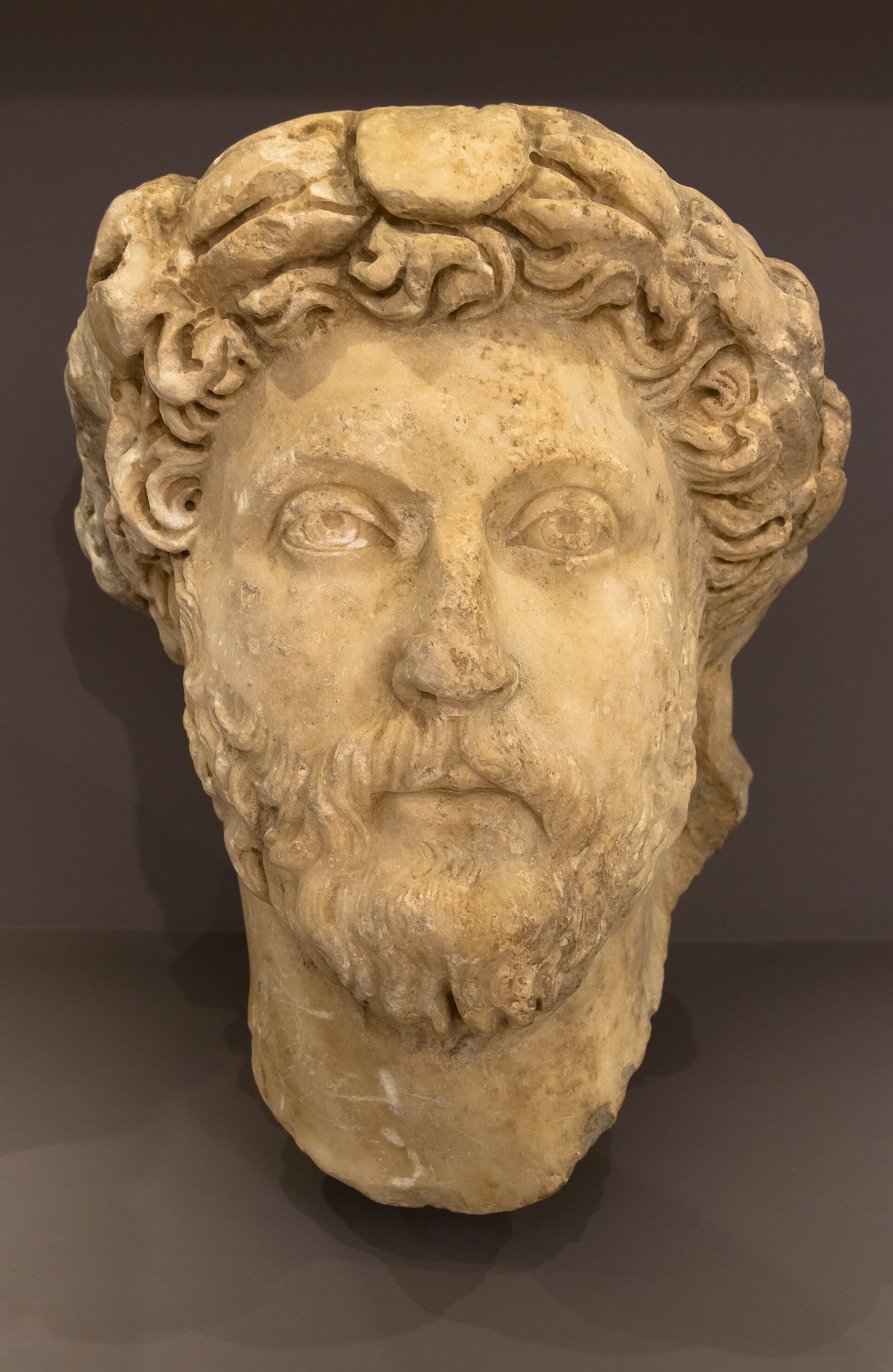 Marcus Aurelius