
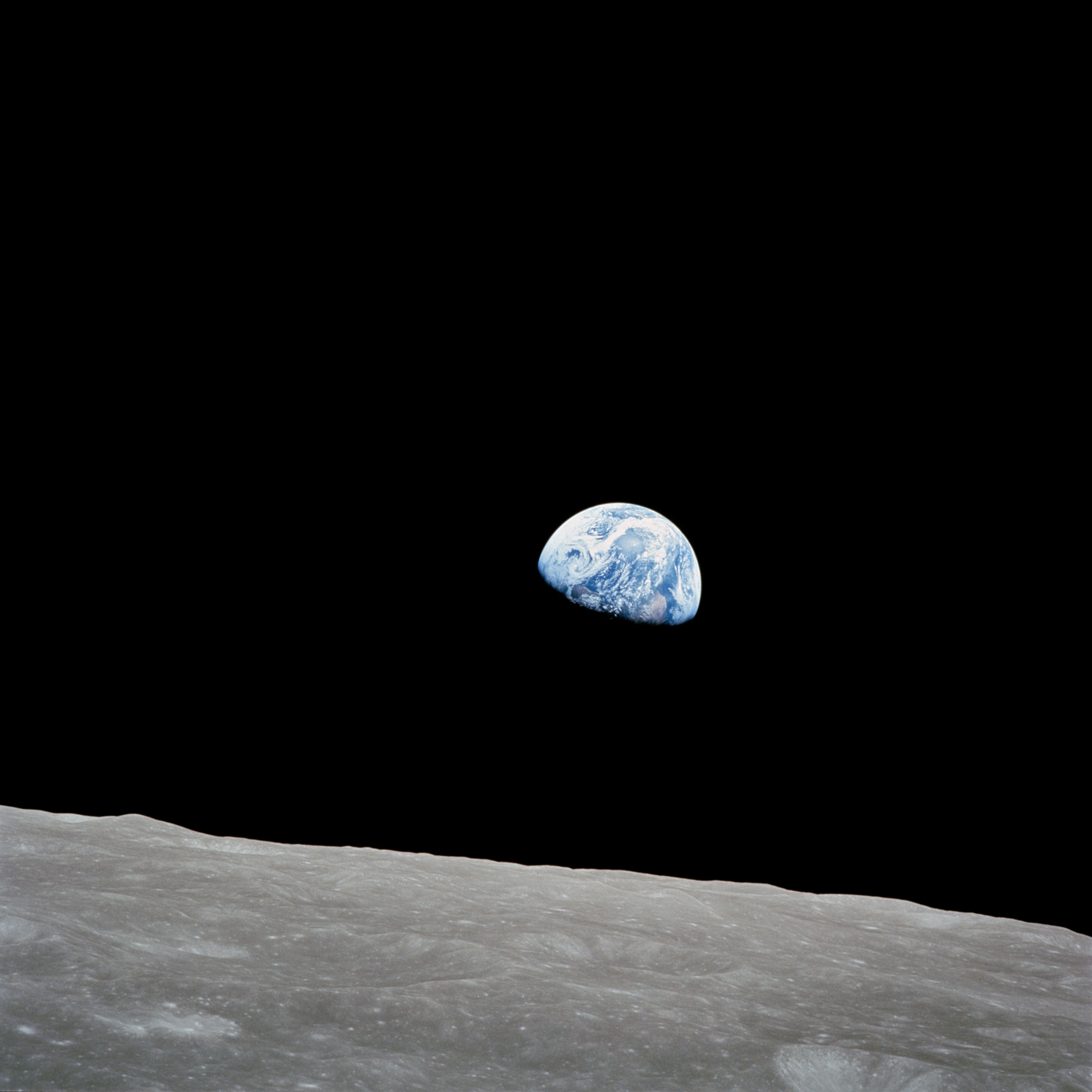
Earthrise — NASA photograph AS8-14-2383, taken by astronaut William Anders on December 24, 1968, from lunar orbit during Apollo 8. The image is shown here in its original orientation (the Moon's horizon is vertical because Anders held the camera sideways). Credit: NASA.
The first time humans saw their own planet rise
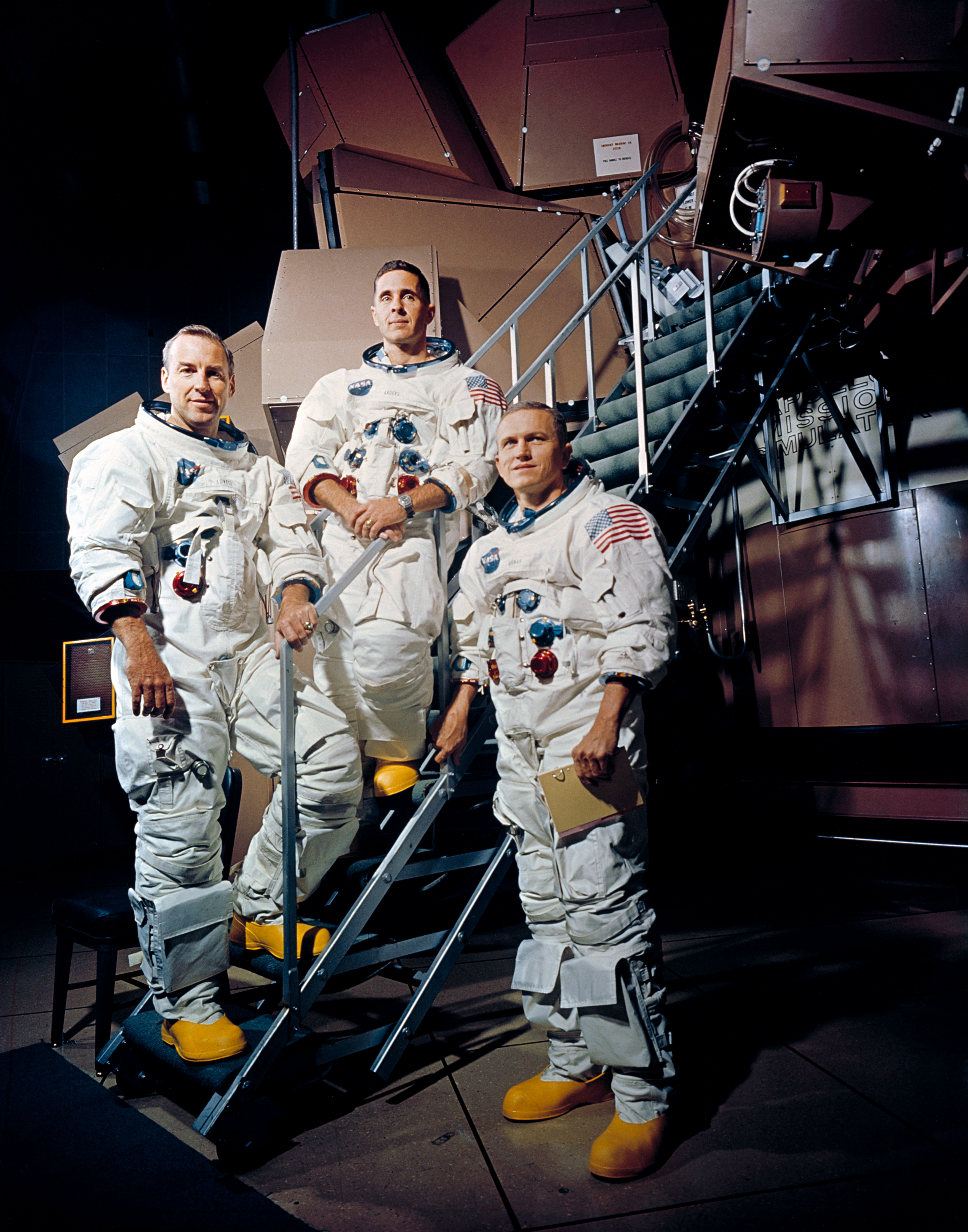
By the time Apollo 8 reached the Moon on December 24, 1968, no human had ever seen Earth as a whole, illuminated planet hanging in space. The crew — Frank Borman (commander), Jim Lovell (command module pilot), and Bill Anders (lunar module pilot) — had a flight plan packed with lunar photography assignments. Earth photography was not on the schedule for that orbit.
Then the spacecraft rolled. As Borman turned the capsule to a new attitude, Earth came into view above the lunar horizon for the first time on the mission. Anders was the first to see it. "Oh my God! Look at that picture over there! Here's the Earth coming up. Wow, is that pretty!"
What happened next was a small, frantic scramble in the cabin to grab a color camera and a roll of film. Lovell and Anders both reached for the camera. Anders fired the shutter at 16:39:18 GMT on December 24, 1968 — capturing the image cataloged by NASA as AS8-14-2383. The picture itself was unplanned, ad-hoc, and almost missed.
"We came all this way to explore the Moon, and the most important thing is that we discovered the Earth."
Earthrise at a glance
Date Captured
December 24, 1968, 16:39:18 GMT
Photographer
William A. "Bill" Anders, Apollo 8 Lunar Module Pilot
NASA Catalog ID
AS8-14-2383
Camera
Modified Hasselblad 500 EL with 250mm Zeiss Sonnar lens, 70mm Kodak Ektachrome color film
The first humans to leave Earth's gravity
Apollo 8 was originally planned as a low-Earth-orbit test of the lunar module. When LM development fell behind schedule and intelligence suggested the Soviets might attempt a circumlunar mission first, NASA made one of the boldest decisions in spaceflight history: send Apollo 8 to lunar orbit on the very first crewed Saturn V flight, with no lunar module to use as a lifeboat. The crew had four months to train for it.
They launched from Kennedy Space Center on December 21, 1968 atop a Saturn V — the third Saturn V launch ever, and the first carrying humans. Three days later, on Christmas Eve, they fired the service module engine to enter lunar orbit. They would orbit the Moon ten times over the next twenty hours, photographing potential Apollo landing sites and the lunar far side — territory no human had ever seen with their own eyes.
The Earthrise photograph happened during the fourth of those ten orbits, by accident, in maybe twenty seconds of opportunity. If Borman had rolled the spacecraft a few minutes earlier or later, Earth would have been below the horizon or out of frame. If Anders had been slower with the camera, or if the lens had been the wrong focal length for the geometry, the picture we know today simply would not exist.
The full sequence and related Apollo 8 images
AS8-14-2383 The Iconic Frame
The color photograph that became "Earthrise." Bill Anders fired this frame seconds after seeing Earth come over the horizon. NASA's high-resolution scan from the original film.
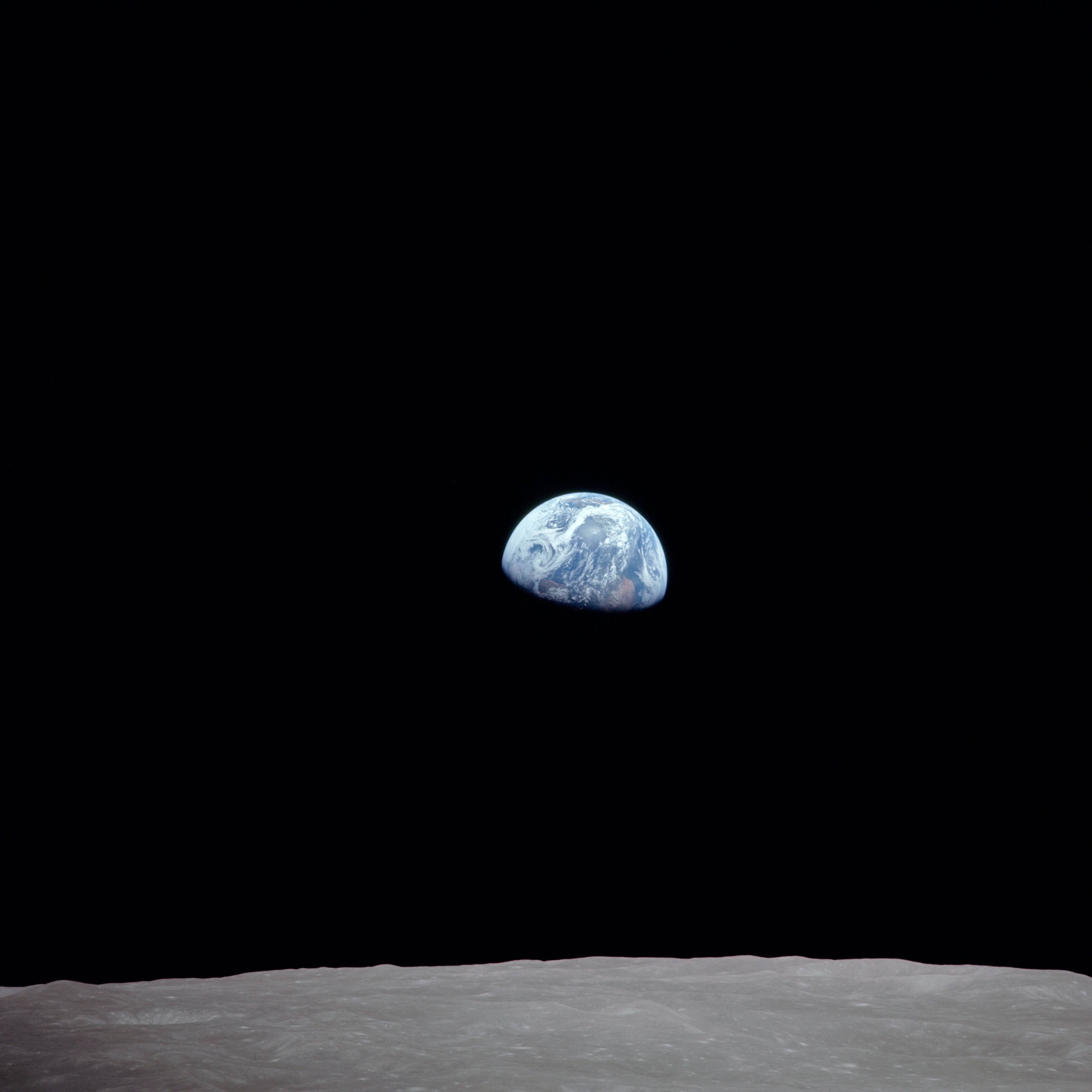
AS8-14-2384 Second Frame
The second color frame in the sequence, taken moments after AS8-14-2383. Anders pivoted the camera and grabbed another exposure as the geometry continued to shift.
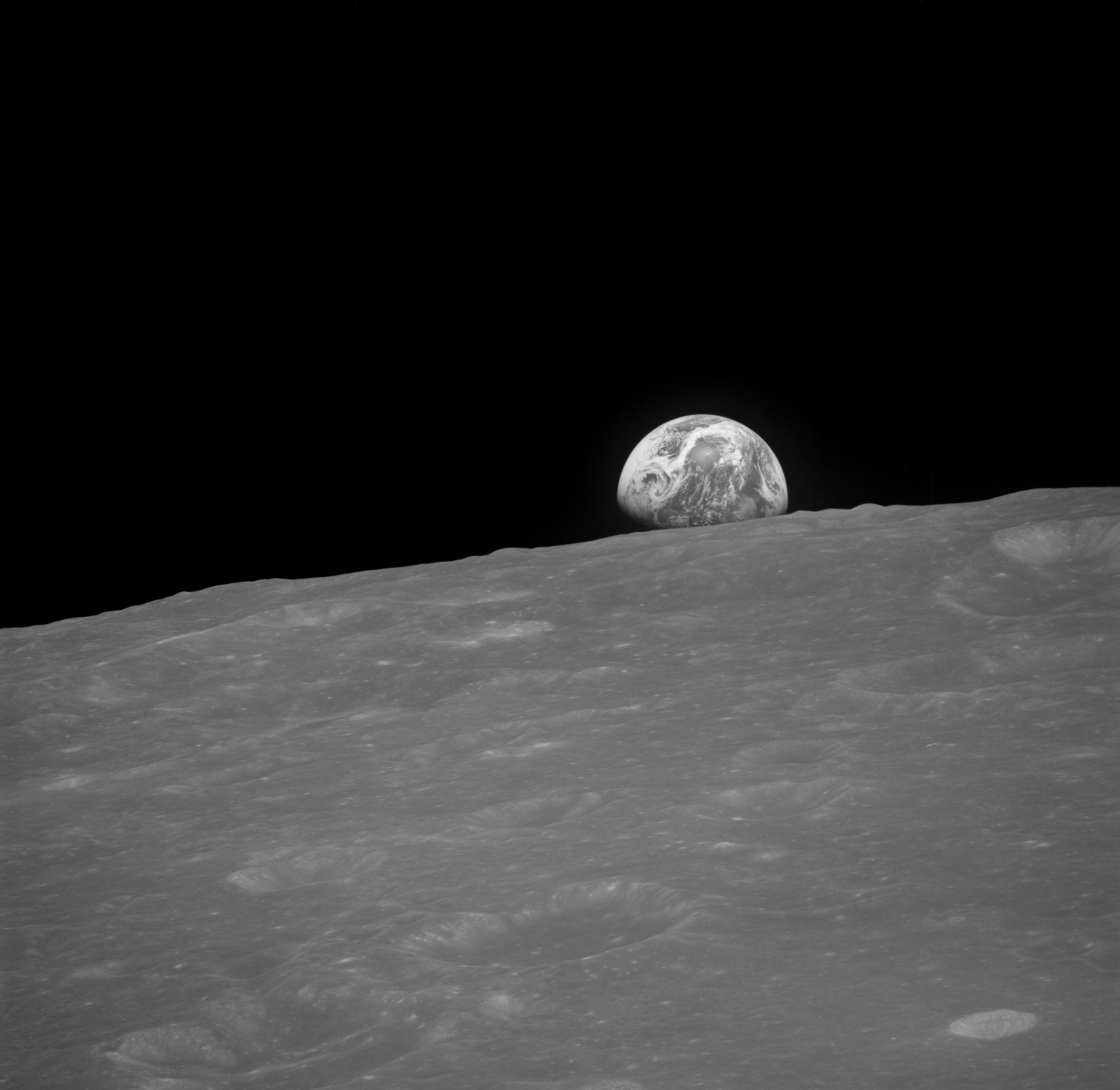
AS8-13-2329 First Earthrise (B&W)
The often-overlooked first Earthrise image: a black-and-white frame Anders shot moments earlier with a different camera, before grabbing the color one. Strictly the first photograph of Earth rising taken by a human.
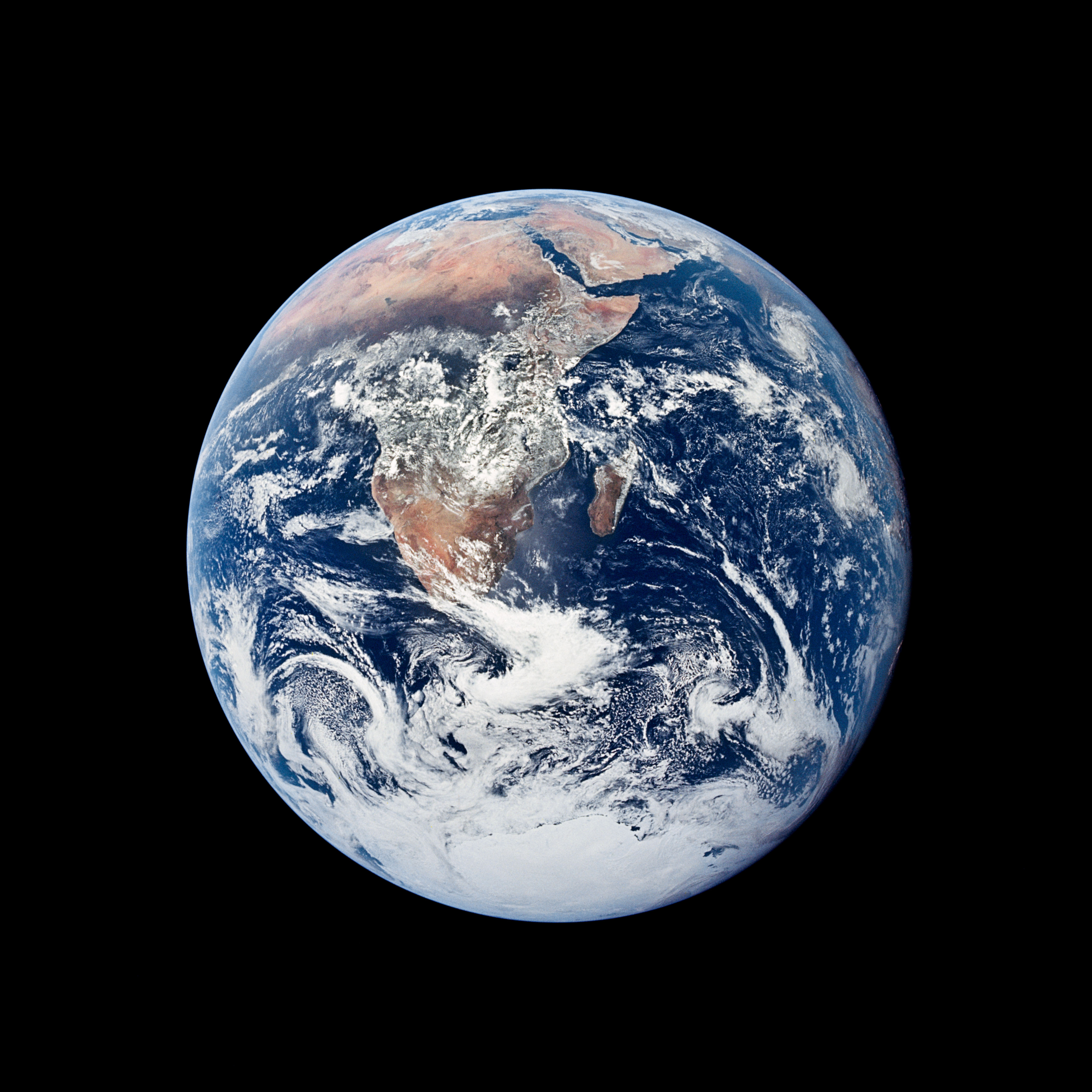
Apollo 17 — The Blue Marble
Four years after Earthrise, the Apollo 17 crew captured this full-Earth portrait at 29,000 km on December 7, 1972. The image — known as the Blue Marble — became Earthrise's natural successor and remains one of the most reproduced photographs in history.
What Anders actually saw and said
The transcript of the moment, reconstructed from the in-cabin recorder, is short and frantic. The crew had a roll of black-and-white film in one camera and were shooting lunar surface targets. Anders was changing magazines when the spacecraft rolled and Earth came over the horizon.
Anders: "Oh my God! Look at that picture over there! Here's the Earth coming up. Wow, is that pretty!"
Borman: "Hey, don't take that, it's not scheduled."
Anders: (laughing) "You got a color film, Jim?"
Lovell: "Hand me that roll of color quick, will you..."
Anders: "Hurry. Quick."
Borman's line is sometimes presented as serious, sometimes as a joke. Either way, Anders had already fired the black-and-white frame, and within seconds he loaded the color film and shot AS8-14-2383. The whole exchange takes about a minute and a half on the tape.
Which way is up?
Anders shot the photograph with the camera rotated 90 degrees. In the original orientation, the Moon's horizon runs vertically up the left side of the frame, and Earth is hanging out to the right at an unfamiliar angle. The image is almost never published this way. Most published versions rotate it 90 degrees counterclockwise so the lunar horizon is at the bottom and Earth is rising above it, in the orientation our minds expect.
Both orientations are "correct." In zero gravity and around an airless world, there is no natural up or down. The crew of Apollo 8 was floating; the spacecraft was rolling; the Moon does not have its own gravity-defined orientation when you are above it. The rotated version is more emotionally legible to people on Earth, which is why it became the famous one.
For decades, exact credit was contested between Anders and Lovell because both men reached for the camera. Audio analysis of the cockpit recording, plus careful study of the camera positions and exposure data, established in the 2010s that Anders fired the frame. The photo is now formally attributed to him in the NASA catalog.
The most influential environmental photograph ever taken
Photographer Galen Rowell famously called Earthrise "the most influential environmental photograph ever taken." That claim is hard to overstate. The picture appeared on the cover of LIFE magazine. The U.S. Postal Service put it on a stamp in 1969. The first Earth Day was held in April 1970 — sixteen months after the photograph was taken — and Earthrise is often cited as one of the catalysts of the modern environmental movement.
Before Earthrise, nobody had ever seen Earth from outside. There had been weather-satellite images, but no human-taken photograph of the whole illuminated planet floating in space. The image made viscerally clear what scientists had long described: Earth is a single sphere, finite, suspended in nothing, fragile against the blackness. The borders we drew on it stopped at the edge of the atmosphere.
Anders, who flew combat in F-89 fighters before becoming an astronaut and later served as Ambassador to Norway, returned to that idea for the rest of his life. He died in June 2024 at age 90, in a plane he was piloting himself near the San Juan Islands.
December 1968 in photographs
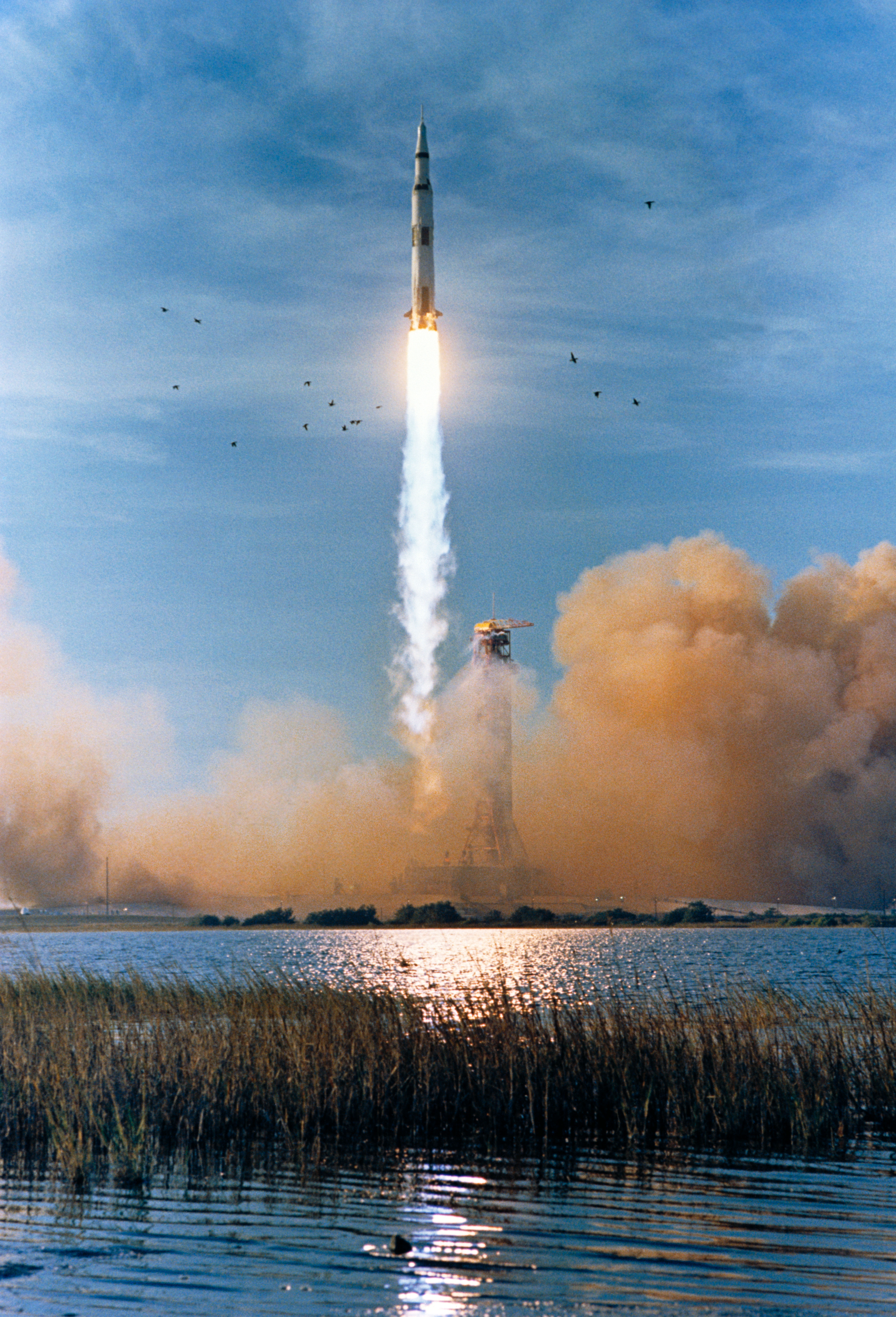
Saturn V Launch
Apollo 8 lifts off from Launch Complex 39A on the morning of December 21, 1968 — the first crewed launch of the Saturn V rocket. The three astronauts rode on top of the most powerful machine ever built by humans.
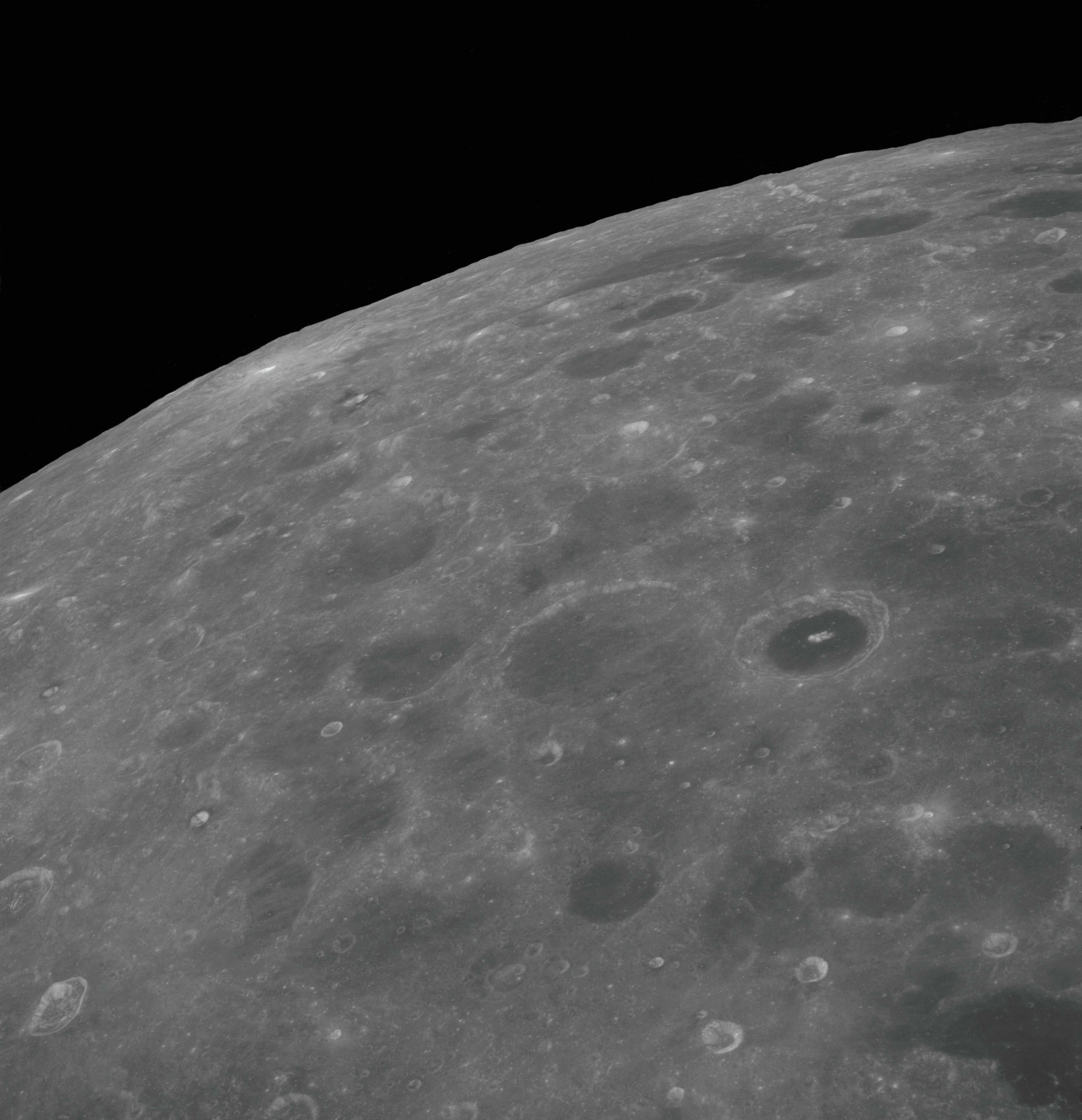
The Lunar Far Side
The Moon's far side — heavily cratered, geologically older, and never visible from Earth — photographed during Apollo 8's lunar orbits. The crew were the first humans to see it directly.
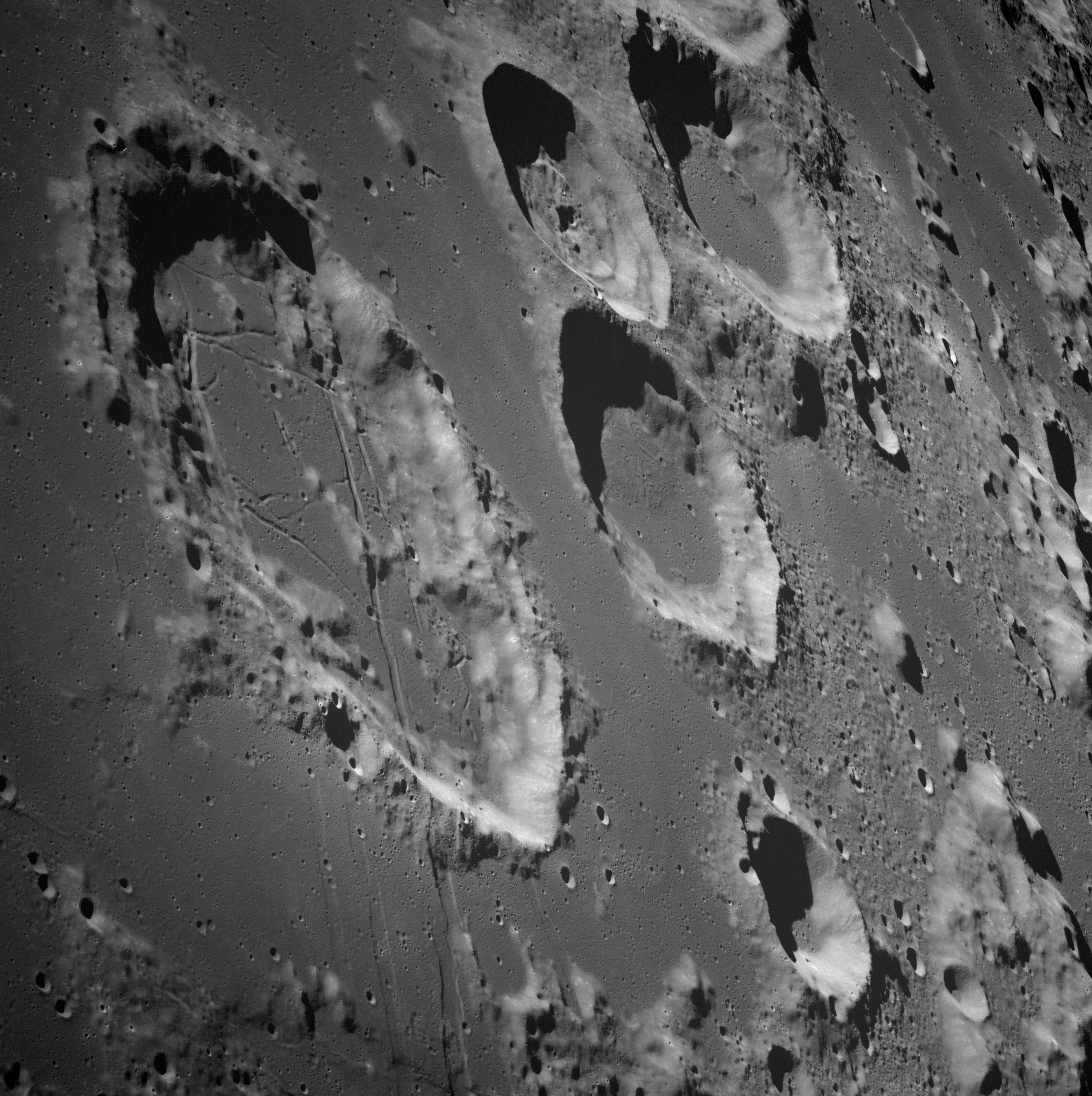
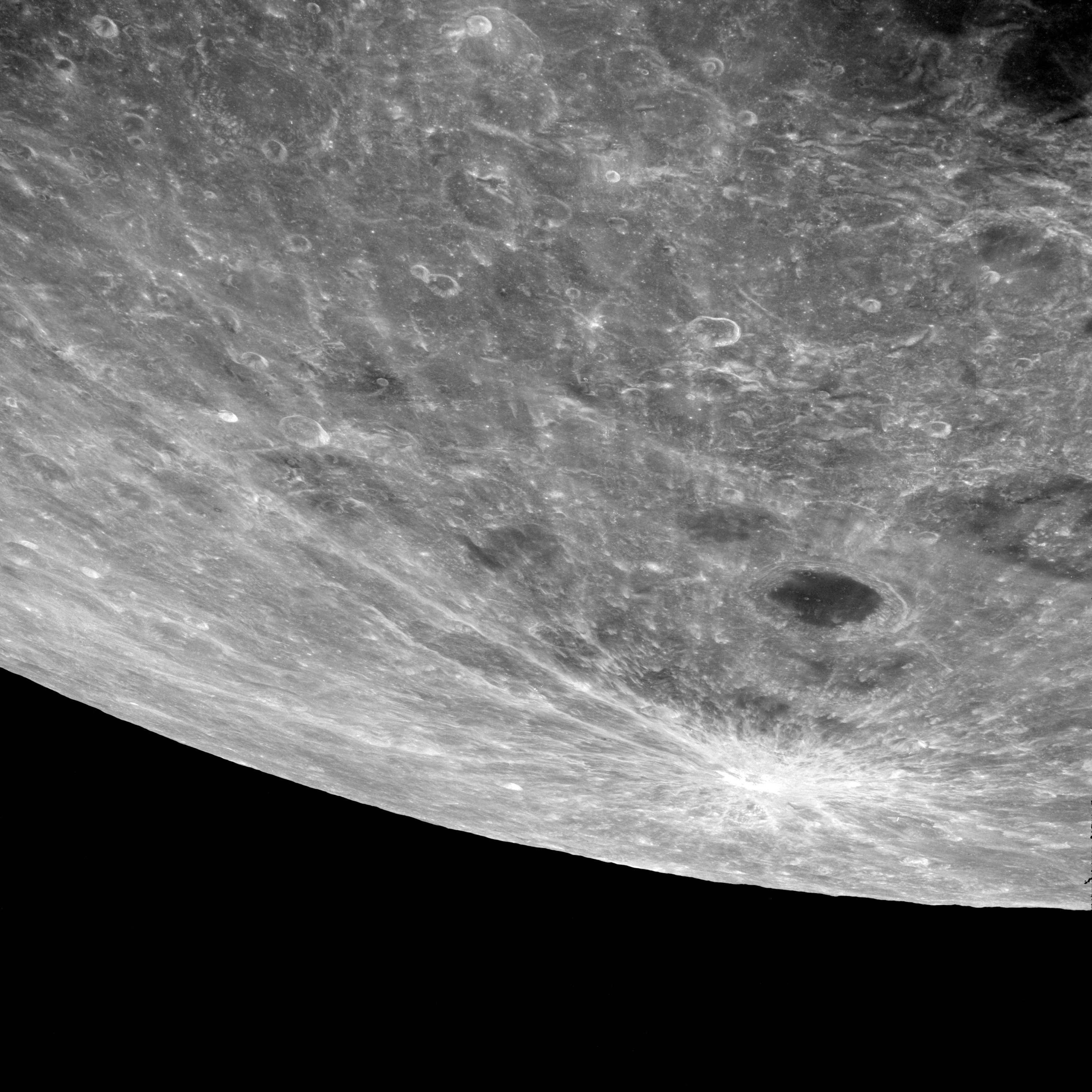
Crater Tsiolkovsky
Apollo 8's lunar photography included detailed surveys of potential landing sites and far-side features like the crater Tsiolkovsky, named for the Russian rocketry pioneer whose work made spaceflight possible.
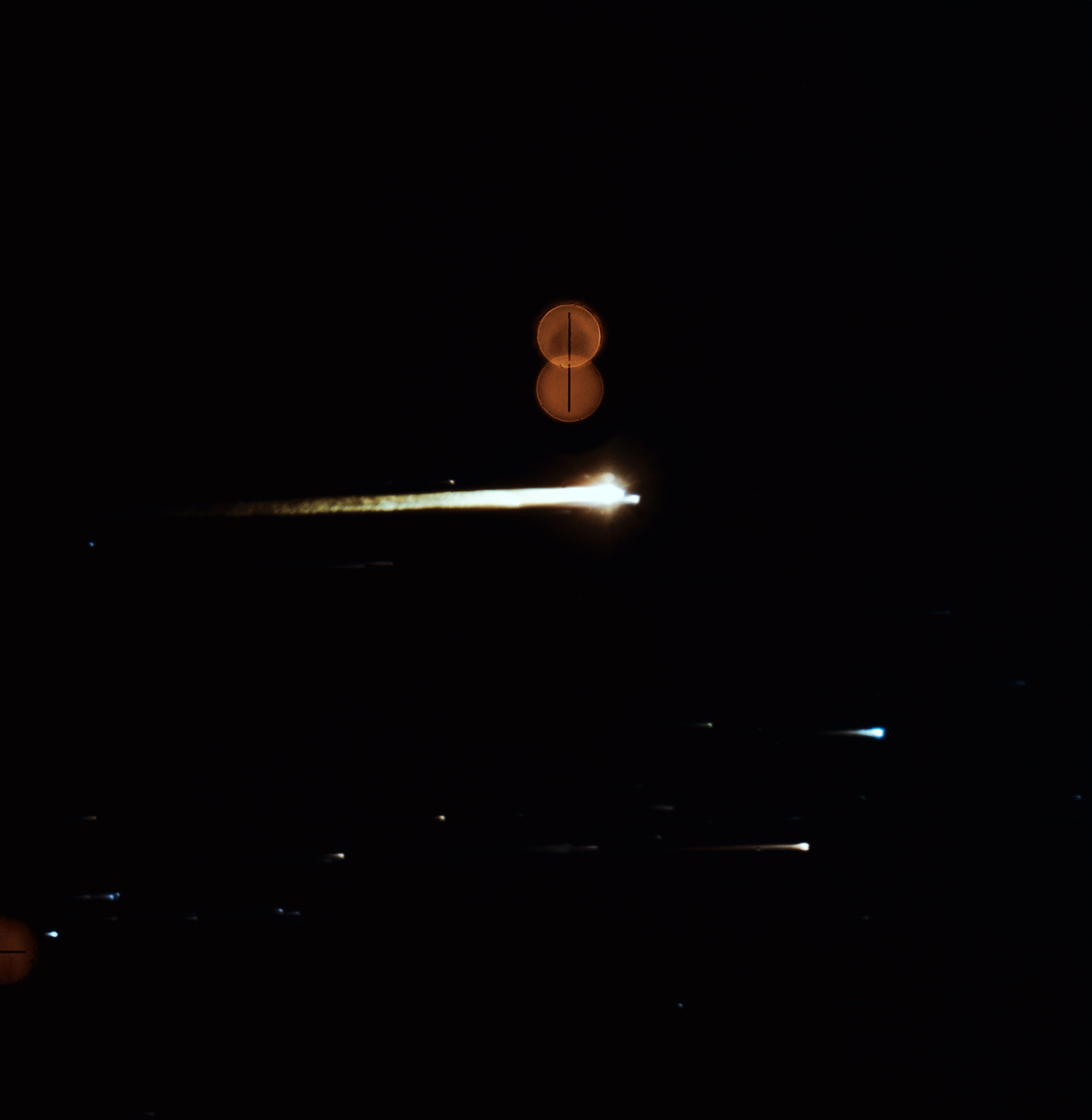
Splashdown and Recovery
The Apollo 8 command module is recovered by the USS Yorktown in the Pacific Ocean on December 27, 1968. Borman, Lovell, and Anders had completed humanity's first journey beyond Earth orbit.
The reading from Genesis
The same evening they took Earthrise, the Apollo 8 crew made a live television broadcast back to Earth — at the time, the most-watched broadcast in history, reaching roughly one billion people in 64 countries. The crew showed views of the Moon and Earth through their windows, then took turns reading the opening verses of the Book of Genesis.
Borman closed the broadcast with: "And from the crew of Apollo 8, we close with good night, good luck, a Merry Christmas, and God bless all of you — all of you on the good Earth."
The reading drew a lawsuit (later dismissed) over religious content on a government broadcast, and considerable discussion afterward. Borman, Lovell, and Anders had each chosen their own passage; the readings were intended to mark the moment with something appropriate to the scale of what they were doing. Whatever one thinks of the choice, the broadcast and Earthrise together made Christmas Eve 1968 one of the most-watched moments of the 20th century.
Apollo 8 mission timeline
| Date | Event |
|---|---|
| Dec 21, 12:51 UTC | Apollo 8 launches from Kennedy Space Center on Saturn V SA-503 |
| Dec 21, ~15:42 UTC | Trans-Lunar Injection burn — the first time humans leave Earth's gravity well |
| Dec 24, 09:59 UTC | Lunar Orbit Insertion burn places Apollo 8 in 60-by-170-mile orbit around the Moon |
| Dec 24, 16:39 UTC | Earthrise photographed (AS8-14-2383) during the fourth lunar orbit |
| Dec 24, evening | Christmas Eve TV broadcast and reading from Genesis — ~1 billion viewers |
| Dec 25, 06:10 UTC | Trans-Earth Injection burn after ten lunar orbits; Lovell radios "Please be informed there is a Santa Claus" |
| Dec 27, 15:51 UTC | Splashdown in the Pacific Ocean; recovered by USS Yorktown |
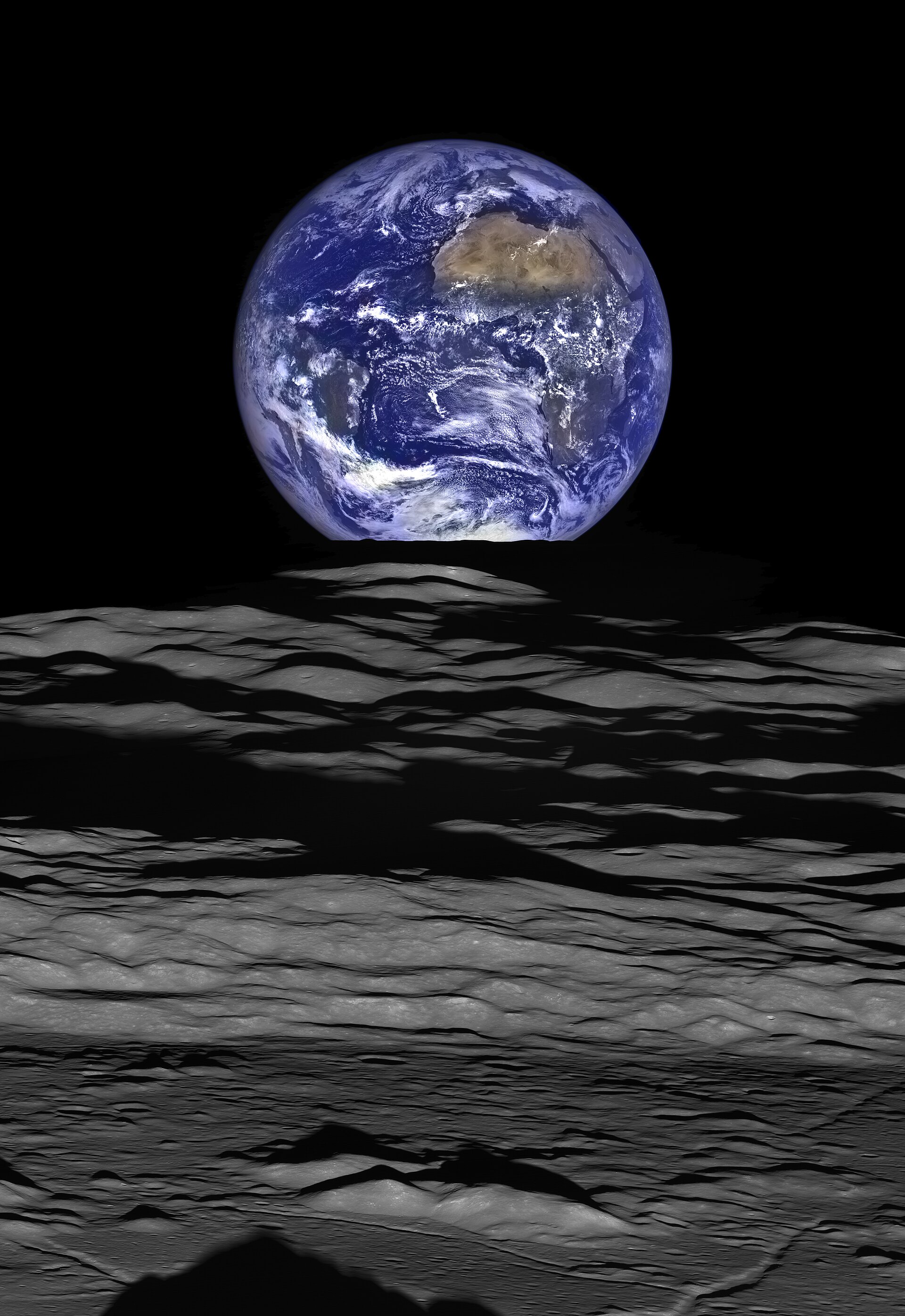
The view since 1968
Anders' photograph is not the only Earthrise on the books. NASA's Lunar Reconnaissance Orbiter has photographed Earth rising over the lunar limb many times, in much higher resolution than was possible with film in 1968. Japan's Kaguya / SELENE orbiter shot 1080p high-definition video of an Earthrise sequence in 2008. China's Chang'e missions have returned their own Earthrise frames.
None of those images have anything close to the cultural weight of the original. Earthrise has the weight it does because it was first, because it was human-taken, and because for the first time a person was actually standing — floating — somewhere far enough from Earth to look back at it as a whole. Every Earthrise photograph since then is in some sense a quotation of this one.
An image of perspective
Astronaut Edgar Mitchell, who walked on the Moon during Apollo 14, said his strongest memory of the mission was looking back at Earth: "You develop an instant global consciousness, a people orientation, an intense dissatisfaction with the state of the world, and a compulsion to do something about it." Many astronauts since have described the same shift — sometimes called the overview effect.
Earthrise made that perspective available to people who would never go to space. The photograph collapses the abstract idea that "Earth is a planet" into a visceral image: a small fragile world hanging in nothing. Whatever one's politics, that picture is part of how the modern environmental movement became possible. The first Earth Day followed sixteen months later.
Anders himself was matter-of-fact about it later in life. The famous quotation — "we came all this way to explore the Moon, and the most important thing is that we discovered the Earth" — was something he came back to in interviews until the end of his life. He flew his last flight in June 2024.
Sources & Image Credits
All photographs in this article are NASA-produced public-domain works from the Apollo 8 mission, December 1968, and the Lunar Reconnaissance Orbiter, sourced from NASA's image library (images.nasa.gov).
- NASA AS8-14-2383 — Earthrise (Anders)
- NASA — Apollo 8 mission overview
- NASA History — Apollo Expeditions to the Moon, Apollo 8
- Smithsonian National Air and Space Museum — Apollo 8 Earthrise
- NASA Scientific Visualization Studio — Earthrise reconstruction
- NASA/GSFC/Arizona State University — LROC Earth over the lunar horizon composite (Oct 12, 2015; released Dec 18, 2015)
- Anders, William, oral history interviews (NASA JSC); NASA mission audio archive
- Rowell, Galen, Mountain Light: In Search of the Dynamic Landscape (1986)
Earthrise was meant to be a photograph of the Moon, and instead became a portrait of home — a fragile blue arc above a dead grey horizon, the picture that taught a generation to look back and see one world worth protecting.
All Astronomy Notes · Pale Blue Dot · Cassiopeia · Andromeda Galaxy · Orion Nebula · Ring Nebula · Pleiades · Betelgeuse · Polaris · Hercules Cluster