How to Live · Ancient India · Suffering
The Buddha: Understand Suffering
The Indian prince who gave up everything to confront human suffering — and taught a practical path to free the mind from it.
 Michael Paycer
The Indian prince who gave up everything to confront human suffering — and taught a practical path to free the mind from it.
Michael PaycerLived
c. 5th–4th century BCE
Tradition
Buddhism (India)
Lens
Understand suffering to end it
Core teaching
The Four Noble Truths
Siddhartha Gautama, the Buddha ('the awakened one'), was born a prince who, confronted with sickness, old age, and death, left his palace to seek the root of human suffering. After years of searching he attained enlightenment and spent his life teaching what he found.
His lens is diagnostic and practical: understand suffering in order to end it. Life involves suffering; suffering arises from craving and attachment; it can cease; and there is a path to that cessation.
The Buddha taught across northern India, gathering a community of followers and offering his teaching to people of every caste — radical for his time. He framed his message not as dogma but as something to be tested in one's own experience.
After his death his teachings spread across Asia, branching into traditions from Theravada to Zen, and shaping the spiritual and philosophical life of much of the world. Buddhism is studied today both as a religion and as a philosophy of mind.
The Buddha's core diagnosis: (1) life involves suffering (dukkha); (2) suffering arises from craving and attachment; (3) suffering can cease; (4) the Eightfold Path leads to its cessation. A physician's logic applied to the mind.
Everything is impermanent and constantly changing; clinging to what cannot last is a source of suffering. Even the fixed 'self' we defend is, the Buddha taught, more fluid than it appears.
Rejecting both indulgence and harsh self-denial, the Buddha taught a 'middle way' — and the Eightfold Path of right understanding, intention, speech, action, livelihood, effort, mindfulness, and concentration.
In the Buddha's teaching, actions have consequences that shape future experience, and craving keeps beings bound to a cycle of rebirth. Liberation (nirvana) is the extinguishing of that craving — release from the wheel of suffering.
Central to the path is the disciplined training of attention — observing thoughts, sensations, and impermanence directly, without clinging. This practice of mindfulness is the Buddha's most far-reaching gift to the modern world.
From its origins in northern India, Buddhism spread across Asia and branched into traditions from Theravada to Zen, shaping the spiritual and artistic life of much of the world for some 2,500 years. It is practiced today by hundreds of millions and studied as a rigorous philosophy of mind.
The Buddha's analysis of attention, impermanence, and the self anticipates ideas now explored in modern psychology, and his practice of mindfulness has been adopted worldwide — in therapy, medicine, and stress reduction — as a secular tool for well-being. Few teachings have crossed so easily from the ancient world into the present.
No self, but moral responsibility? If there is no fixed self, who is reborn, and who is responsible for past actions? Buddhist philosophy has wrestled with this apparent paradox for centuries, and it remains one of the most fascinating problems where ethics meets the philosophy of mind.
Withdrawal or engagement? Is the path one of monastic detachment from the world, or — as "engaged Buddhism" argues — a call to compassionate action within it? The same teaching on suffering has supported both retreat and social activism.
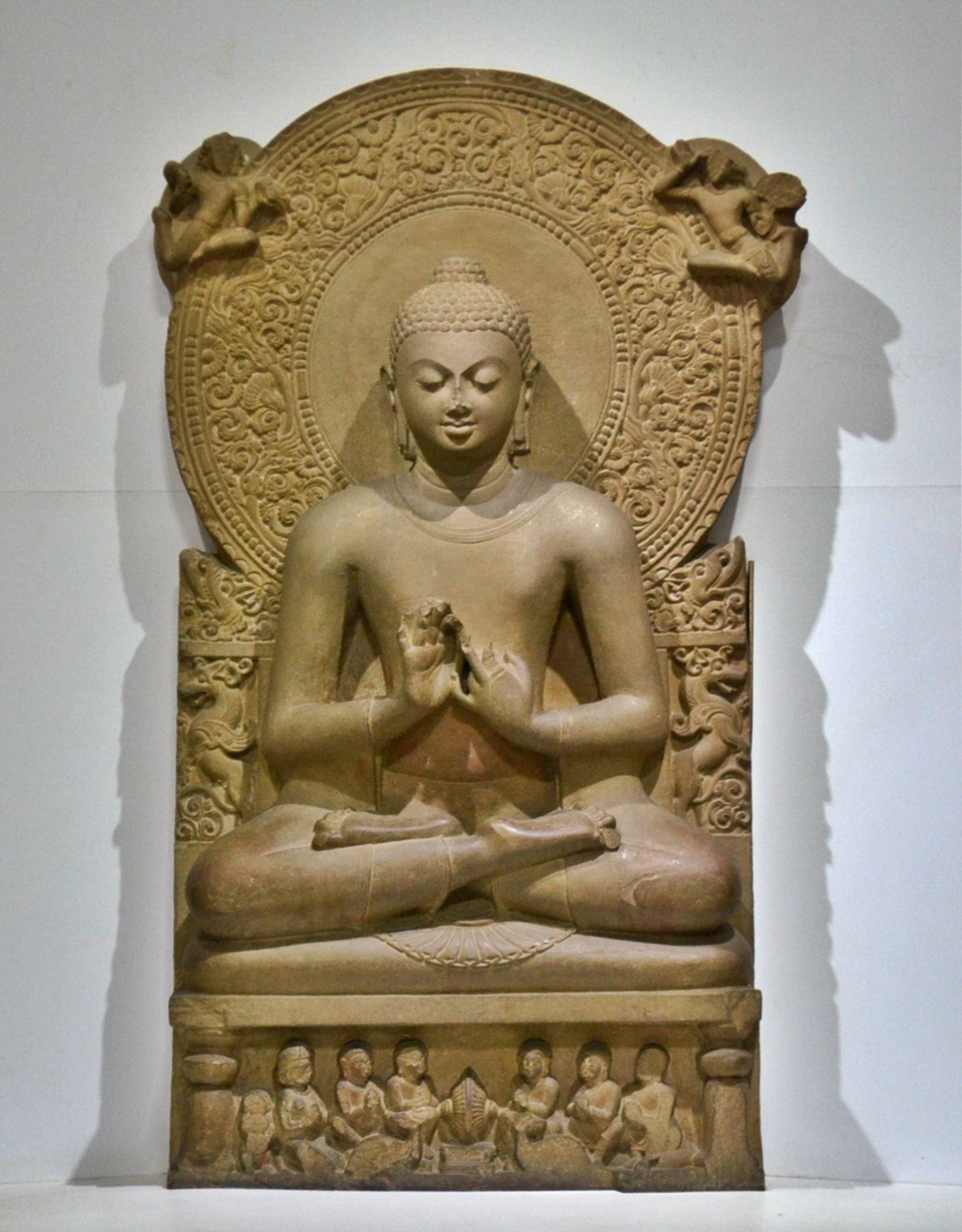
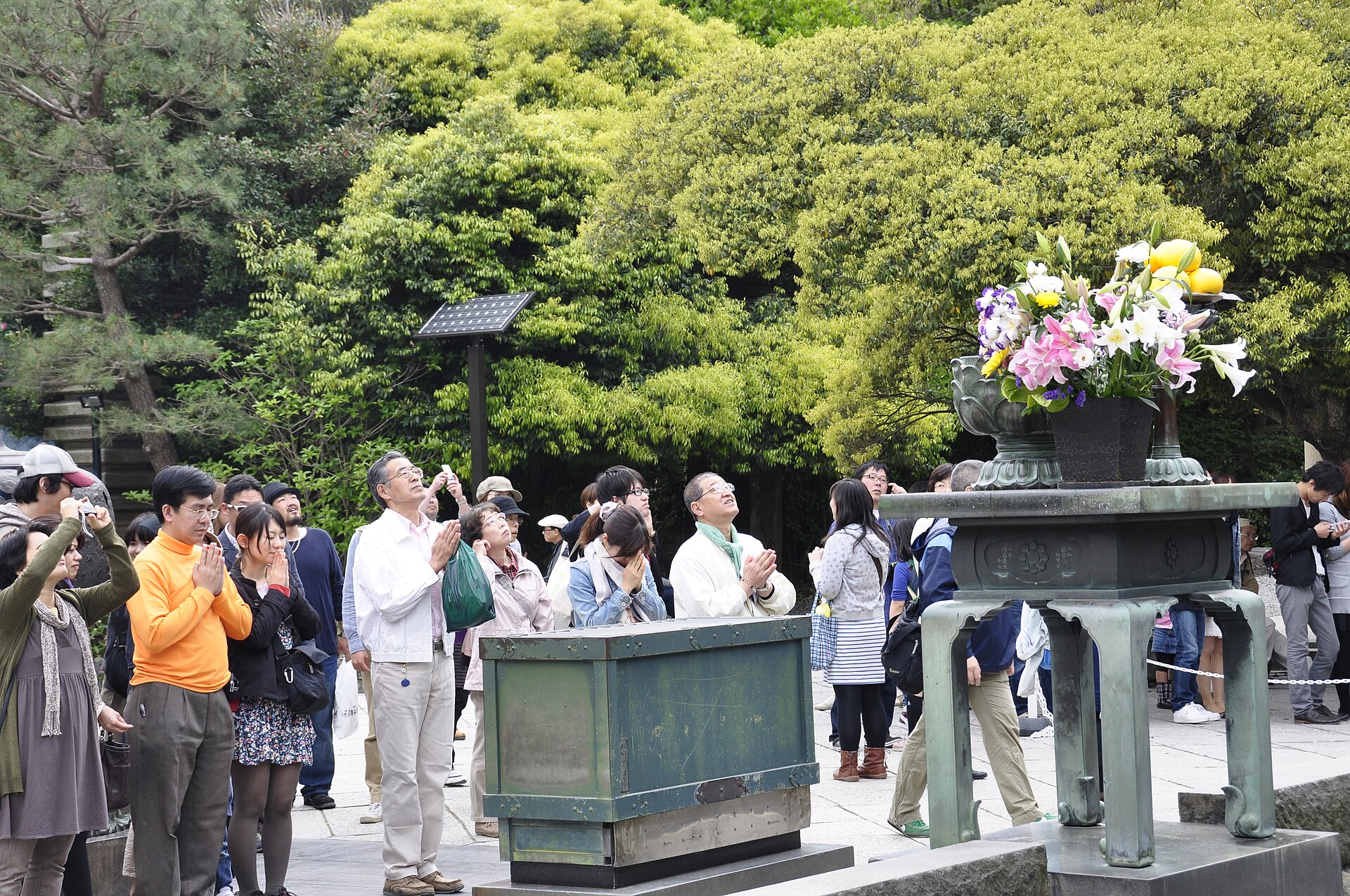
Public-domain portraits and depictions — click any image to view it full size.
“All that we are is the result of what we have thought.”
The Dhammapada
“Hatred does not cease by hatred, but only by love; this is the eternal rule.”
The Dhammapada
“By oneself the evil is done, by oneself one suffers; by oneself evil is left undone, by oneself one is purified.”
The Dhammapada, verse 165
The Buddha's lens is to understand suffering in order to end it — to see clearly how craving and attachment create our pain, and to follow a practical path that frees the mind.
It is a striking complement to the Greek myths of suffering — Demeter's grief, Prometheus' torment. Where the myths dramatize suffering, the Buddha analyzes its mechanism and offers a method to release it.
As a philosophy of mind, his teaching on attention, impermanence, and the self anticipates ideas now explored in modern psychology and the science of well-being.
End suffering by releasing craving and attachment through insight and meditation.
End suffering by mastering judgment and accepting what is outside your control.
The Buddha's core teaching: life involves suffering; suffering arises from craving; suffering can cease; and the Eightfold Path leads to its cessation.
Both. Buddhism is practiced as a religion across the world, but its teachings on suffering, mind, and impermanence are also studied as a rigorous philosophy of mind and ethics.
The Buddha's practical path to end suffering: right understanding, intention, speech, action, livelihood, effort, mindfulness, and concentration — the 'Middle Way' between indulgence and severe asceticism.
The historical Buddha — a prince of ancient India who renounced his privileged life to seek the end of suffering, attained enlightenment, and taught the path he discovered.
When I am not reading Homer or Nietzsche, I tune databases, design high-availability systems, and run cloud migrations.