How to Live · Ancient China · Relationships
Confucius: Honor Your Relationships
The Chinese sage who taught that a good society and a good life are built from the bottom up — through the everyday bonds between people, lived with care.
 Michael Paycer
The Chinese sage who taught that a good society and a good life are built from the bottom up — through the everyday bonds between people, lived with care.
Michael PaycerLived
551–479 BCE
Tradition
Confucianism (China)
Lens
Honor your relationships
Key text
The Analects
Confucius (Kongzi) is the most influential teacher in Chinese history. Living in a time of disorder, he taught that society is healed not by force or law alone but by cultivating virtue in individuals and harmony in their relationships.
His lens: honor your relationships. The bonds between parent and child, ruler and subject, friend and friend — lived with sincerity and respect — are the foundation of a flourishing life and a stable world.
Confucius lived during the late Zhou dynasty, an age of political fragmentation. A minor official and tireless teacher, he gathered students and tried — mostly without success in his lifetime — to advise rulers toward virtuous government.
His sayings, collected by disciples as the Analects, became the core of Confucianism, which shaped Chinese government, education, and family life for two thousand years and remains profoundly influential across East Asia.
The central Confucian virtue: ren, humaneness or benevolence — a genuine care for others that expresses itself in everyday conduct. Goodness is shown not in grand gestures but in how you treat the people around you.
Li (ritual, propriety) gives relationships their proper form. Confucius also taught that society works when names match reality — when a ruler truly acts as a ruler, a parent as a parent.
Centuries before its Western forms, Confucius taught: 'Do not impose on others what you do not wish for yourself' — a foundation of ethical reciprocity.
Confucius reimagined the "gentleman" (junzi) as a matter of character, not birth — anyone could become noble through learning, sincerity, and virtue. It democratized the idea of nobility centuries before the modern world.
"Is it not a pleasure to learn and to practice what one has learned?" For Confucius, becoming good is a lifelong craft of study, reflection, and self-correction — virtue as continuous cultivation rather than a fixed possession.
Confucius shaped Chinese government, education, and family life for over two thousand years; the imperial civil-service exams were built on his classics, and his influence reaches across Korea, Japan, and Vietnam to this day. Few individuals have shaped a civilization so deeply.
His vision — that a good society is built from the bottom up, through virtuous individuals honoring their relationships — remains a powerful alternative to the Western emphasis on the autonomous individual, and a living tradition still debated in modern "New Confucian" thought.
Hierarchy versus equality. Confucian ethics is built on ordered relationships — ruler and subject, parent and child. Modern readers ask whether this wisdom about mutual obligation can be separated from the hierarchy it assumed, a central question in contemporary "New Confucian" thought.
Ritual or authenticity? Confucius prized li (ritual propriety) as the form that makes virtue real. But can outward ritual become empty performance, divorced from inner sincerity? Confucius worried about exactly this, and the tension still animates debates about etiquette, tradition, and genuineness.
Public-domain portraits and depictions — click any image to view it full size.
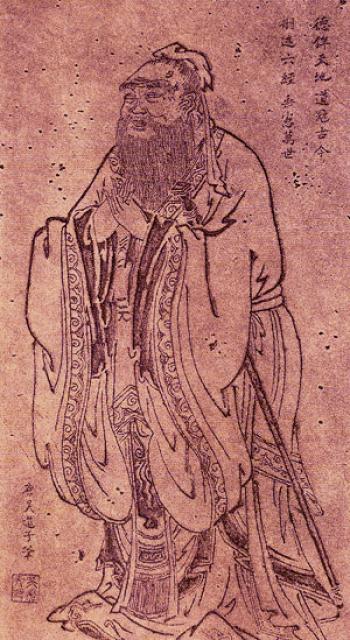
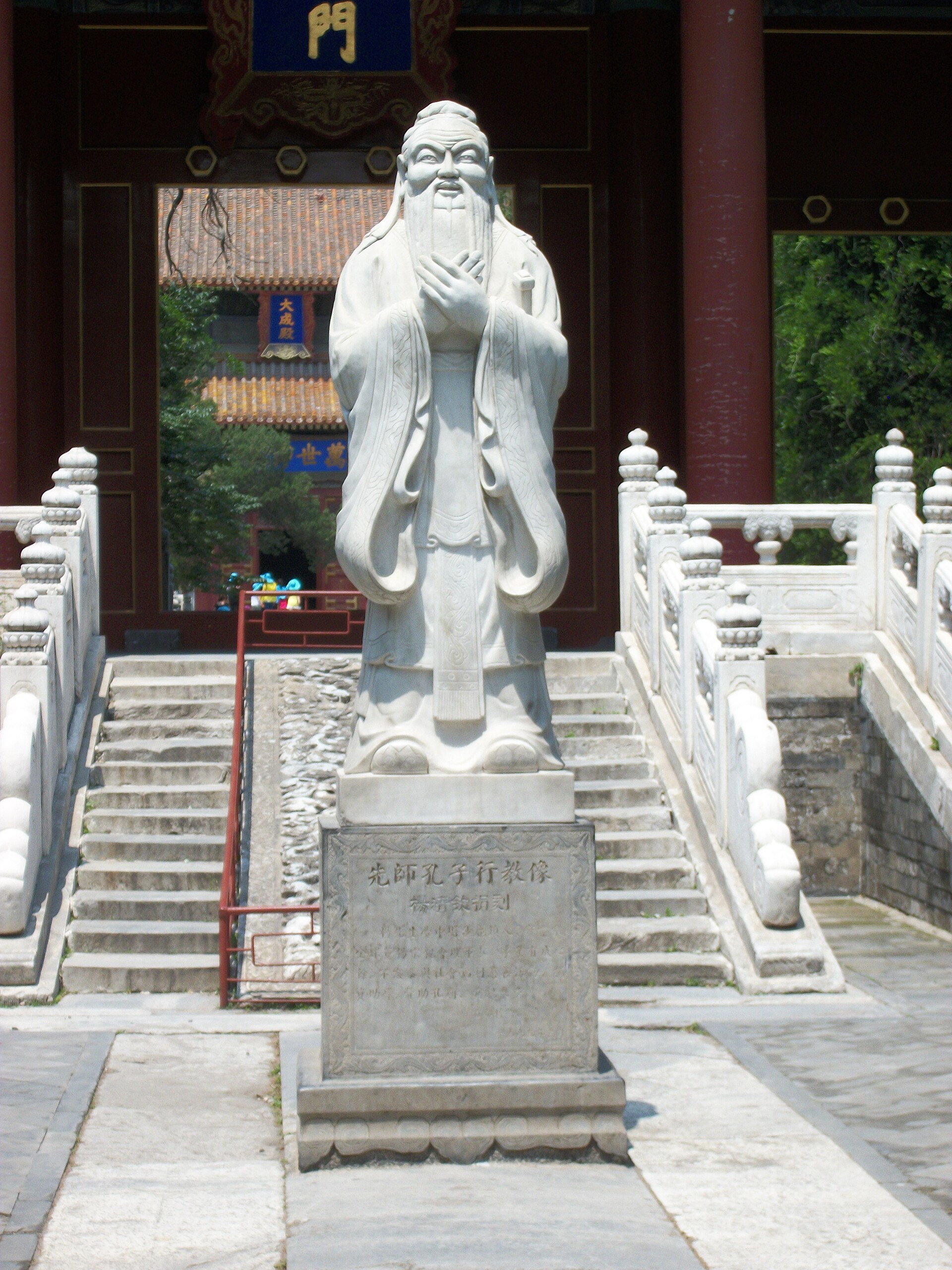
“Do not impose on others what you do not wish for yourself.”
Confucius, Analects
“When you see a worthy person, endeavor to emulate them; when you see an unworthy one, examine yourself.”
Confucius, Analects
“When I walk along with two others, they may serve me as my teachers. I will select their good qualities and follow them, their bad qualities and avoid them.”
Confucius, Analects 7.22 (trans. Legge)
Confucius' lens is to honor your relationships — to build a good life and a good society from the ground up, through the everyday bonds and duties that connect us, lived with sincerity.
Where the Greeks asked about the virtue of the individual soul, Confucius locates the good life in the web of relationships — a complementary answer to "how should I live," centered on family, community, and role.
It is one of the most practical and widely lived philosophies in human history, and a useful contrast to the Western emphasis on the autonomous individual.
Cultivate virtue, ritual, and relationships — actively order society from within.
Stop straining; align with the natural way and let things unfold.
The ethical and social philosophy founded on the teachings of Confucius, centered on personal virtue, proper relationships, ritual, and harmonious society. It shaped Chinese and East Asian civilization for millennia.
Often translated 'benevolence' or 'humaneness,' ren is the central Confucian virtue: a genuine care for others expressed through everyday conduct and relationships.
Yes, in a negative form: 'Do not impose on others what you do not wish for yourself' — predating its well-known Western formulations.
It functions as both an ethical philosophy and, in some forms, a religious tradition. At its core it is a practical teaching about virtue, family, and social harmony rather than worship of gods.
When I am not reading Homer or Nietzsche, I tune databases, design high-availability systems, and run cloud migrations.