Who was Laozi?
Laozi (Lao Tzu) is the traditional founder of Taoism and the attributed author of the Tao Te Ching, one of the most translated books in the world. Whether he was a single historical figure is uncertain — but his vision is unmistakable.
His lens: live simply, in harmony with the Tao — the underlying 'way' of the universe. Stop forcing and grasping; align with the natural flow of things, and life becomes easier and truer.
Life & era
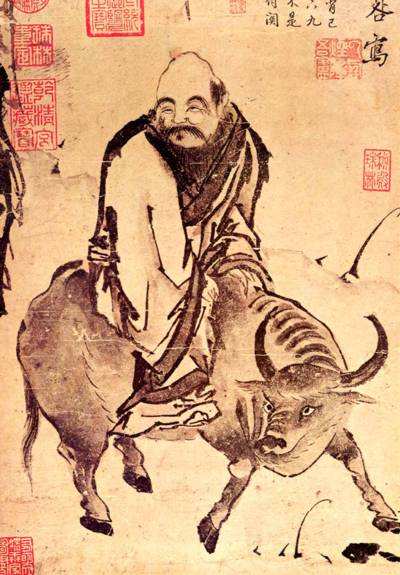
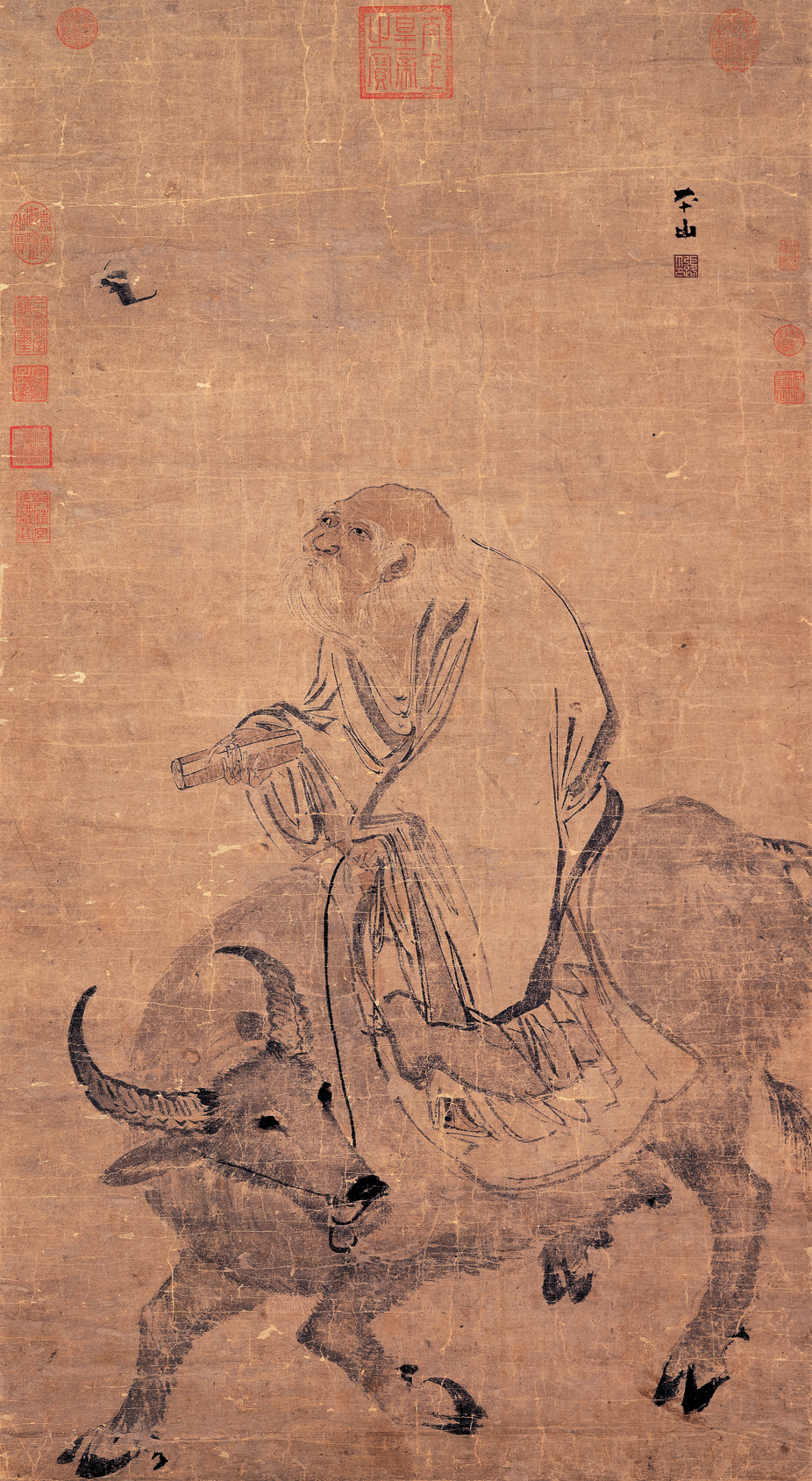
Tradition makes Laozi an archivist of the Zhou court who, weary of its corruption, rode west on an ox and, at a mountain pass, wrote down the Tao Te Ching before vanishing. The story is likely legend, but it captures the philosophy's spirit of withdrawal from striving.
Taoism grew alongside Confucianism as one of the two great native Chinese traditions, shaping Chinese art, medicine, and spirituality for over two thousand years.
Big ideas
The Tao — the Way
The Tao is the nameless, underlying source and pattern of everything. It cannot be fully captured in words ('the Tao that can be spoken is not the eternal Tao'), only aligned with.
Wu wei — effortless action
Not passivity, but action without forcing — like water, which is soft and yielding yet wears down stone. The wise person accomplishes much by not straining against the grain of things.
Simplicity and humility
Laozi prizes simplicity, humility, and contentment over ambition and accumulation. Power that does not dominate, leadership that does not impose — strength through softness.
Governing by not-governing
The Tao Te Ching applies wu wei to rulers: the best leader is barely noticed, intervenes least, and lets people flourish on their own. "Govern a great state as you would cook a small fish" — gently, without overhandling.
The power of the soft
"The softest things in the world overcome the hardest." Water yields, takes any shape, and yet wears down stone. Laozi finds strength precisely in flexibility, humility, and emptiness — a reversal of ordinary ideas of power.
Legacy & influence
The Tao Te Ching is among the most translated books in the world, and Taoism became one of the three great pillars of Chinese civilization alongside Confucianism and Buddhism — shaping its art, poetry, medicine, and martial arts.
Laozi's vision of harmony with nature, simplicity, and non-forcing has found a wide modern audience, resonating with ecology, mindfulness, and anyone wary of the Western drive toward endless mastery and control. As a counterpoint to Confucius, he completes the great complementary pair of Chinese thought.
Themes & debates
Can "non-action" govern? The Tao Te Ching advises rulers to act least and let things unfold. Is this profound political wisdom about restraint and humility, or a recipe for passivity that real states cannot follow? The question has been debated for two millennia.
Withdrawal versus engagement. Taoism can read as a call to retreat from a corrupt world — yet it also offers a way of acting within it, gently and without force. Where simplicity becomes mere escapism is the enduring Taoist tension, and a useful mirror for the Western cult of busyness.
Public-domain portraits and depictions — click any image to view it full size.
If Confucius answers "how should I live" with active cultivation of virtue and relationships, Laozi answers with the opposite move: do less, want less, and align with nature.
Together they form the great complementary pair of Chinese thought — effort and ease, order and spontaneity — and offer a striking alternative to the Western drive toward mastery and control.
What is the Tao?
The 'Way' — the nameless, underlying source and natural pattern of the universe in Taoism. One lives well by aligning with it rather than forcing against it.
What is wu wei?
'Effortless action' or 'non-forcing' — acting in harmony with the natural flow of things rather than straining against them. It is not laziness but a kind of skillful, unforced effectiveness.
Did Laozi really exist?
Uncertain. Laozi is a semi-legendary figure, and modern scholars debate whether the Tao Te Ching was written by one person. The teaching, not the biography, is what endures.
How is Taoism different from Confucianism?
Confucianism stresses active cultivation of virtue, ritual, and social relationships; Taoism stresses simplicity, yielding, and harmony with nature. They are the two great complementary Chinese traditions.
 Michael Paycer