The Olympians · Hunt · Wilderness
Artemis, Goddess of the Wild
Goddess of the hunt and untamed places — fierce, independent, and unwilling to be claimed by marriage or the city.
 Michael Paycer
Goddess of the hunt and untamed places — fierce, independent, and unwilling to be claimed by marriage or the city.
Michael PaycerRole
Hunt, wilderness, chastity, the moon
Symbols
Bow, deer, moon, cypress
Domain
The wild
Family
Daughter of Zeus & Leto; twin of Apollo
Artemis is goddess of the hunt, wild places, and young women, and a protector of childbirth. Twin sister of Apollo, she roams the forests with her band of nymphs, bow in hand.
She is a sworn virgin, fiercely independent, resisting the claims of marriage and settled city life — and she guards that freedom without mercy.
One of the most widely worshipped Greek goddesses, Artemis had her greatest sanctuary at Ephesus, whose vast Temple of Artemis was one of the Seven Wonders of the Ancient World. There she took on an older, fertility-rich form distinct from the lean huntress of the Greek mainland.
The Romans identified her with Diana, goddess of the hunt and the moon. Her cult often centered on transitions in women's lives — coming of age, childbirth — over which she presided.
The hunter Actaeon accidentally saw Artemis bathing; she turned him into a stag, and his own hounds tore him apart — a stark image of how inviolable her independence is.
Born before her twin Apollo, Artemis was said to have helped her mother Leto deliver him — and to have asked Zeus for eternal chastity, a bow, and the wild mountains as her domain.
When Niobe boasted that her many children made her greater than Leto, Artemis and Apollo killed them with their arrows — a brutal myth of hubris punished, and of the huntress's deadly precision.
When the Greek fleet lay becalmed at Aulis, the seer declared that only the sacrifice of Agamemnon's daughter Iphigenia would appease Artemis and free the winds for Troy. In some versions the goddess snatches the girl away at the last moment — a myth that haunted Greek tragedy.
Artemis and the giant hunter Orion were companions in the chase — until, by trickery or accident, she killed him and set him among the stars as a constellation. The huntress could love the hunt, but never be bound by it.
As Diana, Artemis became Rome's moon-goddess and the eternal image of the free, untamed woman — invoked by Renaissance painters, Elizabethan poets praising the "virgin queen," and modern feminism alike. Her great temple at Ephesus was one of the Seven Wonders of the Ancient World.
Her insistence on independence and life "according to nature" makes her a standing philosophical counterpoint to the goddesses of marriage and desire — a reminder that the question of how to live includes the freedom not to be defined by others' expectations.
Artemis's bow is swift, independent action at a distance; the deer and the wild wood are untamed nature; the crescent moon is her cool, chaste light, set against her brother's blazing sun. Her symbols all resist enclosure and ownership.
She stands for freedom and self-possession — the part of a person, and especially of the feminine, that refuses to be defined by marriage, the city, or another's desire. From the Renaissance "virgin queen" to modern feminism, Artemis-Diana has remained the enduring emblem of autonomy and the wild.
Famous public-domain depictions — click any image to view it full size.
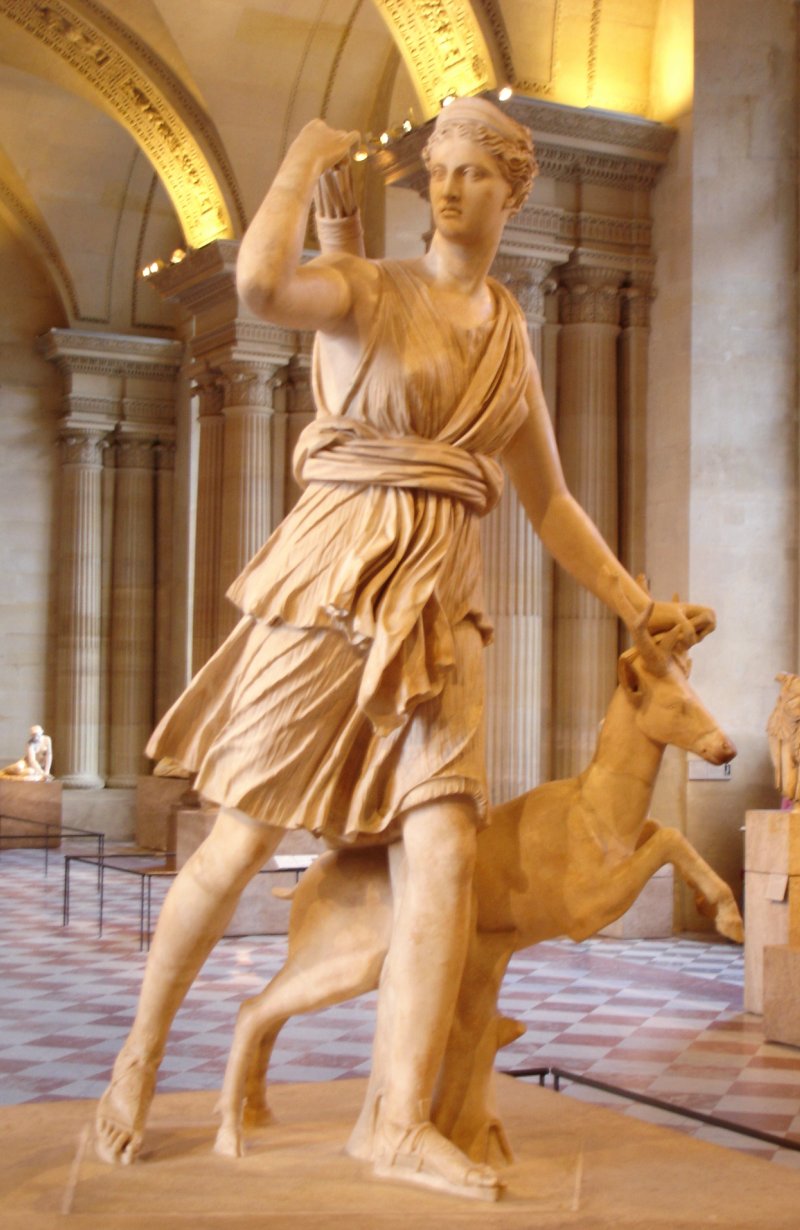
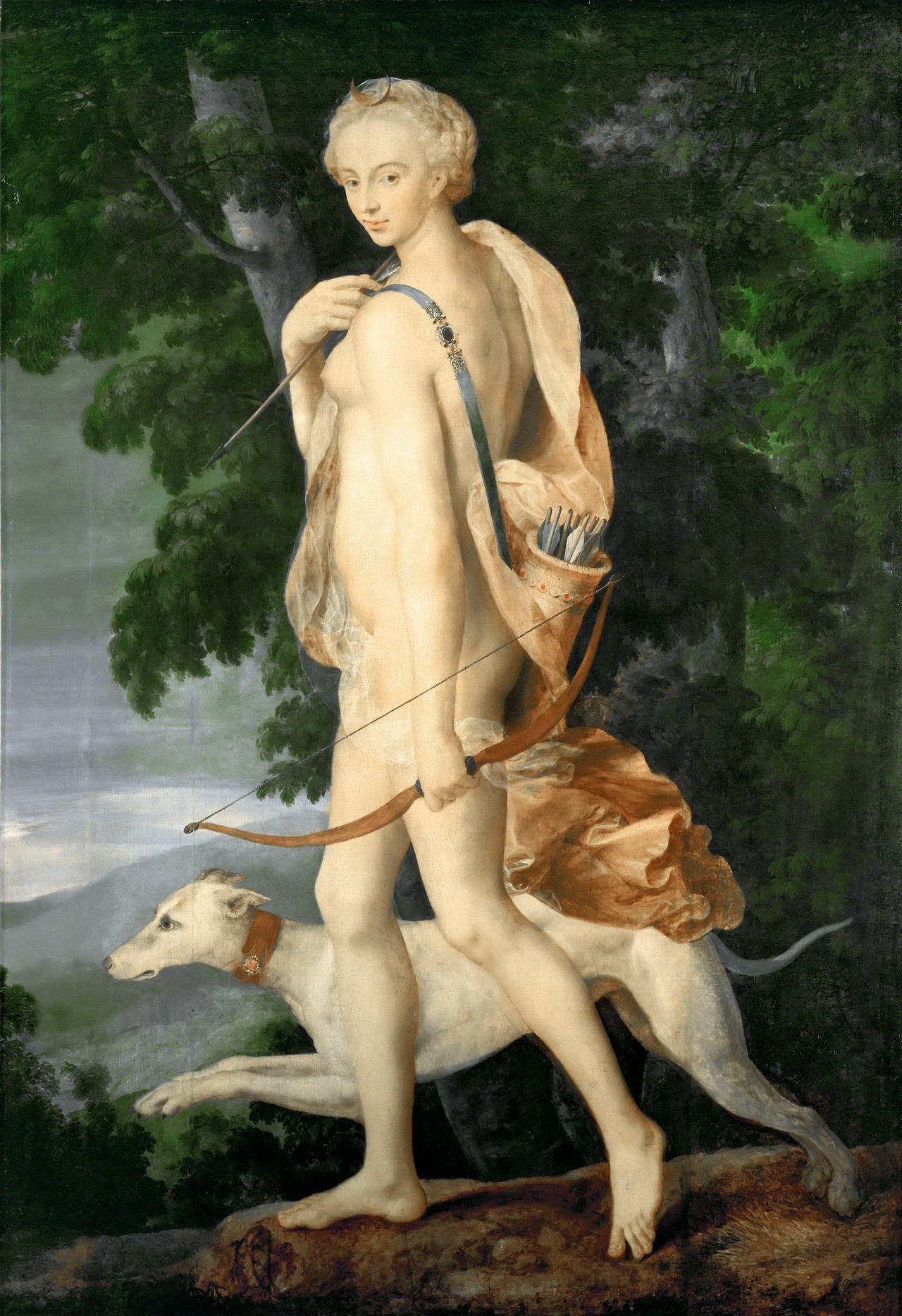
“Give me eternal virginity, father, and as many names as my brother Apollo; and give me the mountains for my dwelling.”
Callimachus, Hymn to Artemis
“I sing of Artemis, whose shafts are of gold, the huntress of stags who delights in arrows.”
Homeric Hymn 27, to Artemis
“I love archery and the chase and the wild mountains.”
Callimachus, Hymn to Artemis — Artemis to Zeus
Artemis stands for freedom and self-rule against social expectation — the wild that refuses to be domesticated by marriage or the city.
She makes a sharp contrast with Hera (marriage) and Aphrodite (desire): three different answers to the question of what a life should be ordered around. Artemis chooses autonomy.
Her independence raises questions philosophy keeps returning to: how much does the individual owe to social institutions, and what does it mean to live according to nature rather than convention? The Cynics' love of natural freedom echoes her.
Wild independence — a life of self-rule, free of marriage and desire.
The pull of desire — the force Artemis defines herself against.
The hunt, wild nature, chastity, the moon, and young women, with a role protecting childbirth. She is the untamed counterpart to the settled, married world.
She asked Zeus for eternal chastity and independence. Her refusal of marriage marks her as a figure of self-rule and freedom from the social roles other goddesses embody.
He accidentally saw Artemis bathing; she turned him into a stag, and his own hunting dogs killed him — a stark image of her wild, inviolable power.
Yes — Diana is the Roman name for the same goddess of the hunt and the moon.
When I am not reading Homer or Nietzsche, I tune databases, design high-availability systems, and run cloud migrations.