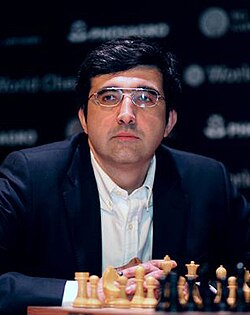
Vladimir Kramnik
The man who dethroned Kasparov. World Champion from 2000 to 2007, Vladimir Kramnik did what no one had managed in fifteen years: he beat Garry Kasparov in a title match — and he did it not with fireworks, but with the most precise strategic preparation chess had ever seen. His weapon was a wall.
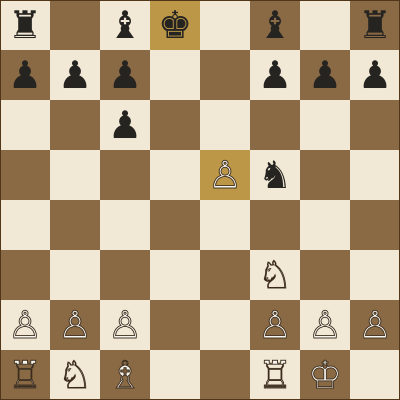
The "Berlin Wall" — the Berlin Defence endgame after 8...Kxd8 (Black's king highlighted, White's pawn on e5). Black gives up castling for a rock-solid structure and the bishop pair. Kramnik used this queenless endgame to neutralize Kasparov's attacking power in 2000 — and won the title without losing a game.
Born
1975 · Tuapse, Russia
World Champion
2000–2007 — beat Kasparov in 2000; reunified the title in 2006
Signature Idea
The Berlin Defence ("Berlin Wall") vs Kasparov, London 2000
Style
Deep strategy, prophylaxis, opening preparation; the Catalan as White
How to beat the unbeatable
By 2000, Garry Kasparov had been world champion for fifteen years and world #1 for sixteen. He was thought to be unbeatable in a match — strongest in attack, strongest in preparation. Kramnik solved the problem the way an engineer solves it: he removed Kasparov's best weapons from the board entirely.
As Black against 1.e4, Kramnik adopted the Berlin Defence, steering the game into a queenless endgame where there was nothing to attack and little for deep tactical preparation to exploit. As White, he scored with a quietly prepared improvement in Kasparov's beloved Grünfeld. The result was historic: two wins, thirteen draws, and — astonishingly — not a single loss. Kasparov's reign was over.
6. Bxc6 dxc6 7. dxe5 Nf5 8. Qxd8+ Kxd8 — the Berlin Wall
After 8...Kxd8 the queens are off and the position is structurally solid for Black: the bishop pair compensates for the doubled c-pawns, and there are no weaknesses for White to target. Against an attacker like Kasparov it was the perfect antidote — a position where brilliance had nothing to bite on. The Berlin became the defining drawing weapon of elite chess for the next two decades.
Putting the title back together
The world championship had been split since 1993, with a "Classical" line and a separate FIDE title. Kramnik held the Classical crown after beating Kasparov, and in 2006 he met FIDE champion Veselin Topalov in a reunification match. Kramnik won, becoming the first undisputed world champion since the schism — an important moment that restored a single, recognized title to the chess world. He held it until 2007, when Viswanathan Anand took over.
Where his games live in this library
The Berlin & the Ruy Lopez
Kramnik's Berlin is a chapter of the Ruy Lopez story — the same 1.e4 e5 2.Nf3 Nc6 3.Bb5 that has shaped chess for 500 years, repurposed into the era's most reliable defense.
The Catalan as White
As White, Kramnik was a leading exponent of the Catalan — a slow, strategically rich 1.d4 system whose long-term pressure suited his patient, precise style perfectly.
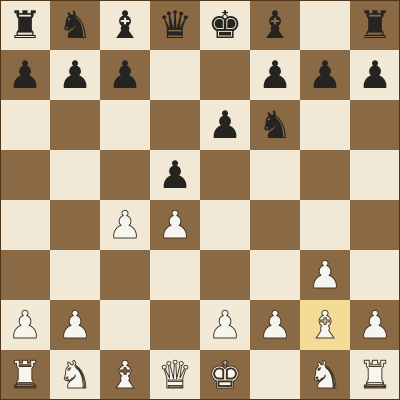
The Catalan (1.d4 with g3 and Bg2) — Kramnik's signature as White. The fianchettoed bishop bears down the long diagonal, generating lasting pressure with almost no risk: a strategic system tailor-made for his style.
Vladimir Kramnik — FAQ
How did Kramnik beat Kasparov in 2000?
In London he defeated Kasparov with two wins, thirteen draws, and no losses, ending a fifteen-year reign. As Black he met 1.e4 with the solid Berlin Defence, neutralizing Kasparov's attacking style and deep preparation; as White he scored with a prepared idea in Kasparov's own Grünfeld.
What is the Berlin Wall in chess?
It is the nickname for the Berlin Defence of the Ruy Lopez, especially the queenless endgame after 8...Kxd8. Black gives up castling for a rock-solid structure and the bishop pair. Kramnik's use of it against Kasparov in 2000 made it elite chess's most popular drawing weapon.
Did Kramnik reunify the world championship?
Yes. After the 1993 split he held the "Classical" title, and in 2006 he beat FIDE champion Veselin Topalov in a reunification match to become the first undisputed champion since the schism. He held the unified title until losing to Anand in 2007.
The Berlin Wall after 8...Kxd8 — the queenless endgame that toppled Kasparov in 2000.
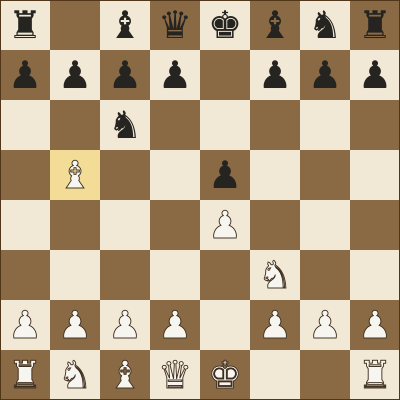
The Ruy Lopez (3.Bb5) — the 500-year-old opening from which the Berlin Defence branches.
The Catalan — Kramnik's patient, low-risk weapon as White, pressure down the long diagonal.
- Classical World Chess Championship 2000 (Kramnik–Kasparov) match records.
- Kramnik–Topalov, World Championship 2006 (reunification) records.
- Berlin Defence theory (Ruy Lopez, ECO C65–C67).
- ChessBase coverage, "25 Years Ago: Kramnik beats Kasparov."
The lineage continues
Kramnik took the crown from Kasparov in 2000 and handed it to Anand in 2007 — both are in this series. Follow the chain through the famous games.