Who were Romulus and Remus?
Romulus and Remus were the legendary twin sons of the god Mars and the priestess Rhea Silvia. Exposed as infants on the orders of a usurping king, they were saved, suckled by a she-wolf, and raised by a shepherd. Grown to manhood, they set out to found a city on the Tiber — but their rivalry ended with the death of Remus, and Romulus alone became Rome's first king. Roman chronology conventionally placed the foundation in 753 BCE.
These twins are not gods in the ordinary sense. They occupy the boundary between hero, king, ancestor, and — in Romulus's case — deity. The story is legend rather than a contemporary historical record, but it became the master narrative of who the Romans were and why their city was destined to rule.
Origins & history
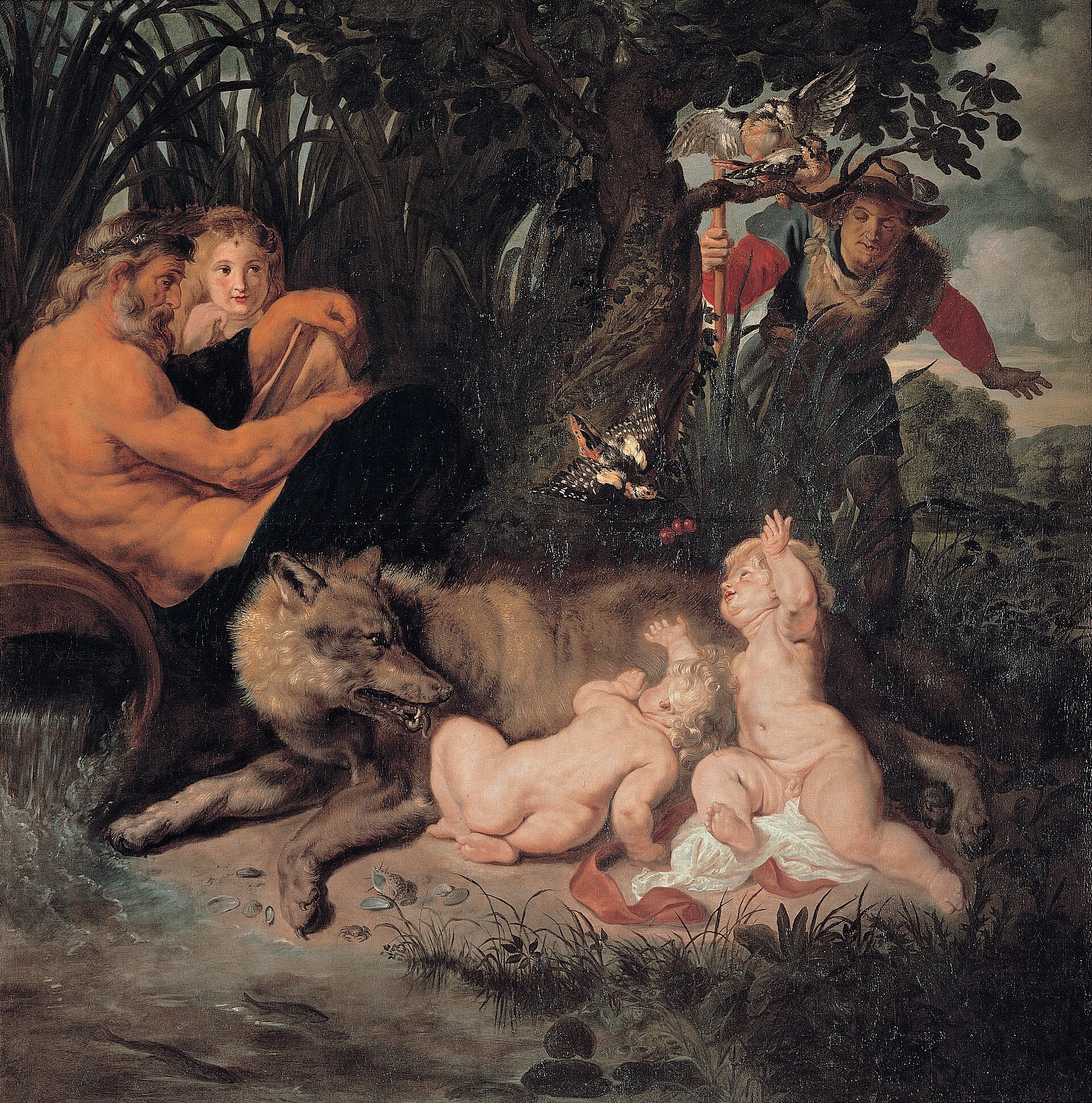
The traditional tale runs like this: Rhea Silvia, a Vestal forced into her office to end her line, bore twins fathered by Mars. The reigning king ordered them drowned, but the basket ran aground and a she-wolf nursed them beneath a fig tree until a shepherd took them in. As young men they restored their grandfather to his throne, then chose to found a new city near the place where they had been saved.
The conventional date of 753 BCE belongs to the legend, not to any surviving record from the period. Later Roman writers fixed the year and elaborated the narrative; the wolf-and-twins image and the foundation story were already central to Roman self-understanding long before critical history could test them. What matters is less whether it happened than that Rome told this story about itself.
Cult, honors & legend
Remus is less a cult figure than a tragic counter-founder — the excluded possibility in Rome's origin story, the brother who dies before the political foundation is complete. Romulus is different. One tradition held that at the end of his reign he did not simply die but vanished and was taken up among the gods, worshipped afterward under the name Quirinus. This made him Rome's foundational example of political deification: the founder who becomes a god of the state he built. Plutarch preserves an apparition tradition in which the transformed Romulus appears to announce that Rome is destined for greatness and instructs the Romans to honor him as Quirinus.
Greek connection
Unlike a god such as Jupiter, Romulus and Remus have no single Greek counterpart. Theirs is a distinctly Roman foundation legend rather than a Latin retelling of a Greek myth. Greek and Hellenistic writers did take an interest in Rome's origins, and elements of the exposed-and-rescued royal infant are a widespread ancient pattern, but the she-wolf, the twin founders, and the deification as Quirinus belong to Rome. The legend sits alongside — and was eventually stitched together with — the older Trojan story of Aeneas, making Rome heir to both a fallen Troy and a wolf-nursed founder.
Famous myths & stories
The she-wolf and the twins
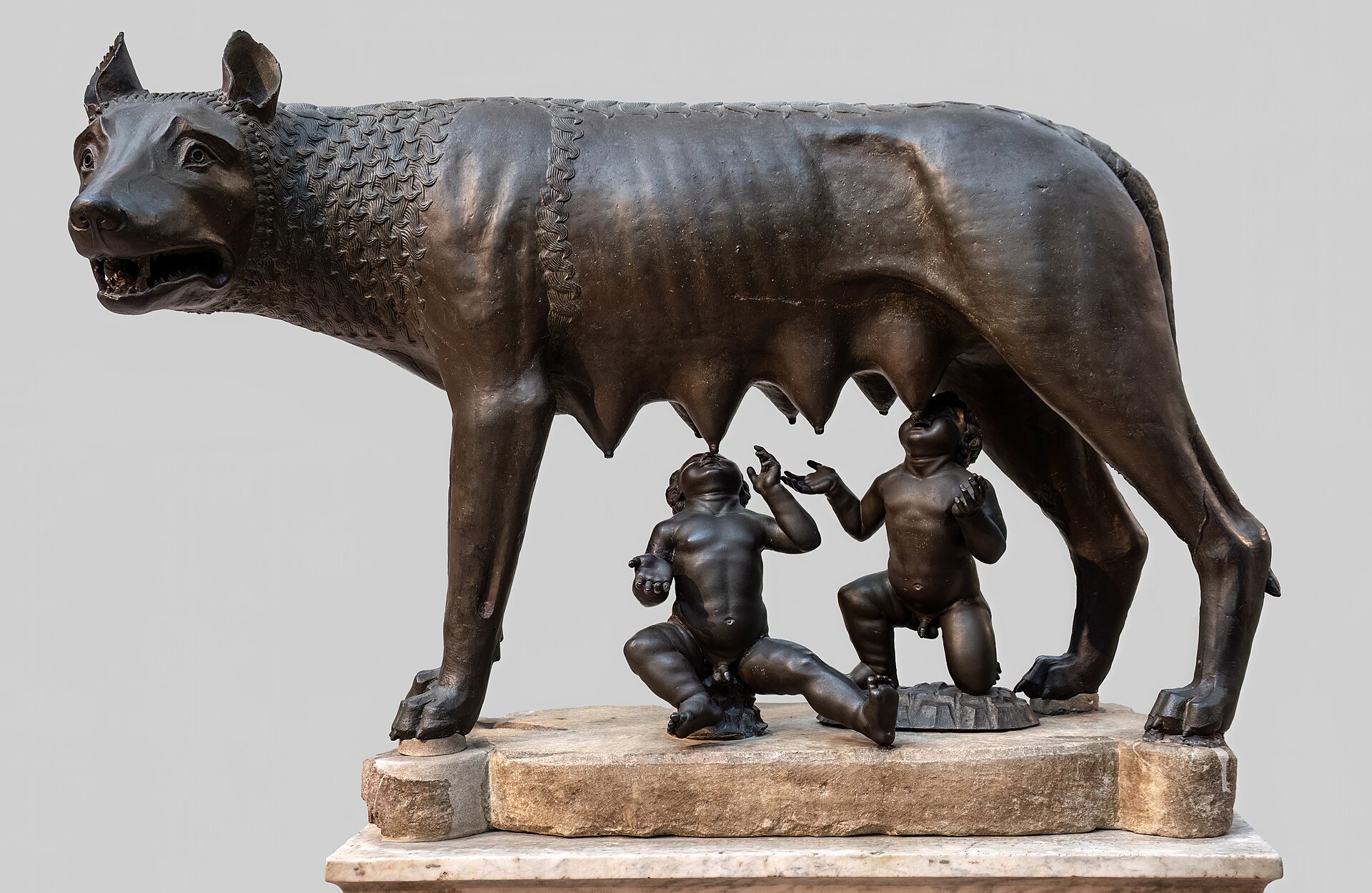
Exposed to die, the infant twins are washed ashore and suckled by a she-wolf beneath a fig tree, then raised by the shepherd Faustulus. The image of the two children beneath the wolf became the enduring emblem of Rome itself — a city that survives abandonment and is nursed to greatness.
The seizure of the Sabine women
To populate his new city, Romulus is said to have invited neighboring peoples to a festival and then seized their unmarried women — the notorious "rape of the Sabine women." The episode fixes a founding tension into Rome's story: the new community is built through an act of violence that later reconciliation must repair.
The fratricide
The brothers quarrel over signs from the gods, over the site, and over who will rule. In the most familiar version Remus mocks or leaps over Romulus's new wall and is struck down. Plutarch records several conflicting versions of the death rather than one certain account — a reminder that the ancients themselves knew the tradition was uncertain, and that fraternal bloodshed stands at the very beginning of Rome.
Legacy & influence
The wolf-and-twins survives as one of the most recognizable images in Western art — cast in bronze, stamped on coins, raised over cities that claimed descent from Rome. The foundation story shaped Roman identity, supplied later empires and republics with a model of political origins, and still frames debates about violence at the birth of states. From Livy and Plutarch to Renaissance painting, opera, and modern film, Romulus and Remus remain the archetypal founding brothers.
Symbolism
The symbols carry the meaning. The she-wolf is survival and fierce nurture, the wild made protective; the twins are shared origin and, in their rivalry, the danger of it; the spear recalls their father Mars and the martial character of the city they found; the plow-furrow that marks the first walls is the sacred boundary whose violation costs Remus his life. Together they say what Rome believed about its own beginning — that it was saved, martial, sacred, and born in blood.
Famous public-domain depictions — click any image to view it full size.
Who were Romulus and Remus?
The legendary twin sons of Mars and the priestess Rhea Silvia. Exposed as infants, suckled by a she-wolf, and raised by a shepherd, they grew up to found Rome. Their rivalry ended with Remus's death, and Romulus became Rome's first king. The story is legend, not contemporary historical record.
When was Rome founded according to the legend?
Roman tradition conventionally dated the foundation to 753 BCE — a legendary date preserved by later writers, not a figure verified by contemporary records. The surrounding narrative is myth rather than documented history.
Why did Romulus kill Remus?
The twins quarreled over signs, the site, and who would rule. In the familiar version Remus mocked or leapt over Romulus's new wall and was killed. Ancient authors preserved several conflicting versions rather than one certain account, making fraternal conflict part of Rome's symbolic beginning.
What happened to Romulus at the end?
One tradition held that he vanished and was taken up among the gods, worshipped afterward as Quirinus. Plutarch preserves an apparition tradition in which the deified Romulus announces Rome's future greatness — making him Rome's foundational example of political deification, though Plutarch also criticizes his slide toward one-man rule.
 Michael Paycer