Who is Quirinus?
Quirinus was an archaic Roman god and a member of the old triad Jupiter-Mars-Quirinus. By the late Republic he was widely identified with the deified Romulus, Rome's founder. His original nature, however, remains debated — one of the more obscure figures in Roman religion, important less for a body of myth than for what his cult reveals about how Rome thought about its own beginnings.
Older scholarship often treated him as the god of the Roman citizen body in its peaceful civic aspect, contrasted with Mars in war. But no single reconstruction commands certainty, and claims about his exact original function are best presented as hypotheses rather than facts.
Origins & history
Quirinus belonged to an early stage of Roman state religion, standing beside Jupiter and Mars in the archaic triad that preceded the later Capitoline Triad of Jupiter, Juno, and Minerva. That membership is the clearest sign of his early importance. His pre-Romulean identity is obscure, and the sources do not let us recover it with confidence.
By the late Republic the tradition had firmly linked him to the deified Romulus. That equation is late enough to raise historical questions — a reminder that Roman religion was not static but reinterpreted its own oldest gods over time.
Cult & worship
Quirinus's place in Roman worship rests above all on his membership in the archaic triad of Jupiter, Mars, and Quirinus — a grouping from an early phase of Roman state religion. Through it his cult connected archaic state religion, the idea of citizenship, and eventually the apotheosis of Rome's founder. Where his exact rites and original functions are concerned, the evidence is thin and much remains reconstruction rather than record.
No standard Greek equivalent
Unlike gods such as Jupiter (Zeus) or Saturn (Cronus), Quirinus has no standard Greek counterpart. He is an archaic, distinctly Roman god. That absence, together with his membership in the old triad and his tie to Romulus, marks him as belonging to the native, pre-Hellenizing layer of Roman religion — a god who cannot be understood by translation into Greek terms.
Famous myths & stories
The apotheosis of Romulus
Plutarch records the tradition that the vanished Romulus appeared in divine form and commanded the Romans to worship him as Quirinus. The founder's mysterious disappearance became his elevation to a god — the moment that fused a political founder with an archaic deity.
The archaic triad
Quirinus stood with Jupiter and Mars in the old triad Jupiter-Mars-Quirinus, an early Roman grouping later overshadowed by the Capitoline Triad. His membership is the strongest surviving evidence of how central he once was to Roman state cult.
The contested god
His original nature is debated. Older scholarship read him as the god of the citizen body in peace, opposite Mars in war, but no single reconstruction commands certainty and the equation with Romulus is late. Quirinus is, in a sense, a myth about how Rome remade its own gods.
Legacy & influence
Quirinus matters most for what he reveals about Roman state religion, apotheosis, and the ideological transformation of political founders into divine protectors. His story — an archaic god fused with the deified Romulus — is a case study in how a community can turn its founder into a guardian deity. For students of Roman religion he remains an essential, if elusive, figure.
Symbolism
Quirinus's significance is structural rather than pictorial. The archaic triad marks his early rank beside Jupiter and Mars; the citizen body is the civic community older scholarship associated with him, set against Mars and war; the apotheosis of Romulus makes him the emblem of a founder become god. He stands for the deep, native layer of Roman religion and for the idea that Rome's origins were themselves divine.
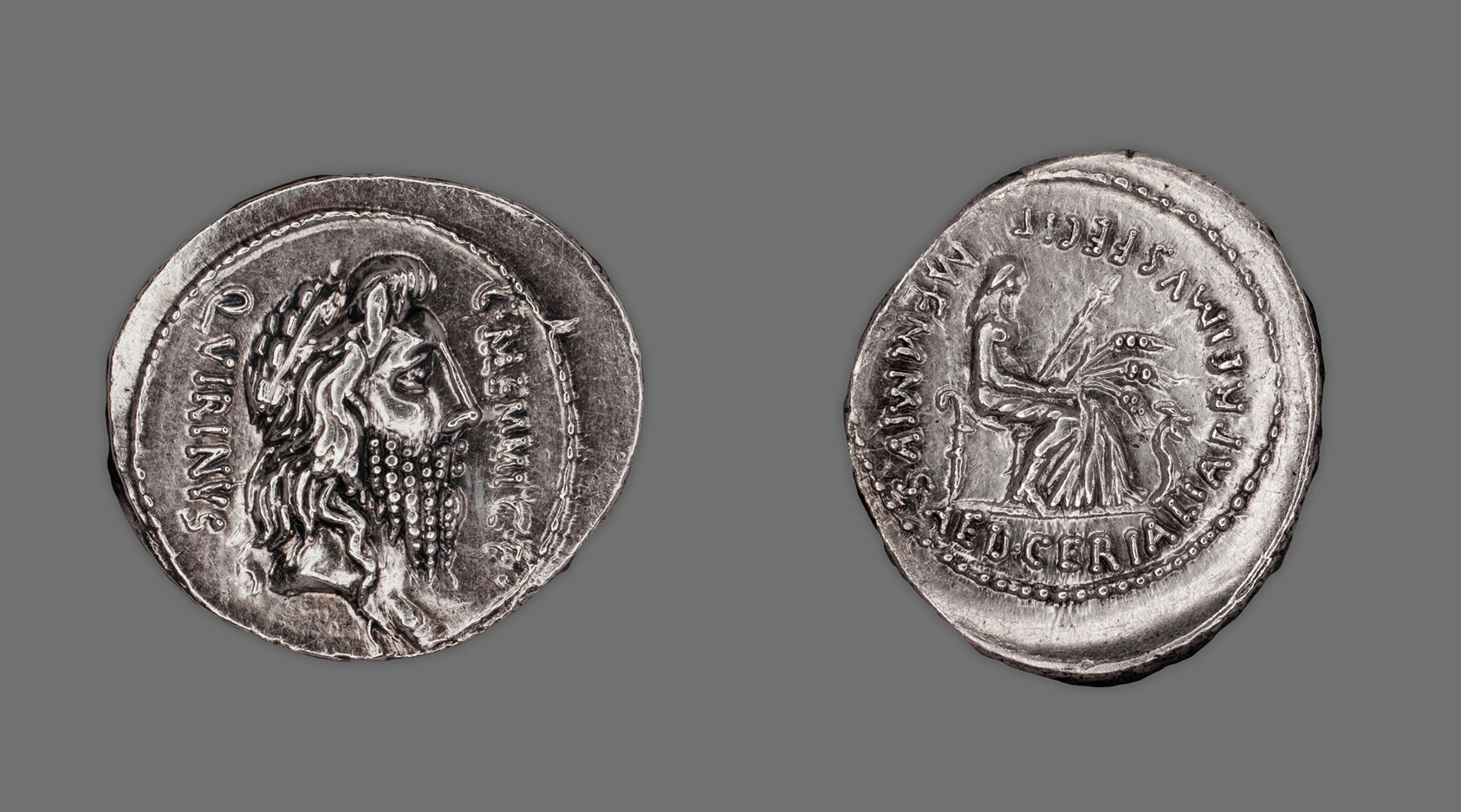
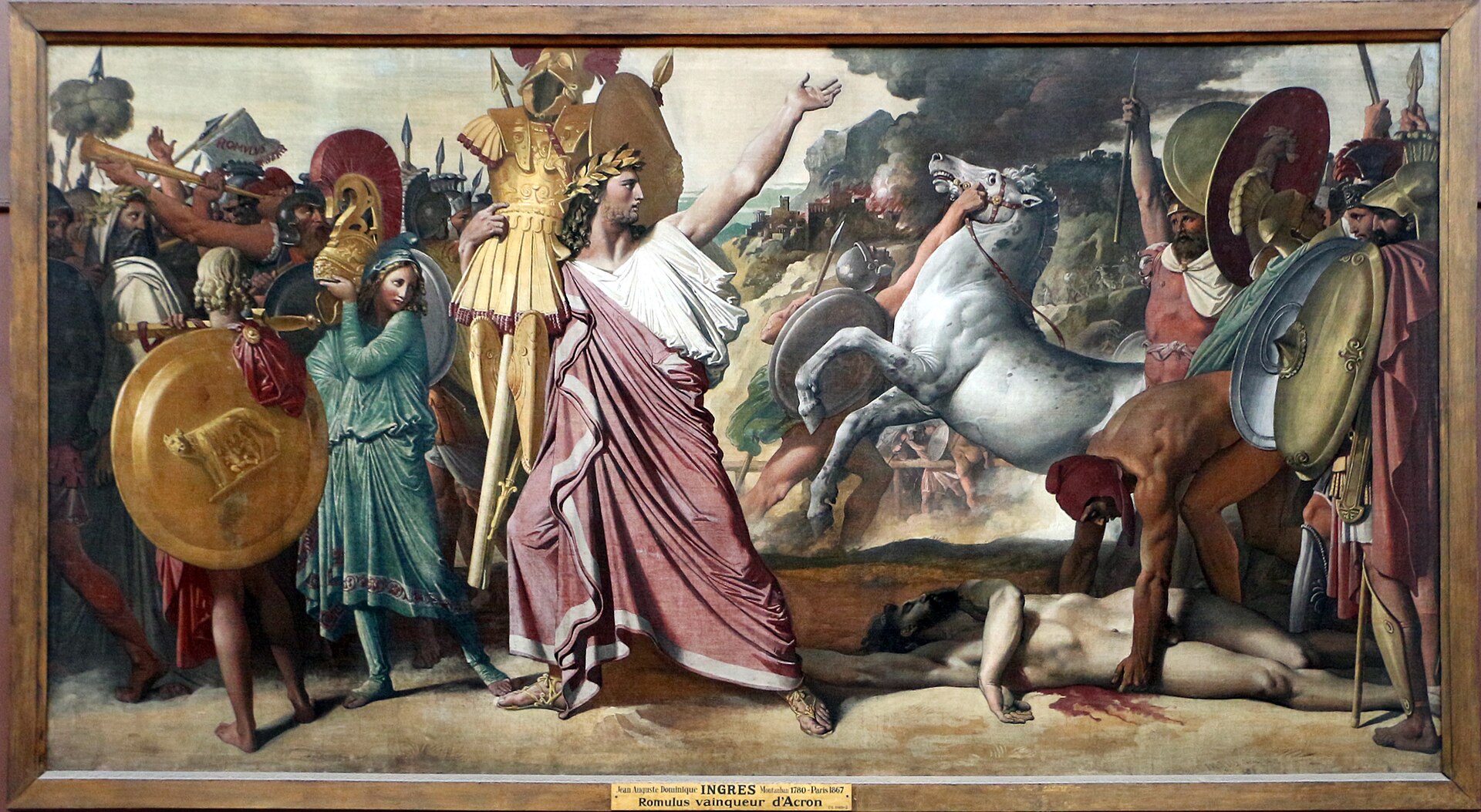
Famous public-domain depictions — click any image to view it full size.
Does Quirinus have a Greek equivalent?
No. Quirinus was an archaic Roman god with no standard Greek counterpart. He belonged to the old Roman triad of Jupiter, Mars, and Quirinus, and by the late Republic was widely identified with the deified Romulus, Rome's founder.
Was Quirinus the same as Romulus?
By the late Republic, Quirinus was widely identified with the deified Romulus. But that equation is late enough to raise historical questions, and the god's pre-Romulean identity is obscure — the identification should be treated as a tradition, not an established fact.
What was Quirinus the god of?
His original nature is debated and no single reconstruction commands certainty. Older scholarship often treated him as the god of the Roman citizen body in its peaceful civic aspect, contrasted with Mars in war, but this should be presented as a hypothesis rather than a fact.
What was the archaic triad of Jupiter, Mars, and Quirinus?
An old Roman grouping of three gods — Jupiter, Mars, and Quirinus — from an early stage of Roman state religion, predating the later Capitoline Triad of Jupiter, Juno, and Minerva. Quirinus's membership in it is one of the clearest signs of his archaic importance.
 Michael Paycer