Rome’s virtues, made divine
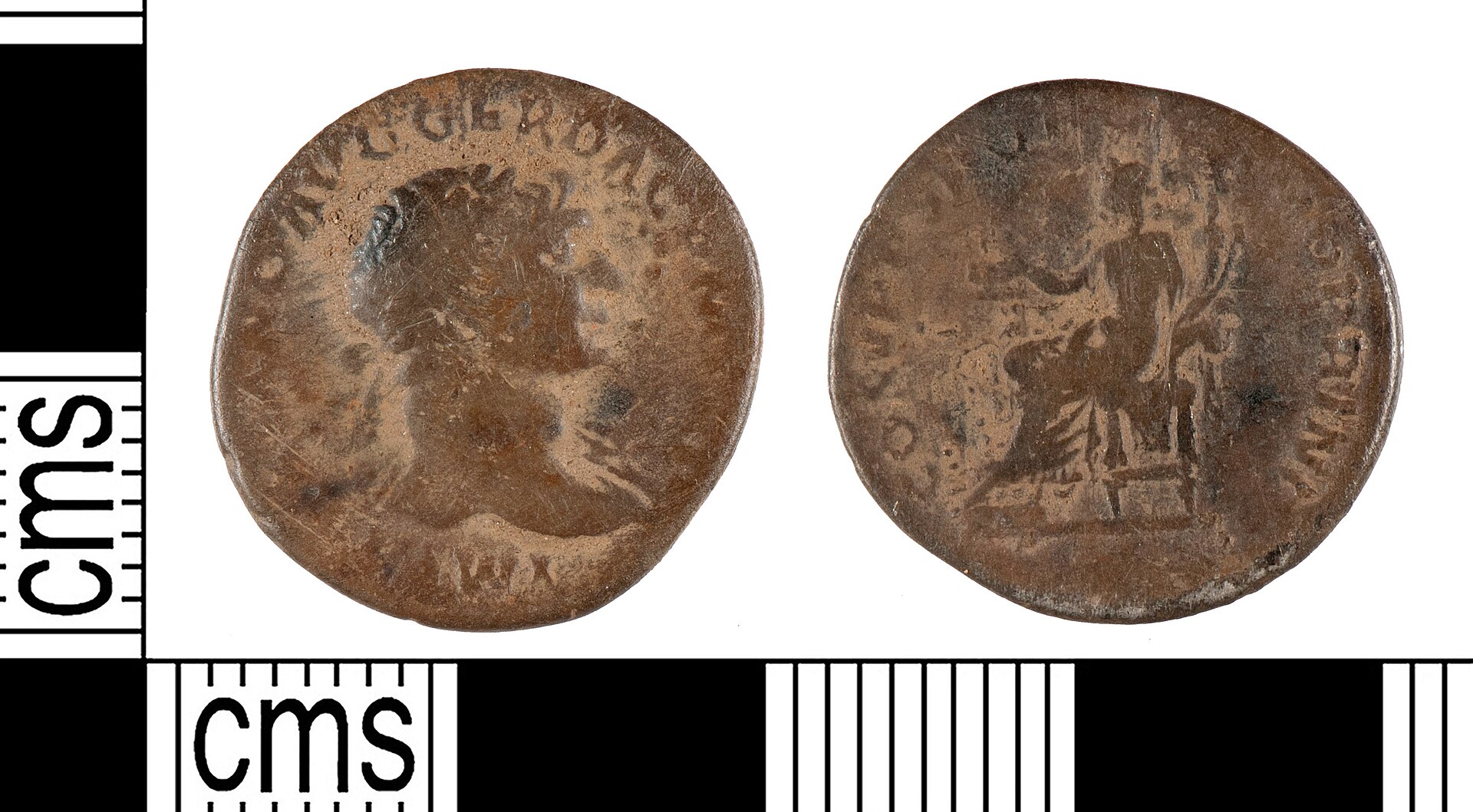
One of the most distinctively Roman religious habits was to take a moral or political abstraction — good faith, harmony, freedom, peace, victory, hope, safety, honor, courage, fairness — and worship it as a god. These personifications were not empty metaphors. They received real cult: temples, altars, dedications, priesthoods, and, above all, a permanent home on the coinage that carried the state’s self-image across the empire. To honor Fides or Concordia was to sacralize the qualities Rome claimed held it together.
An honest note on evidence. These figures are unevenly attested. Pax and Victoria are strong (grade A), anchored by monuments like the Ara Pacis and by relentless coin imagery. Fides, Concordia, Libertas, Salus, Spes, Virtus, and Aequitas are substantial (A/B) but rest mostly on cult and numismatics rather than story; Bellona and Honos are thinner (grade B), with real cult but sparse surviving myth. Throughout, remember that Roman coin legends proclaim ideals, not verified conduct: an emperor advertising Aequitas was not thereby proven fair. And much of what we know about the smaller Roman gods survives only because hostile Christian writers — above all Augustine in City of God — catalogued them in order to ridicule them. Treat that testimony as polemic, not neutral description.
Boundary, war, and the sworn word
Terminus
Terminus was the god of the boundary marker — divinity located in the stone itself. His cult expressed the Roman conviction that property lines, territorial limits, and sworn agreements carried sacred force; the Terminalia each February renewed neighbors’ mutual recognition of their limits. He is almost pure function, with no narrative personality, and that is precisely why he matters: Roman religion never required a god to have a dramatic biography. Legend even held that when Jupiter’s great Capitoline temple was built, Terminus alone refused to be moved — stability as theology. The words term, terminal, and terminus preserve his root and his idea of the fixed endpoint.
Bellona
Bellona was a Roman war goddess, treated variously as the sister, wife, or companion of Mars. Her temple stood outside the sacred boundary (the pomerium), which suited its role in foreign affairs and the formal declaration of war — the space where Rome dealt ritually with what lay beyond it. She personifies war’s fury and the formal violence of the state; in later imperial religion her ecstatic worship could blur into foreign cultic forms. Surviving myth is sparse and her identity overlaps with other war deities, so she is better understood as function than as character. The Latin war-root bellum stands behind the English adjective belligerent, though not by simple descent from her name alone.
Fides
Fides personified trust, good faith, reliability, and the keeping of agreements — the glue of a society built on oaths, patronage, treaties, and credit. She was more than a private virtue: she was publicly worshipped, a vivid case of Roman religion making a political abstraction cultically present. Yet Roman leaders invoked fides even while breaking treaties and betraying political trust, which lays bare the gap between the advertised ideal and actual conduct. Her name lives on in fidelity, fiduciary, and bona fide.
The political virtues on temple and coin
Concordia
Concordia personified civic harmony and agreement, and she was an explicitly political deity: harmony raised to sacred necessity. Temples to her commemorated the reconciliation — or the claimed reconciliation — of social and political conflict, and Ovid ties her temple to the work of a pacifying ruler. The revealing pattern is that Concordia was advertised most loudly precisely when Roman politics was most divided; her image could dress up coercion or enforced consensus as unity. She survives in the word concord and in the civic mottoes of later states.
Libertas
Libertas personified freedom. In Republican political language, liberty meant freedom from domination and the rights of Roman citizens — though those rights were, by modern standards, deeply unequal. She was at once a cult figure and a contested slogan: Caesar’s assassins, rival factions, and later emperors could all claim to be her defenders. The strongest evidence for her is iconographic and political rather than any canonical divine speech; she appears on Roman coinage as a powerful ideological claim. Roman “liberty” coexisted with slavery, patriarchy, and empire, so its scope was never universal. She gives us liberty and the whole visual tradition of the liberty-figure on coins and monuments.
Pax
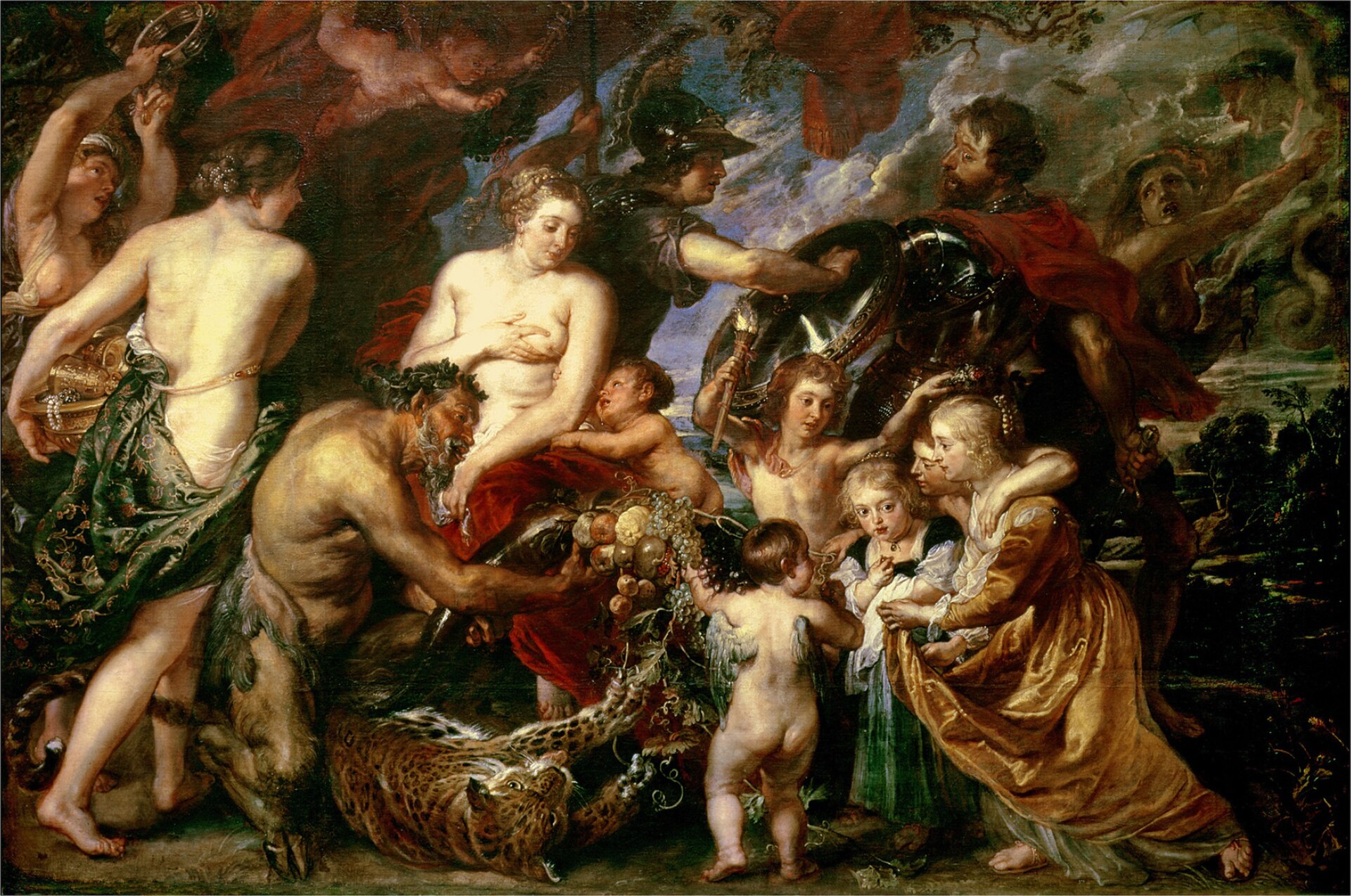
Pax personified peace — but in Roman imperial ideology, peace often meant order secured by Roman victory, not merely the absence of fighting. Under Augustus, Pax Augusta became central to the claim that one-man rule had ended civil war and restored stability; the Ara Pacis, coinage, and Augustan literature carry far more weight than any invented divine speech. The honest counterpoint is that the Pax Romana was maintained through conquest, taxation, and suppression: peace for Rome could mean defeat for others. Her name endures as shorthand for a hegemonic peace — Pax Britannica, Pax Americana.
Victoria
Victoria personified victory and was bound tightly to Roman military success and imperial power. She is victory itself transformed into a divine presence and a political claim; statues, altars, inscriptions, and coinage make her status abundantly clear. Her altar in the Senate house later became a flashpoint between pagan senators and Christian emperors — a reminder of how much political meaning a personification could carry. Every victory implies a defeated enemy, so as a personification she could just as easily sanctify expansion or a civil-war triumph. Her imagery, fused with the Greek Nike, shaped later winged victories, angels, medals, and the personal name Victoria.
Spes
Spes personified hope, and she had a temple in Rome and a frequent place on imperial coinage — typically a youthful woman carrying a flower and lifting the hem of her garment. Hope could be a personal virtue, a political promise, and a divine abstraction all at once, and dynasties used her to signal a bright future. But hope shades easily into propaganda or wishful thinking, and coin imagery cannot prove that anyone actually believed the message it carried. The Latin spes remained important in Christian theology, mottoes, and institutional names.
Salus
Salus personified safety, welfare, health, and preservation — especially the welfare of the Roman people and, later, of the emperor. Her sphere shows how public health and political safety could be sacralized together; temples, inscriptions, and imperial coin types are the core evidence. The catch is that imperial use could quietly convert “the safety of the state” into loyalty to the ruler, and what counts as public safety is always politically contestable. Her root runs through salubrious, salutation, and the language of salvation.
Honos
Honos personified honor and public esteem, and he was often paired with Virtus, especially in the moral vocabulary of military and civic achievement. He is external recognition made divine — fitting for an elite culture that ran on reputation, offices, triumphs, and ancestral memory. No secure direct divine quotation survives, so cult and political language are the primary evidence; his myth is thin (grade B). Honor cultures can reward status, conquest, and display rather than moral goodness, and Roman honor was sharply classed and gendered. The English word honor comes straight through Latin honor.
Virtus
Virtus personified excellence, courage, and valor — especially the martial worth of a vir, a man, from which the word derives. Its political meaning broadened under the empire, straddling ethics and propaganda: philosophers could discuss virtue as moral excellence while public culture emphasized battlefield distinction and service. Plutarch’s essay On the Fortune of the Romans explicitly weighs Roman virtus against Fortuna as rival explanations for the empire’s rise. Because it began gendered and war-bound, its shadow is clear: courage without justice can become mere brutality. From the same root comes the English virtue, though the modern moral sense is broader.
Aequitas
Aequitas personified equity, fairness, evenness, and proper balance, and she appeared frequently on imperial coinage, often holding scales. She belongs to the Roman habit of turning moral-political principles into divine or semi-divine personifications; numismatic and legal vocabulary are her strongest evidence. She is the sharpest illustration of the whole group’s central problem: coin legends proclaim ideals, not verified performance, so an emperor advertising Aequitas was not thereby proven equitable. The concept survives in equity, equal, and the legal traditions of equitable judgment.
Famous public-domain depictions — click any image to view it full size.
Did Romans actually worship abstractions like Fides and Concordia?
Yes. These were not mere figures of speech. Fides, Concordia, Pax, Victoria, Salus and others received real cult — temples, altars, dedications, and priesthoods — and appeared constantly on state coinage. Roman religion routinely made moral and political abstractions cultically present, so that a quality like good faith or civic harmony could be honored as a divine power.
Were the virtue-gods just propaganda?
Often the cult and the propaganda were the same act. Emperors advertised Pax, Concordia, Libertas, and Aequitas on coins precisely when peace, harmony, freedom, or fair dealing were most in doubt. The honest rule is that propaganda is not proof of performance: a coin proclaiming Aequitas does not prove an equitable emperor, and a temple of Concordia was often dedicated after conflict, not before it.
Which English words come from the Roman virtue-gods?
A great many. Fides gives us fidelity, fiduciary, and bona fide; Concordia gives concord; Libertas gives liberty; Pax survives in Pax Romana and Pax Americana; Victoria gives victory; Virtus gives virtue; Aequitas gives equity; Salus underlies salubrious and the language of salvation; and Terminus gives term, terminal, and terminus.
Which of these gods are well attested and which are thin?
Pax and Victoria are strongly attested (grade A) through monuments like the Ara Pacis, altars, and abundant coinage. Fides, Concordia, Libertas, Salus, Spes, Virtus, and Aequitas are substantially attested (A/B), mainly through cult and coinage rather than narrative myth. Bellona and Honos are thinner (grade B): their cult is real but surviving myth is sparse, and much detail about minor personifications reaches us through hostile later Christian polemic that must be read as argument, not neutral report.
 Michael Paycer