Who is Saturn?
Saturn was an old Roman god of agriculture whose worship reached deep into the community and the state. Roman tradition linked him with a lost Golden Age in Latium — a myth of abundance before harsh labor and rigid hierarchy — and his temple in the Roman Forum housed the state treasury. His festival, Saturnalia, became one of Rome's most famous and enduring.
He is a god who bridges field and state, past and present: an agricultural deity whose memory carried a whole vision of an earlier, easier world, and whose cult stood at the financial heart of the city.
Origins & history
Saturn was among the old Italic agricultural gods, and Roman tradition made him the ruler of a mythical Golden Age in Latium — the land, in that story, once ruled by the exiled god. Philosophical and antiquarian writers used him to think about time, agriculture, social order, and origins, treating the memory of his reign as a way to reflect on what an unspoiled, abundant world might have been.
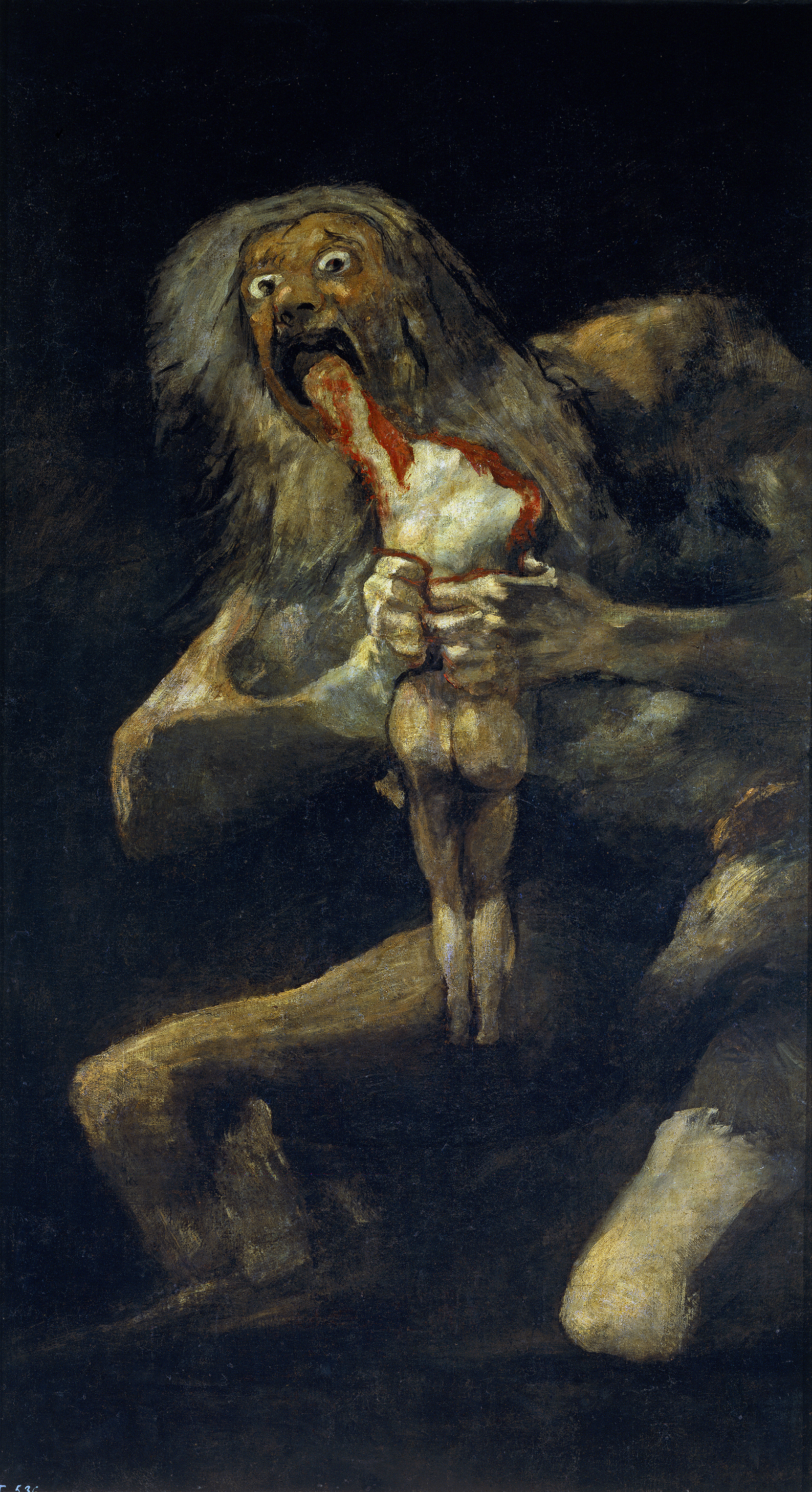
Later, Saturn was identified with the Greek god Cronus. That equation imported the disturbing myth of a father devouring his children — a Greek story grafted onto a Roman god whose own character had been agricultural and benign.
Cult & worship
Saturn's temple stood in the Forum and housed the state treasury, tying his cult directly to the wealth and administration of the Roman state. His great festival, Saturnalia, became famous for feasting, gift-giving, role reversals, and a temporary relaxation of social norms — masters and slaves trading places for a season, hierarchy loosened in memory of the age when it did not exist. Through the temple-treasury and the festival alike, Saturn connected agriculture and abundance to the ordered life of the community.
Greek equivalent
Saturn was identified with Greek Cronus, and through that identification he inherited the Greek myth of the father who devours his children to forestall his own overthrow. But the pairing is not the whole story. Saturn's Roman identity — agriculture, the Golden Age of Latium, the Forum temple and treasury, and Saturnalia — is older and distinct from the darker Cronus material. Reading the two together shows both what Rome borrowed and what it kept of its own.
Famous myths & stories
The Golden Age of Latium
Virgil recalls Saturn's Golden Age in the Aeneid, presenting Italy as a land once ruled by the exiled god — a time of abundance before harsh labor and rigid hierarchy. The myth gave Rome a memory of an earlier, easier world lying beneath its own history.
Saturnalia, the world reversed
Saturn's festival became one of Rome's most enduring. Feasting, gift-giving, role reversals, and a temporary relaxation of social norms let the city briefly re-enact the Golden Age, when hierarchy did not yet bind. It remains the most vivid trace of his cult.
The father who devoured his children
Later identification with Greek Cronus imported the disturbing myth of a father devouring his children to prevent his own overthrow. This darker story sits uneasily beside Saturn's agricultural, Golden-Age character — a reminder of how Greek and Roman traditions were fused.
Legacy & influence
Saturn's name is everywhere. Saturday carries it; so does the planet Saturn. Goya's terrifying Saturn Devouring His Son fixed the Cronus myth in the modern imagination, and Saturnalia still fascinates as an image of licensed misrule — though attempts to trace a direct line from it to every modern winter holiday are usually too simplistic. Between the Golden Age and the devouring father, Saturn remains one of antiquity's most double-edged figures.
Symbolism
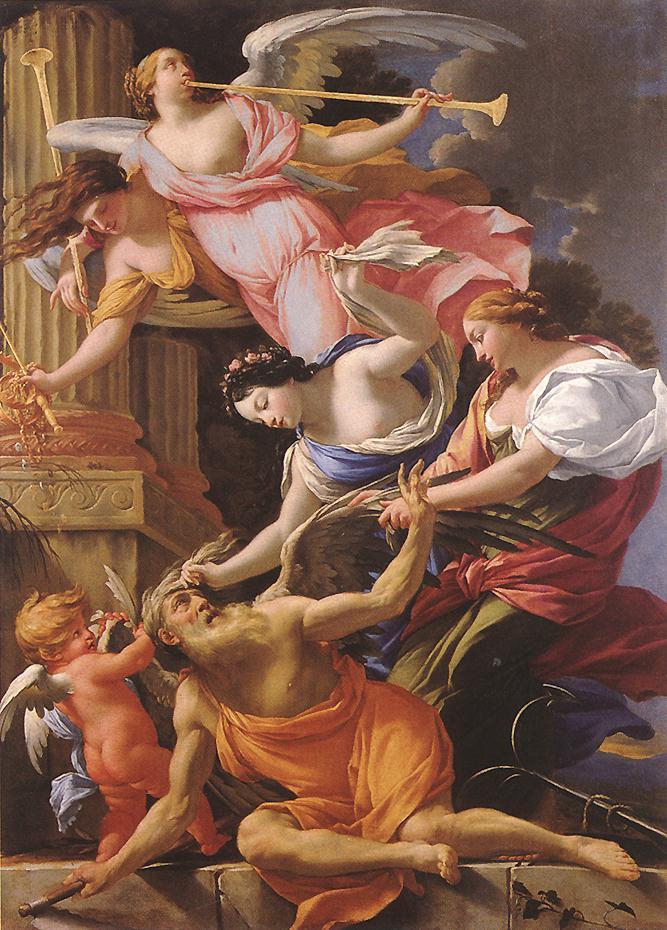
Saturn's symbols hold his contradictions together: the harvest and the sickle mark him as a god of agriculture and of time's turning; the Golden Age is his memory of abundance without toil; the treasury in his Forum temple binds him to the wealth of the state. Even the later Cronus material — devouring what he has made — reads as time consuming its own children. He is the god of plenty and of passing alike.
Famous public-domain depictions — click any image to view it full size.
Is Saturn the same as Greek Cronus?
Saturn was an old Roman agricultural god who was later identified with Greek Cronus. That identification imported the disturbing myth of a father devouring his children, but Saturn's own Roman character — agriculture, the Golden Age of Latium, the Forum temple, and Saturnalia — is distinct and older than the Greek overlay.
What was Saturn the god of?
An old Roman god of agriculture, linked in Roman tradition with a lost Golden Age in Latium — a myth of abundance before harsh labor and rigid hierarchy. His cult also connected him to the state, since his temple in the Forum housed the treasury.
What was Saturnalia?
Saturn's festival, one of Rome's most enduring — famous for feasting, gift-giving, role reversals, and a temporary relaxation of social norms. Attempts to trace a direct line from Saturnalia to every modern winter holiday are usually too simplistic.
Why did Saturn's temple hold the treasury?
Saturn's temple stood in the Roman Forum and housed the state treasury, connecting his cult directly to the Roman state — a distinctive link between an agricultural god of abundance and the community's wealth.
 Michael Paycer