Who is Minerva?
Minerva was one of the three deities of the Capitoline Triad, worshipped in the great temple on the Capitoline Hill alongside Jupiter and Juno. She governed wisdom, strategic intelligence, crafts, weaving, education, and the skilled professions — a remarkably wide brief that runs from the loom to the battlefield to the schoolroom.
Crucially, her “wisdom” is practical. Minerva represents disciplined intelligence and technical skill rather than a vague, abstract cleverness. She is the goddess of people who make things well and think clearly under pressure.
Origins & history
Roman Minerva absorbed extensive features of the Greek Athena while retaining Italic and Etruscan roots. That mixed ancestry is part of who she is: she is not a pure import, but neither is she untouched by Greek myth. Because of that fusion, any attempt to reconstruct a “purely original” Minerva behind the Greek overlay is necessarily speculative. In philosophical terms she became a natural symbol of reason, prudence, and the ordered mind.
Cult & worship
Minerva was honored both at the summit of the state cult and in the workshops of ordinary Romans. As a member of the Capitoline Triad she shared the Capitoline temple with Jupiter and Juno. Her major festival, the Quinquatrus, was associated with artisans — and later with teachers and students, making her the patron of both skilled trades and learning. Craftworkers, weavers, and those in the skilled professions looked to her as the divine sponsor of good work.
Greek equivalent
Minerva was identified with Greek Athena, and much of her persona — the armed goddess of wisdom, strategy, and craft — is shared with her. What is genuinely Roman (and Etruscan) lies underneath that shared surface, in the Italic goddess of skilled work who was folded into the Capitoline cult. Reading Minerva beside Athena is the clearest way to see both the depth of the borrowing and the native roots it did not erase.
Famous myths & stories
The contest with Arachne
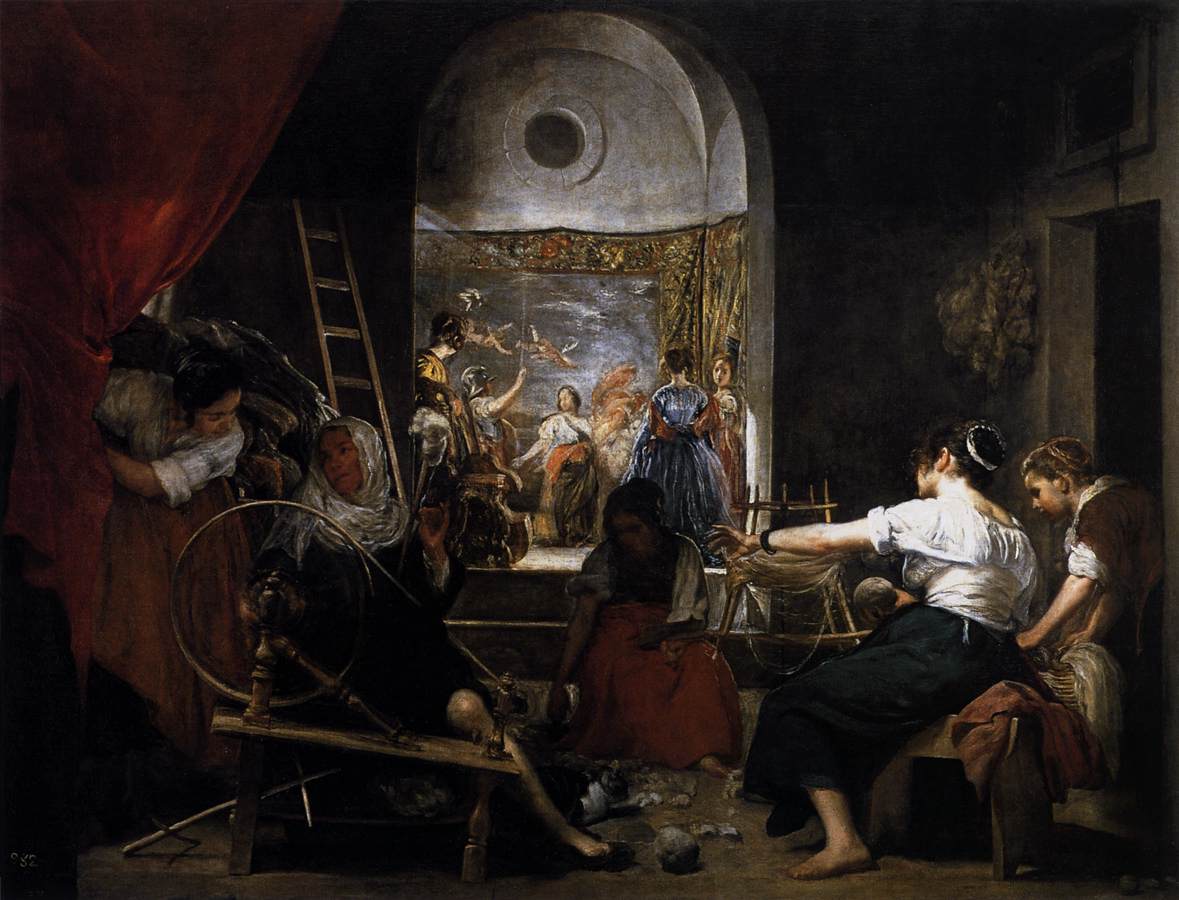
The most famous Roman literary test of Minerva's domain is her weaving contest with the mortal Arachne, told in Ovid's Metamorphoses. It is where artistic excellence and divine authority collide: Minerva wins — or at least controls — the contest through divine power, yet Arachne's own weaving, which depicts the misdeeds of the gods, is not easily dismissed. The story exposes a disturbing tension between wisdom and punitive pride.
Goddess of disciplined skill
Beyond any single story, Minerva's mythic role is patronage: of artisans, of intellectual work, of strategy and the arts. She defends civic order and, in Greco-Roman literature, assists heroes with counsel and craft. Her power is competence itself — the ability to do difficult things well.
Wisdom and its shadow
The Arachne episode is also a warning. Minerva is partly a product of cross-cultural fusion, and her myths carry the same complications as the other gods: even the goddess of wisdom can act from wounded pride. Ancient readers were not blind to the contradiction between her ideal and her conduct.
Legacy & influence
Minerva became the Western emblem of disciplined intelligence. Universities, learned societies, seals, and military insignia have all reached for her image, and she appears in countless works of art as the calm, armed figure of reason. Whenever an institution wants to picture knowledge as something ordered, earned, and defended, it tends to reach for Minerva.
Symbolism
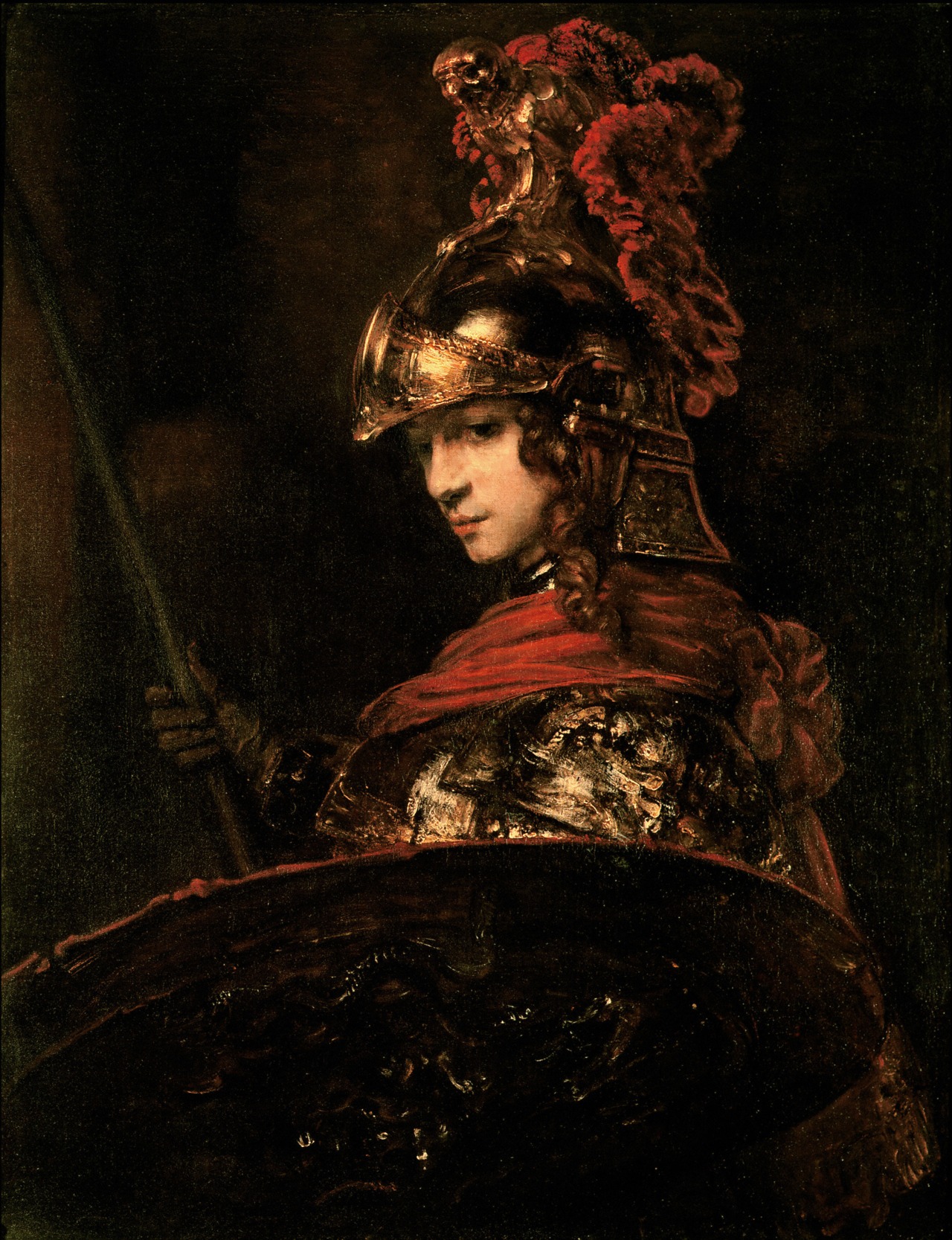
Minerva's attributes join thought to skilled action. The helmet and spear mark strategic intelligence — wisdom that can defend itself and win contests, not merely contemplate. The owl is her sign of watchful discernment. And the craft of weaving, central to the Arachne story, stands for the technical skill she patronizes. Together they say what Rome meant by her: intelligence that is disciplined, practical, and armed.
Famous public-domain depictions — click any image to view it full size.
No single secure Roman quotation defines Minerva; her domain is best captured not by a divine speech but by Ovid's portrayal of her as goddess of skilled craft — above all in the weaving contest with Arachne in the Metamorphoses.
Is Minerva the same as Athena?
Roman Minerva absorbed extensive features of Greek Athena while retaining Italic and Etruscan roots. The two overlap heavily in wisdom, craft, and strategy, but Minerva is partly a product of cross-cultural fusion, which makes attempts to reconstruct a purely original form speculative.
What was Minerva the goddess of?
Minerva governed wisdom, strategic intelligence, crafts, weaving, education, and the skilled professions. She represented disciplined intelligence and technical skill rather than mere abstract wisdom, and she was one of the three deities of the Capitoline Triad.
What is the Quinquatrus festival?
The Quinquatrus was Minerva's major festival, associated with artisans and later with teachers and students. It reflects her patronage of skilled work and learning, the practical crafts and professions under her protection.
What is the myth of Minerva and Arachne?
The Arachne contest is the most famous Roman literary test of Minerva's domain, where artistic excellence and divine authority collide. Minerva wins or at least controls the contest through divine power, but Arachne's artistic critique of divine misconduct is not easily dismissed — exposing a tension between wisdom and punitive pride.
 Michael Paycer